
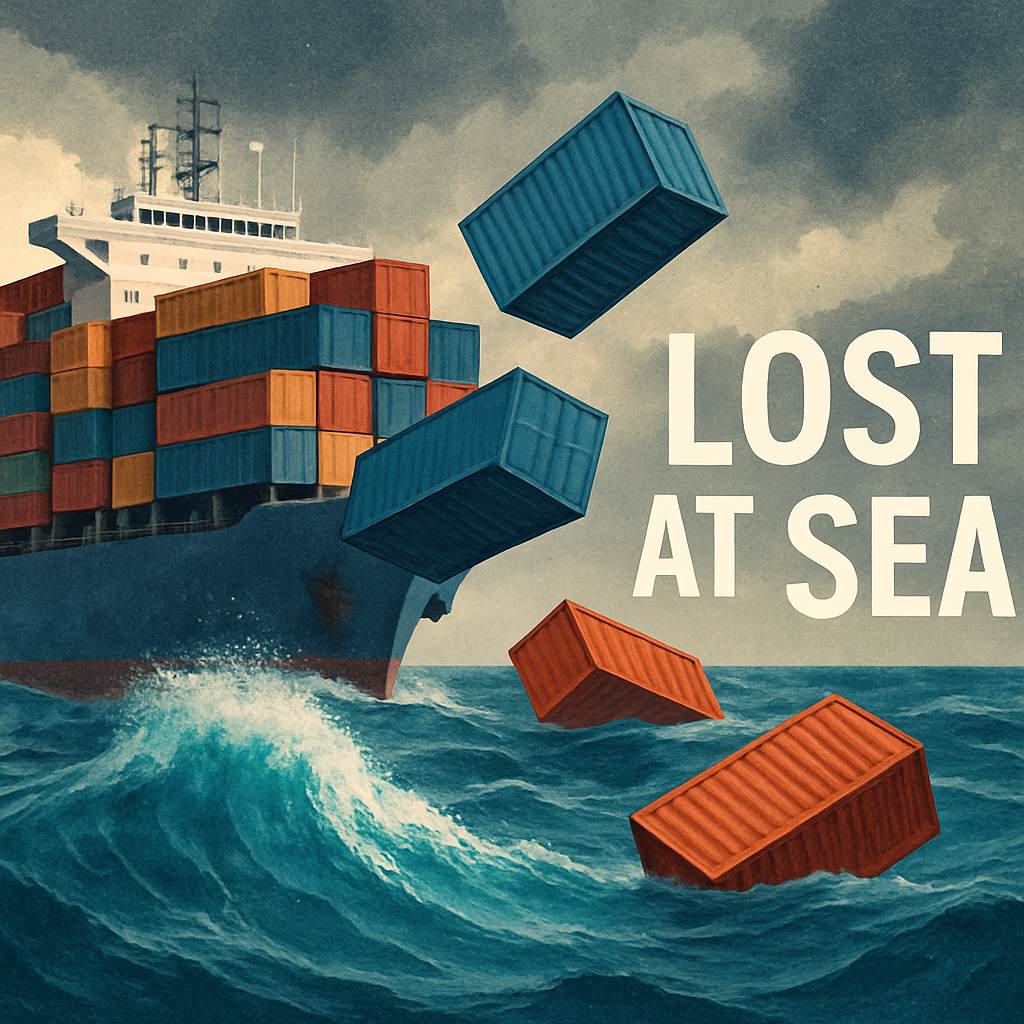
The number of shipping containers lost at sea more than doubled in 2025, driven by notable maritime incidents and severe weather, according to the World Shipping Council's latest Containers Lost at Sea Report.
Last year, it is estimated that 1,478 containers went overboard from a total of around 280 million containers shipped globally. This accounts for just 0.0005% of total container movements. This marks an increase from 576 containers lost in 2024, although it remains significantly lower than historical highs.
This rise in losses was primarily due to a few major accidents rather than a general decline in container shipping safety. For instance, one particular incident involving the Liberian-flagged MSC ELSA 3, which sank off Kochi, India, led to the loss of 640 containers, making up around 43% of all containers lost globally that year.
The report noted, "2025 data shows that yearly totals are greatly influenced by unique, impactful events," mentioning additional incidents linked to severe weather, shifting cargo, and stack collapses that also contributed to the overall figures.
The World Shipping Council pointed to challenging weather conditions in the North Atlantic and North Pacific as key factors in container losses. This included warmer ocean temperatures and unpredictable storms. Incidents of fire, cargo shifts in rough seas, groundings, and total vessel losses also contributed.
Even with the increase, the report emphasizes that container losses are still rare in the context of global trade. The highest recorded annual loss by the WSC was in 2013, with 5,578 containers lost, while the lowest was just 221 containers in 2023.
On a positive note, container recovery efforts showed improvement. In 2025, carriers reported recovering 128 containers, the highest number since the WSC began tracking recoveries in 2023. This reflects better collaboration between shipping companies and coastal authorities after incidents.
The report was released as new international reporting rules took effect on January 1, 2026. Changes to the International Convention for the Safety of Life at Sea (SOLAS) now require all lost or drifting containers at sea to be reported, and flag states must report annual container losses to the International Maritime Organization. The WSC has been promoting mandatory reporting for years, stating that these new rules should enhance data quality and maritime safety.
The council also mentioned various initiatives aimed at reducing container losses, including its AI-driven Cargo Safety Program launched last year, which focuses on identifying incorrectly declared dangerous goods before they are loaded. This report follows the release of new Allianz data showing that container ship fires now occur about every 17 days, with misdeclared dangerous goods being a leading cause of these fires.
Other industry efforts include updates to the Code of Practice for Packing of Cargo Transport Units (CTU Code), recommendations from the TopTier Joint Industry Project aimed at preventing container losses, and new International Maritime Dangerous Goods (IMDG) Code requirements that classify all charcoal shipments as dangerous goods.
The WSC’s annual survey is based on data collected from member companies that represent approximately 90% of global container vessel capacity, with estimates used to gauge industry-wide losses. While mandatory IMO reporting is now in place, the organization has stated that it will continue to publish its annual report to ensure consistency and transparency.