
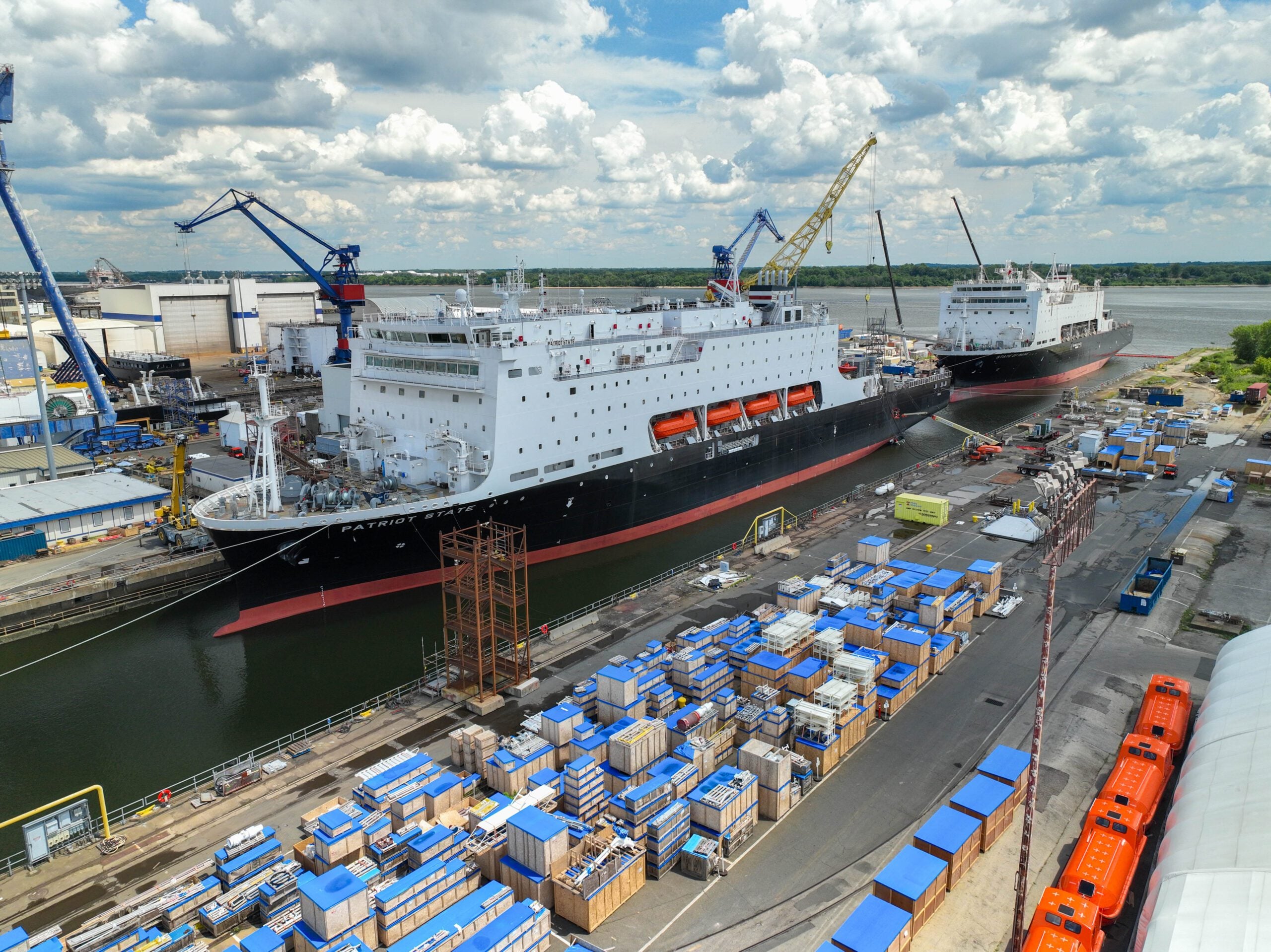
A rare joint hearing in the House on Wednesday highlighted both the goals and the challenges of Washington’s efforts to boost American shipbuilding. While administration officials advocated for a broad maritime expansion, congressional watchdogs raised concerns about ongoing delays, rising costs, and industrial bottlenecks that could hinder progress.
The hearing, titled “Revitalizing Shipbuilding and the Maritime Industrial Base,” brought together members from the House Armed Services Subcommittee on Seapower and Projection Forces and the House Transportation and Infrastructure Subcommittee on Coast Guard and Maritime Transportation. This collaboration illustrated the growing interconnection between commercial shipbuilding, naval readiness, and industrial policy in Washington.
Chairman Mike Ezell opened the session by emphasizing the importance of shipbuilding, calling it “the keystone” of the administration’s Maritime Action Plan. He supported the White House's proposal to allocate funds for 41 new government vessels in the fiscal 2027 budget.
The main focus of the hearing was a key discussion on identifying what issues exist in shipbuilding and how to address them.
Administration representatives depicted the maritime sector as entering a significant rebuilding phase. Jason Potter, who is acting as the Assistant Secretary of the Navy for Research, Development and Acquisition, highlighted the administration’s “Golden Fleet” initiative, which includes a proposed $65.8 billion in shipbuilding funding for fiscal 2027 aimed at producing 18 battle force ships and 16 non-battle force ships.
Potter explained that the strategy relies on three key areas: maintaining maritime dominance, revitalizing the industrial base, and improving the government's ship procurement process.
“We are shifting Navy shipbuilding acquisition from a compliance-focused approach to one that prioritizes effective warfighting outcomes,” Potter stated during his testimony.
Stephen Carmel, the administrator of the U.S. Maritime Administration, delivered perhaps the most compelling testimony by asserting that the U.S. has misunderstood the shipbuilding issues for many years.
Carmel argued that shipbuilding is not the main problem causing maritime decline, but rather a result of ineffective cargo policies. He explained, “Cargo demand drives vessel deployment. Consistent vessel deployment supports shipbuilding,” stressing that rebuilding maritime power requires more than just subsidizing shipyards; it needs restoring cargo flows tied to U.S. shipping.
This view reflects a broader administration message that maritime policy should encompass not only naval procurement but also trade, logistics, and commercial fleet growth.
Rear Adm. Mike E. Campbell discussed a substantial Coast Guard recapitalization plan, which includes $14 billion for new cutters under recent legislation, complete funding for two Polar Security Cutters, and all nine Stage 2 Offshore Patrol Cutters, as well as investments in enhancing the service’s aging fleet and repair infrastructure.
Campbell also highlighted an interesting international element in the strategy, noting that the first four Arctic Security Cutters are being constructed in Finland, aiming to bring back icebreaker expertise to U.S. shipyards.
However, the optimism from administration officials faced skepticism from congressional watchdogs. Eric Labs of the Congressional Budget Office warned that crucial Navy and Coast Guard programs are still dealing with significant delays and increased costs. He noted that the construction of destroyers and submarines is now taking 9 to 10 years, compared to 5 to 6 years in previous decades.
Labs claimed that these delays might have cost the Navy about 20 additional ships that could have been in service.
At the Government Accountability Office, Shelby Oakley issued a stern warning, stating that hopes for a shipbuilding surge will stall without improvements in acquisition practices.
“Navy and Coast Guard shipbuilding programs have consistently fallen short of expectations,” Oakley said, mentioning billions in overruns, prolonged delays, and troubled initiatives from the Navy’s Constellation-class frigate to the Coast Guard’s Offshore Patrol Cutter.
The GAO also pointed out ongoing challenges, such as incomplete ship designs, inadequate industrial base planning, and unresolved supplier issues.
The divergence in perspectives was clear: while administration officials argued that historic investments and reforms are aligning, watchdogs responded that many of the same pledges have accompanied troubled programs for years.
The hearing also marked a shift in how Washington is discussing maritime power. Rather than treating naval and commercial shipbuilding, as well as sealift, as distinct issues, lawmakers seem increasingly focused on them as part of a unified industrial ecosystem — a theme central to the Maritime Action Plan that was reiterated throughout the hearing.
This could have significant implications for ongoing discussions related to cargo preferences, expanding the commercial fleet, workforce development, and potential legislation stemming from the SHIPS for America initiative.