
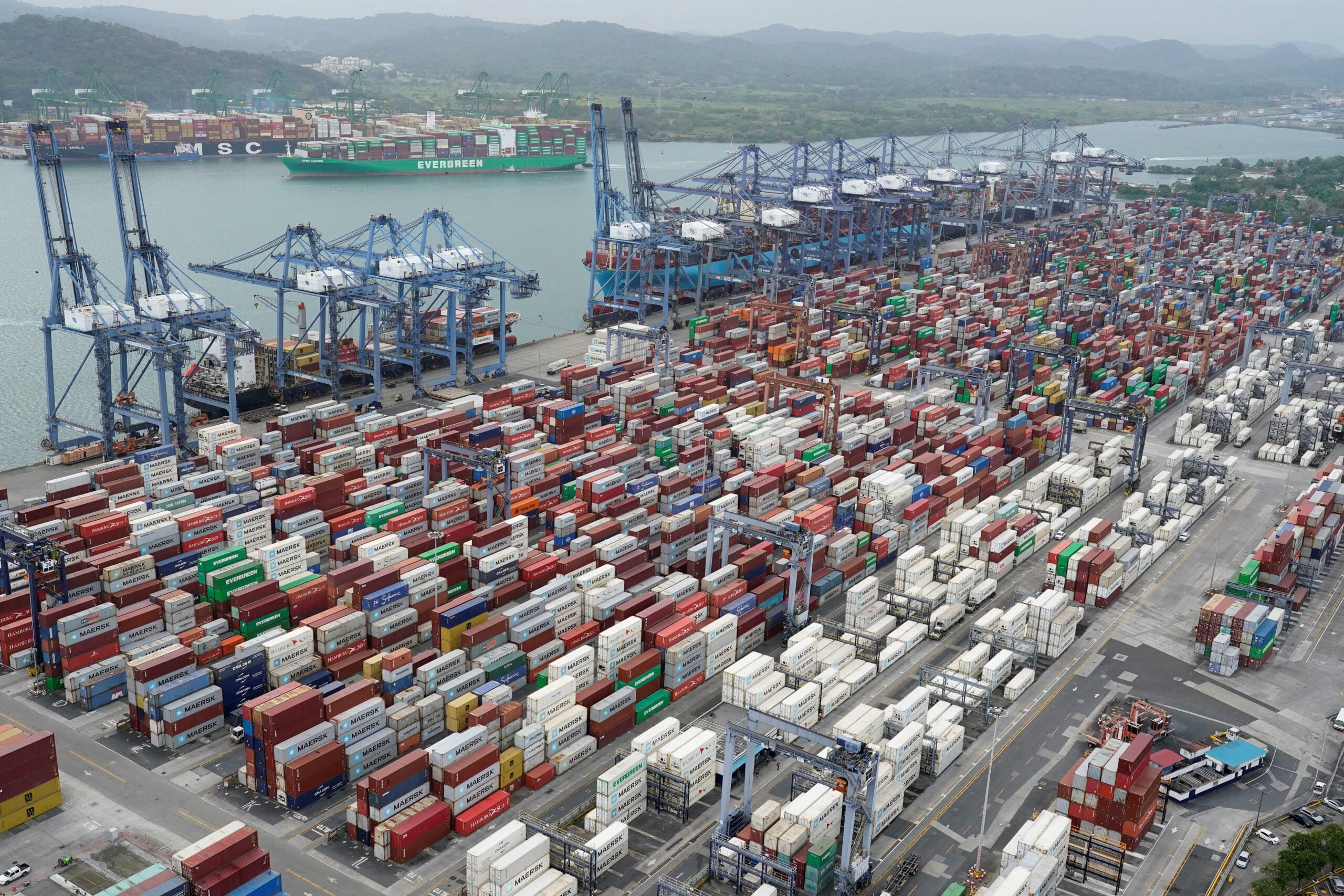
CK Hutchison Holdings Limited, based in Hong Kong, has officially informed Panama about a dispute under an investment protection treaty. This legal battle has created uncertainty for two crucial Panama Canal ports and triggered significant international reactions.
The dispute revolves around a decision by the Supreme Court of Panama, which ruled that Law No. 5 from January 16, 1997, the legal basis for CK Hutchison's nearly 30 years of operating the Balboa and Cristobal container terminals, is unconstitutional. Although the decision has not been published or enacted yet, the Panamanian government has started planning for a forced exit of Panama Ports Company (PPC), which is CK Hutchison's indirect subsidiary, without a clear transition plan.
CK Hutchison warned that if the ruling is published, it would instantly make operations at both terminals illegal, making it impossible for them to continue operating. The company's future in these ports now relies entirely on the Panama Supreme Court and the Panamanian state, which are factors beyond its control.
Warning Shot at Maersk
In a significant escalation, Hutchison Port Holdings Limited warned A.P. Moller-Maersk A/S on February 10 that any attempt by APM Terminals or its affiliates to take control of the ports without CK Hutchison’s approval would lead to damage claims and legal action.
This warning follows an announcement on January 30 by Panama’s Maritime Authority, stating that it would consider APM Terminals as a temporary administrator during the transition period. APM Terminals later expressed its “willingness” to take on the role to mitigate any risks that could affect essential services for regional and global trade.
APM Terminals emphasized that any operational access to the terminal would comply fully with legal requirements and procedures, which can only occur once the Panama Supreme Court’s ruling becomes final and binding—a timeline not under the company’s control.
CK Hutchison also warned third parties against being involved in or profiting from what it called unlawful actions related to the terminals' operation.
Hong Kong Lodges Formal Protest
The dispute has now drawn Hong Kong into the situation. On February 9, Commerce and Economic Development Secretary Algernon Yau made a formal protest to Panama’s consul general, stating that the ruling would “seriously undermine international trade rules.”
“We strongly disagree with and oppose the judgment concerning the unconstitutionality of the two contracts for the continued operation of the two ports between the Panama government and CK Hutchison,” Yau said in a statement from Hong Kong’s Commerce and Economic Development Bureau. He urged Panama to honor its contractual obligations and create a fair and predictable business environment.
China Warns of ‘Heavy Prices’
Previously, Beijing called the ruling “absurd,” “shameful,” and “pathetic,” warning that Panama could face “heavy prices both politically and economically” if it proceeded with the ruling.
Foreign Ministry spokesperson Guo Jiakun stated that China would take “all necessary measures” to protect the rights and interests of Chinese businesses and mentioned that Beijing has “sufficient means and tools” to uphold what it considers a fair international economic and trade order.
China, a major user of the Panama Canal, has reportedly instructed state-owned companies to pause discussions on new projects in Panama as part of its broader retaliation.
Washington Sees Strategic Win
In Washington, the court ruling has been viewed as a win amidst escalating U.S.–China competition for global trade routes. President Donald Trump has repeatedly pushed for limiting Chinese influence around the canal, which handles about 5% of global maritime trade.
John Moolenaar, head of the U.S. House Select Committee on China, called the ruling a “win for America,” arguing that the ports along the canal should be operated by companies that align with U.S. values.
Arbitration and Investment at Risk
PPC has stated that it has invested around $1.8 billion in infrastructure and technology over its nearly 30 years of operating the Panamanian terminals and has the right to seek both domestic and international legal remedies. CK Hutchison confirmed that PPC started arbitration on February 3 based on the concession agreement.
The company expressed its commitment to protecting employees, avoiding disruptions, and ensuring the smooth flow of vessels and cargo through the canal—as long as legal conditions permit operations to continue.
Fallout for Global Port Deal
This ruling also complicates CK Hutchison’s plans for a proposed $23 billion sale of 43 ports across 23 countries to a consortium led by BlackRock and the Mediterranean Shipping Company. The timeline for this deal is uncertain, with unresolved issues including China Cosco Shipping Corp.’s reported desire for a majority stake.
As Panama serves as a crucial transshipment hub connecting various trade routes, shipping companies are paying close attention. Any extended disruption at Balboa or Cristobal could quickly affect regional and global container networks.