
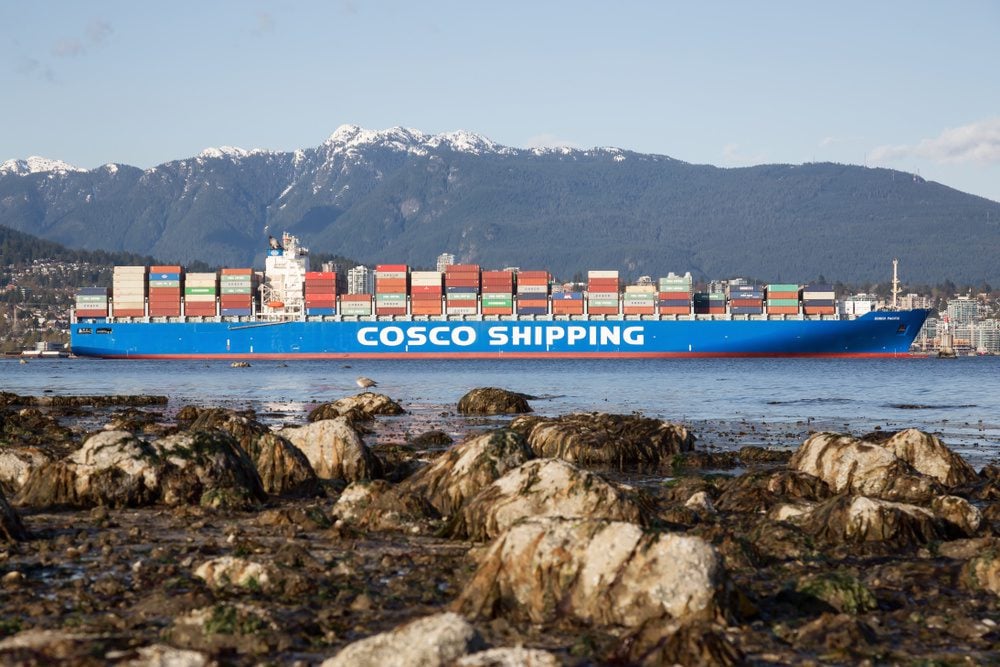
LONDON, March 27 - Two Chinese container ships turned back after attempting to leave the Gulf through the Strait of Hormuz on Friday, according to ship-tracking data. This happened despite Iran's assurance that Chinese vessels would be allowed to pass.
The operator of the ships, COSCO from China, announced on March 25 that it had resumed bookings for general cargo shipments from Asia to the United Arab Emirates, Saudi Arabia, Bahrain, Qatar, Kuwait, and Iraq.
The ships, CSCL Indian Ocean and CSCL Arctic Ocean, both flagged in Hong Kong, have been stuck in the Gulf since the U.S.-Israeli conflict with Iran began on February 28.
They tried to cross the strait at 0350 GMT on Friday but then turned back, as reported by the Kpler data platform.
This was the first attempt by a major shipping group to cross since the conflict started, and the incident indicated that "safe passage could not be guaranteed," said Kpler analyst Rebecca Gerdes.
On Wednesday, Iran's foreign minister Abbas Araghchi tweeted that the country had "permitted passage through the Strait of Hormuz for friendly nations including China, Russia, India, Iraq, and Pakistan."
The two vessels both transmitted messages through their AIS ship-tracking systems indicating they had Chinese owners and crews, according to data from the LSEG platform.
COSCO Shipping, based in Shanghai, did not immediately respond to requests for comment.
Iran has conducted attacks on shipping in the Gulf and threatened more, leaving hundreds of vessels and 20,000 seafarers stranded. Exports of energy, including crude oil from Saudi Arabia and liquefied natural gas from Qatar, have been largely halted.
GOODWILL GESTURE
U.S. President Donald Trump mentioned on Thursday that Iran was allowing 10 oil tankers to transit through the Strait of Hormuz as a "goodwill gesture" in ongoing negotiations.
Details regarding these tankers remain unclear, and it is unknown if any have passed through the strait since Trump's statement.
A few other vessels have departed recently, such as Indian-flagged tankers carrying liquefied petroleum gas for cooking.
A Thai oil tanker also went through the strait after diplomatic coordination with Iran, according to a Thai official and the oil company that owns the vessel.
Traffic in the past week has mainly consisted of Iranian oil tankers leaving and bulk carriers arriving in Iran with grain and other commodities, based on data from maritime specialists Lloyd’s List Intelligence and further analysis by Reuters.
Iran has repeatedly stated that while some vessels may pass, it will decide which ones can do so, blocking those linked to the U.S., Israel, or their allies.
According to a statement from Iran, "Aggressor parties – namely, the United States and the Israeli regime – as well as other participants in the aggression, do not qualify for innocent or non-hostile passage," which was part of a circular sent to member countries of the UN shipping agency the International Maritime Organization on March 24.
Chinese Foreign Minister Wang Yi said during a Friday call with his Pakistani counterpart that starting peace talks would be "helpful in restoring normal navigation" through Hormuz.