
On Tuesday, Beijing announced sanctions as the U.S. and China began charging extra port fees on each other's ships, marking a new chapter in their ongoing trade conflict ahead of an upcoming meeting between their leaders.
South Korea has made a commitment of $150 billion to invest in its shipbuilding sector, aiming to "Make America Shipbuilding Great Again" and support U.S. President Donald Trump’s efforts to boost American shipbuilding to compete with China.
Officials in Seoul stated that the decline of the U.S. shipbuilding industry and the supporting sectors has made it difficult to source materials and parts domestically.
Seok Jong-gun, South Korea's Minister of Defense Procurement Program Administration, noted, “There will definitely be an impact.”
During a parliamentary hearing on Friday, he remarked, “I don’t see how we can produce all the materials and supplies for Philly Shipyard in the U.S.”
“If you need to import many items from South Korea and face sanctions and various barriers, it will likely impact the MASGA initiative eventually,” he added.
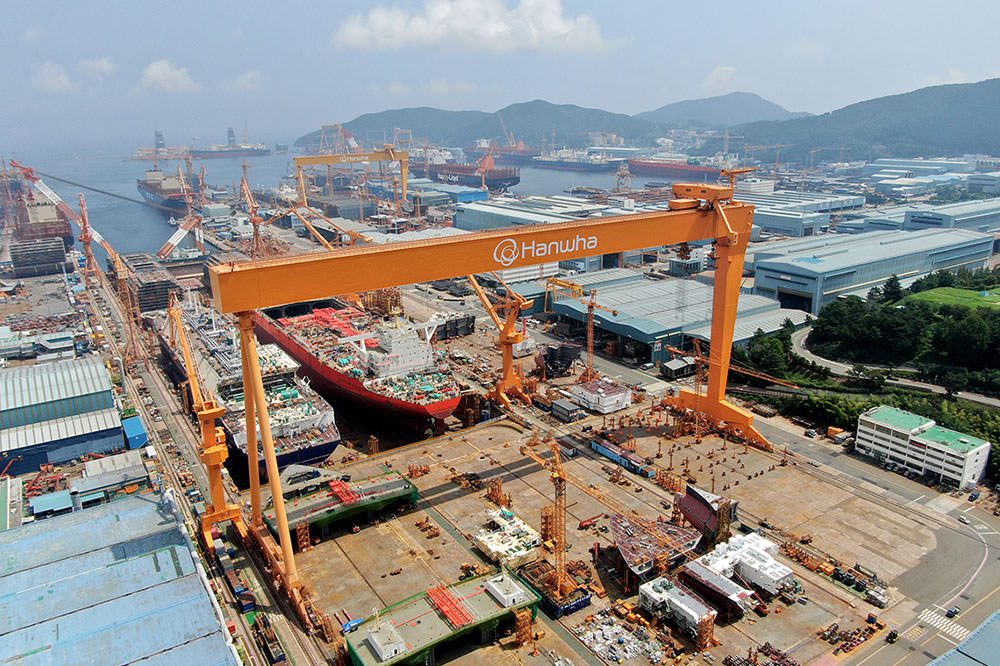
Hanwha 042660.KS operates a shipyard in Shandong, China, where it builds ship component modules. These modules are then sent to its South Korean facility for final assembly, according to a company filing.
Although analysts believe that the Chinese sanctions may not have an immediate effect, they warn that this could signal tougher actions from China that could harm South Korean shipbuilders working with the U.S.
‘NOT JUST A TRADE ISSUE’
South Korean lawmaker Yu Yong-weon estimated that the Chinese sanctions might cost Philly Shipyard about $60 million in the next two years. He did not provide specific details but mentioned potential supply disruptions and delays in vessel deliveries.
“This is not just a trade issue; it’s a serious matter that impacts our economic security and industrial strength,” Yu stated, noting his visit to the shipyard last month.
Hanwha Ocean did not comment on the estimated losses but Hanwha USA, a subsidiary, mentioned it is assessing the details of the Chinese sanctions and emphasized, “Hanwha will keep delivering top-notch maritime services to our clients, including through our investments in the U.S. maritime sector and via Hanwha Philly Shipyard.”
Philly Shipyard, located in Philadelphia, was acquired by Hanwha last year and is one of five U.S. subsidiaries affected by the new Chinese sanctions.
Hanwha’s competitors in South Korea, HD Hyundai and Samsung Heavy Industries, are looking at projects related to revamping U.S. maritime capabilities, which includes building and maintaining navy vessels.
Earlier on Friday, the U.S. State Department criticized the Chinese sanctions as “irresponsible,” claiming that they disrupt operations of private companies and undermine U.S.-South Korea cooperation on revitalizing shipbuilding and manufacturing.
“China's actions are part of a long history of attempts to coerce South Korea,” a spokesperson stated in a statement to Reuters.
China's Commerce Ministry has prohibited transactions and cooperation with Hanwha Ocean’s U.S.-linked branches, citing security concerns due to their involvement in U.S. government investigations.
South Korea's investment plan in the U.S. shipbuilding industry represents the most significant commitment made to support a trade agreement intended to reduce U.S. tariffs on South Korean products.