
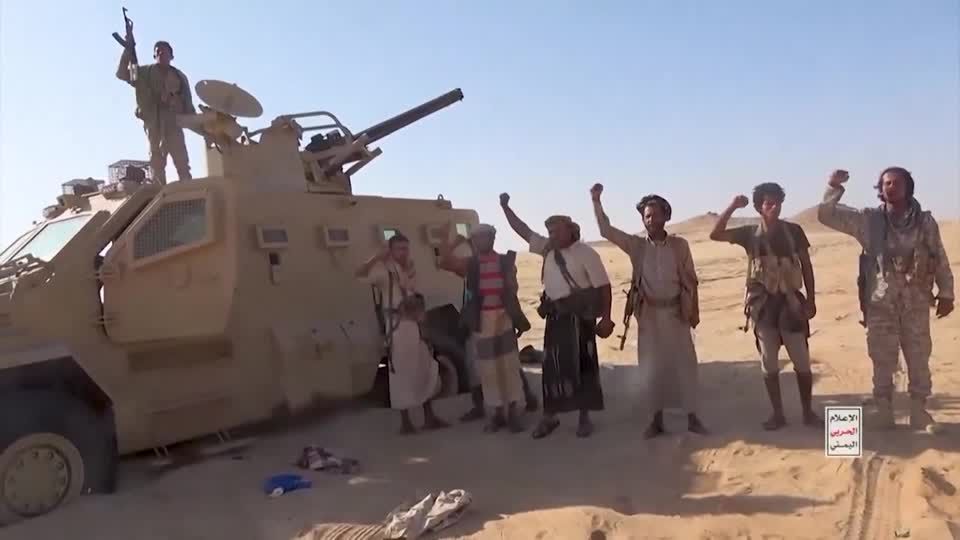
DUBAI, Sept 17 (Reuters) - China has privately asked Iran to help control the Houthis in Yemen. This follows a request from Saudi Arabia after the Iran-backed group made significant military gains in the past week, as reported by three Iranian sources familiar with the situation.
Saudi Arabia reached out to China for assistance after the Houthis advanced rapidly along the Red Sea coast and near the Bab el-Mandeb Strait, increasing risks for Saudi oil exports and shipping, the sources noted.
While China has publicly called for restraint, dialogue, and safe navigation, its private communications were more direct. Beijing is looking for Iran to leverage its influence over the Houthis to prevent further escalation in energy routes that are critical for China's economy.
The exact way the message was conveyed has not been disclosed, nor is it clear if it happened during Iranian Foreign Minister Abbas Araqchi's recent visit to China, according to the sources who chose to remain anonymous.
Iran's response highlighted that stability in the region relies on ending the US-Israeli conflict with Iran.
Chinese officials did not issue any explicit threats or indicate they would economically pressure Tehran if it failed to influence the Houthis, according to the same sources.
In response to a request from Reuters, the Chinese foreign ministry expressed a desire to avoid an escalation of tensions in Yemen and the Red Sea, emphasizing that regional instability is not beneficial for any party involved.
They stressed the importance of respecting the sovereignty of all nations and ensuring that critical infrastructure is not targeted. China urged for resolution through dialogue and negotiation.
Iran's foreign ministry and Saudi Arabia's media office have not responded to requests for comments on this matter.
DANGERS OF A WIDER REGIONAL WAR
For over a decade, China has been Iran's largest trading partner and the main buyer of its oil. In 2025, over 80% of Iran's maritime oil exports, averaging around 1.4 million barrels per day, went to China.
“Beijing is one of the few capitals able to encourage Iran to control the Houthis,” a senior diplomat in the region commented.
The Houthis, who oppose Saudi Arabia's influence in Yemen, have been supported by Iran through arms, training, and funding. They are part of Iran's anti-Western and anti-Israel "Axis of Resistance."
Any threats by the Houthis targeting shipping in the Red Sea and Bab el-Mandeb Strait could exacerbate the global energy crisis, especially as Iran has already disrupted the Strait of Hormuz.
With Hormuz effectively blocked, ongoing Houthi attacks could impact the Middle East's primary oil export routes simultaneously, escalating the energy crisis and Iran’s broader conflict with the US.
Iran and its allies are now exerting pressure on both ends of the region’s key maritime routes, which are essential for China's economy.
Alex Vatanka, an expert at the Middle East Institute, noted that while Beijing may oppose US pressures on Tehran, its interests in the region go beyond Iran. About half of China's oil imports come from this area, and its trade with Gulf Cooperation Council countries is around $300 billion annually.
“Although Iran can disrupt Hormuz, such moves may ultimately hurt the very power it relies on,” Vatanka warned.
CHINA'S DILEMMA
It remains uncertain whether Tehran will heed Beijing's concerns. However, the relationship holds significant economic and strategic importance for Iran, especially amidst ongoing issues with the US.
China is one of the few nations capable of supporting Iran’s oil industry and relieving economic pressures caused by war and sanctions.
China has shown its diplomatic reach, having successfully mediated the resumption of ties between Iran and Saudi Arabia earlier this year.
Yet, there are limits to this influence. Critics in Iran express dissatisfaction with the limited scale of Chinese non-oil trade and investments since their 25-year cooperation agreement in 2021, contrasting it with China’s increasing investments in Gulf states.
While Iran cannot disregard China, two sources emphasized that Beijing's interests are just one of many factors in Iran's decision-making process. Iran’s choices are influenced by a mix of strategic, economic, and political factors.
“Tehran and Beijing need each other. Both want Hormuz reopened and shipping in the Red Sea secured,” said the Western diplomat.
Analysts suggest the real test will be whether China is willing to enforce consequences for its demands. Ultimately, visible action from Beijing would be the best indicator of its commitment.