
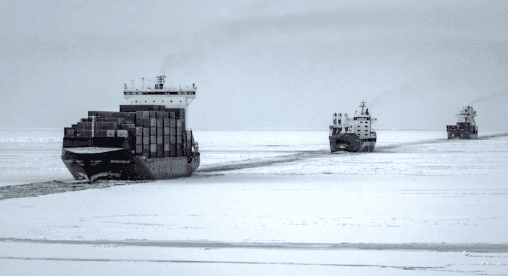
In 2025, China greatly increased its use of the Northern Sea Route (NSR), completing 14 container ship journeys between Asia and Europe. This marks an increase from 11 voyages in 2024 and seven in 2023. These latest figures highlight a consistent rise in Chinese-led container traffic along this Arctic route.
The growth indicates rising confidence among Chinese operators in navigating the Arctic route during the summer, which reduces travel time between northern China and Europe compared to the usual routes through the Suez Canal.
Shipping companies NewNew Shipping Line and Sea Legend have expressed plans to further enhance their Arctic container services in 2026, intending to add more sailings and improve schedule reliability during the short summer navigation period.
The shipping season kicked off on July 16 with the NewNew Polar Bear leaving Shanghai for the Russian port of Arkhangelsk. It wrapped up on October 30 with the Xin Xin Tian 2 traveling from Shanghai to Kaliningrad. The window for shipping was about three weeks shorter than last year due to early ice formation in the eastern sections of the route.
Rosatomflot, Russia's state-owned nuclear icebreaker operator, reported that the rise in container traffic led to a record year for cargo on the NSR. The company's data indicated that container volumes reached around 400,000 tons in 2025, which is more than double the amount from 2024.
A notable voyage this season was by the containership Istanbul Bridge, which made the first-ever direct container connection between China and the United Kingdom through the Northern Sea Route. The vessel completed the journey in a remarkable 20 days, averaging a speed of 16.7 knots along the Arctic corridor, showcasing the time-saving benefits of this route under good ice and weather conditions.
While container shipping on the Northern Sea Route has been a topic of discussion for some time, its development has been slow. Danish company Maersk conducted a trial journey with the Venta Maersk in 2018 to see if Arctic container transit was viable. Despite this successful test, Maersk and most other major Western container lines have repeatedly said they have no plans to offer regular container services via the NSR, citing concerns about the environment, inadequate infrastructure, insurance issues, and unpredictable costs.
Consequently, container traffic along the NSR has mainly been driven by Russian and Chinese interests, bolstered by Russia's growing fleet of nuclear-powered icebreakers and state-supported Arctic infrastructure development.
Overall, traffic on the Northern Sea Route also reached record levels in 2025. Authorities reported 103 transit journeys, carrying about 3.2 million tons of cargo, primarily consisting of crude oil, liquefied natural gas, and bulk commodities.