
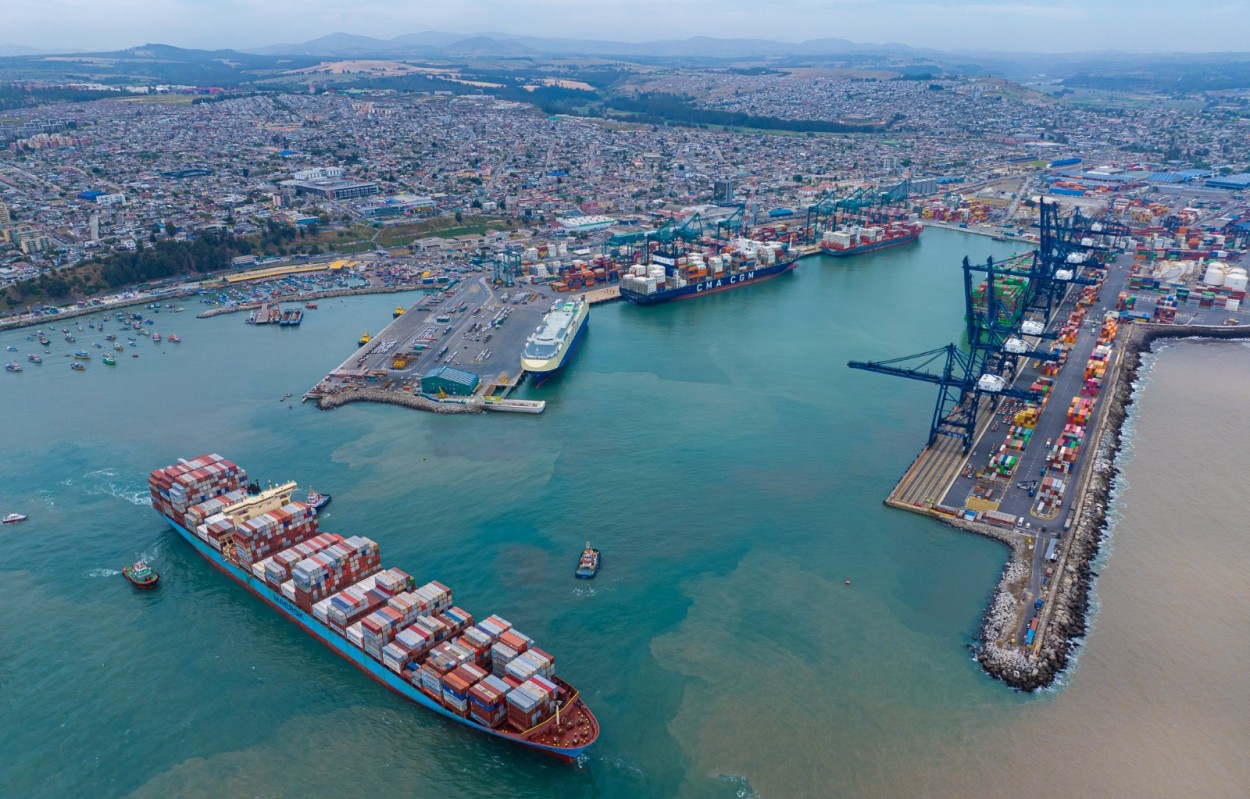
Chile has taken a big step forward in one of its largest infrastructure projects as regional authorities have unanimously approved the environmental permit for the “Puerto Exterior” expansion at the Port of San Antonio.
This approval from the Environmental Assessment Commission of the Valparaiso Region is crucial for the $4.45 billion project. It aims to upgrade the San Antonio complex owned by Empresa Portuaria San Antonio into a modern mega port that can accommodate the largest container ships in the world.
The project, initiated by the Chilean government and carried out by EPSA, is set to significantly increase cargo capacity in the central part of the country, starting in the latter half of the next decade.
According to EPSA, "This initiative will provide the necessary port infrastructure for Chile to remain competitive in international trade.”
The “Outer Port” project includes about a 4-kilometer breakwater, extensive dredging, reclaimed terminal areas, and two semi-automated container terminals, each 1,730 meters long. The project will be developed in four phases based on expected cargo demand.
When fully completed, Puerto Exterior is anticipated to handle up to 6 million twenty-foot equivalent units (TEU) each year, which is around 60 million tons of cargo annually. It will also be able to accommodate up to eight container ships, each around 400 meters long, which are some of the biggest ships operating today.
The first phase, featuring an 865-meter berth with a capacity of 1.5 million TEU per year, is expected to be operational by 2036.
This project is supported by a significant public-private partnership. EPSA will invest about $1.95 billion in maritime infrastructure, which includes the breakwater, dredging, support areas, road access, and environmental protection measures. The remaining $2.5 billion is anticipated to come from private terminal operators through future concession agreements related to terminal construction and operations.
The environmental approval comes after a lengthy six-year review process, which involved numerous rounds of public participation, environmental addendums, and discussions with Indigenous communities.
EPSA stated that this project will help Chile avoid future port congestion, high logistics costs, and declining competitiveness in both regional and global supply chains as ships get larger and trade volumes increase.
The port authority also highlighted the environmental measures that will be taken, including protections for the nearby Lagunas Ojos de Mar urban wetland ecosystem and plans for Lagunas de Llolleo Park.
Construction contracts are expected to be awarded later this year as the project moves into the next development stage.