
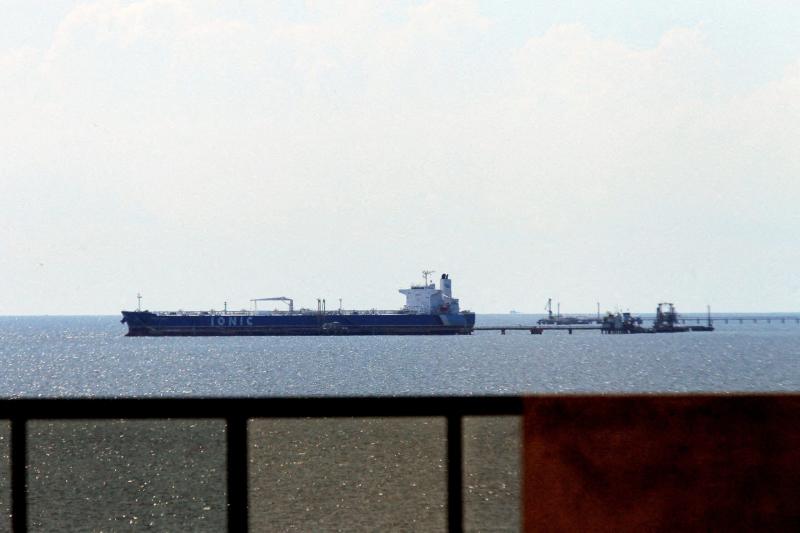
This past weekend marked a turning point for commercial shipping in the southern Caribbean.
Paul Morgan (gCaptain) - A military strike by the United States in Venezuela has captured President Nicolás Maduro and his wife, Cilia Flores, turning the region into a battleground for authority. This situation is compelling shipowners, charterers, and insurers to face new operational risks unlike anything seen in decades.
The operation, called Absolute Resolve, included airstrikes on military targets alongside a special forces mission that took the presidential couple from Fuerte Tiuna, the largest military complex in Venezuela. Maduro was then flown by helicopter to the USS Iwo Jima offshore and later transported to New York, where he appeared in federal court, pleading not guilty to charges of narcoterrorism.
The strike reportedly resulted in the deaths of at least eighty people, including thirty-two Cuban military personnel. Several shipping containers at La Guaira port were destroyed, with satellite images showing at least five warehouses burned and damage to port infrastructure. Power outages swept across Caracas, which was unusually quiet by Sunday, with most businesses closed.
The aftermath has created a dangerous power vacuum at sea. Venezuela’s Supreme Court has appointed Vice President Delcy Rodríguez as acting president for ninety days, although she initially resisted acknowledging the change. Defense Minister Vladimir Padrino López condemned the operation as a cowardly act while supporting Rodríguez’s temporary leadership.
Trump asserted that the U.S. would effectively govern Venezuela until a proper transition occurs and warned of a second, larger strike if the country does not cooperate. This complicated legitimacy means that ships approaching Venezuela must navigate a legal minefield as various factions may try to seize control of vessels for leverage or as targets.
The oil trade is particularly affected. Venezuelan crude and fuel oil continues to flow to Asian buyers via intermediaries and shadow fleet tankers despite existing sanctions, with ship-to-ship transfers in Venezuelan waters increasing by sixty-five percent from April to December. Trump stated that American companies would rebuild Venezuela’s oil infrastructure, and revenues from oil sales would support the transitional government. However, if a future Venezuelan government or international tribunal deems current loadings illegal, bills of lading and payment chains could be challenged, leading mainstream shipping companies to halt Venezuelan operations altogether, leaving higher-risk operators to fill in at elevated premiums.
So far, reactions in the oil market have been muted. U.S. crude prices dropped only half a percent to fifty-seven dollars per barrel at market opening Sunday, while Brent crude fell by twenty-two cents to sixty dollars and fifty-three cents. Analysts highlight that Venezuelan production and exports have already been declining since the U.S. imposed a maritime blockade last December, seizing multiple tankers. However, this overlooks the growing geopolitical risks now associated with operations in the Caribbean.
Insurance and finance sectors are under immediate strain. Venezuela has been categorized by the Joint War Committee as an area requiring additional premiums since 2022, which means vessels entering Venezuelan ports must declare their voyages for prior agreement with insurers. London underwriters are likely to act quickly to tighten conditions, increasing war-risk premiums. Insurance clubs and hull underwriters are expected to issue circulars demanding enhanced security measures and detailed routing plans, some may even require prior approval for fixtures involved with Venezuelan interests. Banks that previously viewed Venezuelan cargoes as high-risk may now withdraw entirely. Maritime insurance premiums for Caribbean transit have already risen, reflecting the higher perceived risks associated with voyages, even for ships not intending to dock in Venezuela.
The operational environment has become significantly more dangerous. The Federal Aviation Administration has banned U.S. aircraft from flying in Venezuelan airspace at any altitude. International airlines are rerouting flights to avoid Venezuela’s Flight Information Region, leading to longer, fuel-intensive routes, especially for flights south of Puerto Rico, Aruba, Curaçao, and Trinidad. An increased U.S. naval presence to enforce new regulations around Venezuelan oil could tighten security checks and boarding operations across southern Caribbean approaches to the Panama Canal, which handles about six percent of global trade. Ships may experience more frequent inspections and diversions, especially if there are orders to block unauthorized Venezuelan exports.
Risk managers are considering potential asymmetrical responses. Pro-Maduro militia members have told reporters they are armed and ready to fight. The country’s chain of command is in disarray, and threats of fast-boat harassment of tankers, drone attacks on offshore loading sites, or sabotage of underwater infrastructure remain possible. Venezuela’s Bolivarian Militia includes armed units ready to resist any further U.S. actions.
The geopolitical implications extend beyond Venezuela. Trump recently criticized Colombian President Gustavo Petro, warning that he wouldn’t remain in power for long due to drug-related activities. When asked if this meant a possible operation in Colombia, Trump said it sounded good to him. Petro responded, stating on social media that he had vowed never to take up arms again but would do so for his homeland. Secretary of State Marco Rubio somewhat downplayed claims about managing Venezuela, indicating that the U.S. would focus on enforcing an oil quarantine, but the damage to regional confidence had already occurred.
International reactions have been strong. Countries such as Brazil, Chile, Colombia, Mexico, Uruguay, and Spain condemned the operation as a troubling precedent for regional security. China's President Xi Jinping called it unilateral bullying, while Russia and Cuba denounced it as state terrorism. Iran expressed concern about becoming a target for U.S. actions. North Korea issued a strong condemnation, test-firing hypersonic missiles and citing the geopolitical crisis as justification. The United Nations Security Council convened on Monday at the request of Colombia, Russia, and China.
The diplomatic tensions may lead to retaliatory measures that could complicate shipping throughout the Caribbean. Cuba declared two days of mourning for the thirty-two Cubans killed, and both Cuba and Russia have substantial maritime ties with Venezuela, involving vessels, intermediaries, insurers, and ship management services in sanctioned trades. Russia has been expanding its maritime relationship with Venezuela through new voyages from Russian ports and ship-to-ship operations, creating what analysts refer to as a strategically opaque supply route.
In the upcoming days and weeks, much will depend on whether the U.S. limits its actions to the initial strikes and detainment or escalates toward a sustained military presence. Trump indicated that preparations for a second wave of strikes were made, although they were not executed. With Maduro now in custody, it remains uncertain what further targets might be pursued if Washington believes Venezuela is not cooperating.
At present, commercial operators must navigate newly redefined sea lanes. Higher premiums, stricter compliance requirements, competing claims of authority over ports and cargoes, along with the real possibility of further military action create a shipping risk profile in the Caribbean that is now notably more volatile than it was just days ago. This transformation impacts the entire southern Caribbean basin, where the precedent of regime change through military force and direct threats against Colombia have fundamentally shifted the dynamics for maritime trade in the Western Hemisphere.