
By Bruce Kimbrell (Policy Op-Ed)
In the past year, the White House has started turning its Maritime Action Plan and President’s FY2027 budget proposal into real actions through various maritime and industrial initiatives.
Transportation Secretary Sean Duffy has unveiled billions in funding for maritime and port projects. Acting Navy Secretary Hung Cao has shared a focused shipbuilding plan. Meanwhile, Maritime Administrator Stephen Carmel has highlighted the importance of logistics, energy security, and commercial resilience in congressional hearings.
This coordination across federal agencies is important as the country is now using its resources to improve infrastructure and rebuild its maritime capabilities. These efforts are part of a growing national strategy aimed at revitalizing its industry, ensuring supply-chain strength, and decreasing reliance on foreign maritime facilities—all of which rely on building up maritime capacity.
The main challenge is whether the U.S. can effectively coordinate its national efforts to create integrated maritime systems that connect shipping needs, shipbuilding, infrastructure, freight networks, funding, and workforce into a cohesive system that can support large-scale activity.
For successful outcomes, sustained activity rather than isolated projects is key, as sustained activity builds concentration, which in turn fosters maritime power. This is not just a theory; it’s how maritime strength has historically been formed.
Maritime Strength Grows Through Concentration
China’s maritime expansion wasn't about making every coastal city a little bit better. Instead, it focused investment in shipbuilding, manufacturing, port infrastructure, funding, and logistics in a few selected regions that support large-scale industry. This concentration was driven by focused demand through export-based production, state-driven procurement, and shipping routes that stabilized operations.
As a result, China developed regional maritime systems that support global shipbuilding, logistics, and export leadership. While the U.S. can't fully imitate that model, especially regarding overcapacity and non-transparent financing, American leaders can still focus innovation around strong maritime hubs through infrastructure investment and by creating consistent commercial demand.
The U.S. has already seen successful concentration in fields like aerospace in Southern California, tech in Silicon Valley, energy along the Gulf Coast, and naval industry in Hampton Roads. These areas thrived not from one-off projects but from decades of building supportive ecosystems. However, U.S. policymakers have not yet applied this concentration logic specifically to maritime competition.
Concentration isn’t a catch-all solution, nor should all investment go to select areas. However, Maritime Prosperity Zones (MPZs) can help organize national efforts to leverage U.S. strengths in naval power, technology, logistics, and maritime services.
Understanding Maritime Prosperity Zones
This is where Maritime Prosperity Zones become crucial.
An MPZ is a defined geographic area where infrastructure, logistics, industrial activity, workforce training, funding, maritime security, and commercial needs are actively coordinated to strengthen maritime power in key regions.
Not every area will need equal focus. MPZs pinpoint where public and private efforts can work together to build lasting national advantages.
The goal isn’t centralized economic control but rather aligned efforts to enhance effectiveness. MPZs aren't just vague economic development initiatives or permanent subsidy programs; they are structured ways to establish solid maritime hubs by aligning current authorities with private interests.
Their aim is to enhance U.S. maritime capabilities, resilience, and strategic reach through ongoing collaboration between public authorities, private investment, and the maritime industry. This includes better control over the movement of strategic cargo linked to energy, critical minerals, fisheries, underwater infrastructure, and defense logistics.
Why Alaska Should Be the First Maritime Prosperity Zone
If the U.S. is serious about rebuilding its maritime strengths, it should focus on regions where geography plays a crucial role.
Energy flows, resource competition, military presence, underwater infrastructure, Arctic shipping access, and great-power rivalries are all converging in the High North.
Russia has already militarized large parts of the Arctic, while China increasingly sees the area as a future commercial corridor. Cargo traffic on Russia’s Northern Sea Route reached about 38 million tons in 2024, more than double from a decade ago. While this may seem small in global trade, it’s significant as a sign of growing Arctic maritime activity driven by consistent routes, infrastructure improvements, and state-supported logistics.
Meanwhile, the U.S. risks facing the next phase of Arctic competition without sufficient infrastructure, industrial depth, and a unified maritime presence. This isn’t just a lack of awareness; it’s a critical gap in the ability to implement strategies quickly enough for the region’s demands.
Establishing an MPZ in Alaska represents a larger strategic change where Arctic geography is becoming more essential than traditional infrastructure investment patterns. In this context, an MPZ is more than just a maritime program; it’s a method for ensuring consistent U.S. access, presence, and competitiveness in a region that increasingly matters for national interests.
Implementing the Arctic MPZ
The initial focus should be less on flashy announcements and more on creating continuity in the Arctic maritime environment. This involves modernizing ports in Anchorage, Nome, and Dutch Harbor, improving fuel storage, enhancing sealift support capacities, and strengthening logistics for Arctic conditions.
The first steps are straightforward: prioritize current contracts, form an interagency MPZ task force through the Department of Commerce and MARAD, and use targeted federal support to align commercial and defense demand. These measures can begin right away using existing authority. More importantly, they translate strategic plans into early actionable efforts, enabling private operators, investors, and maritime industry players to see a reliable path ahead.
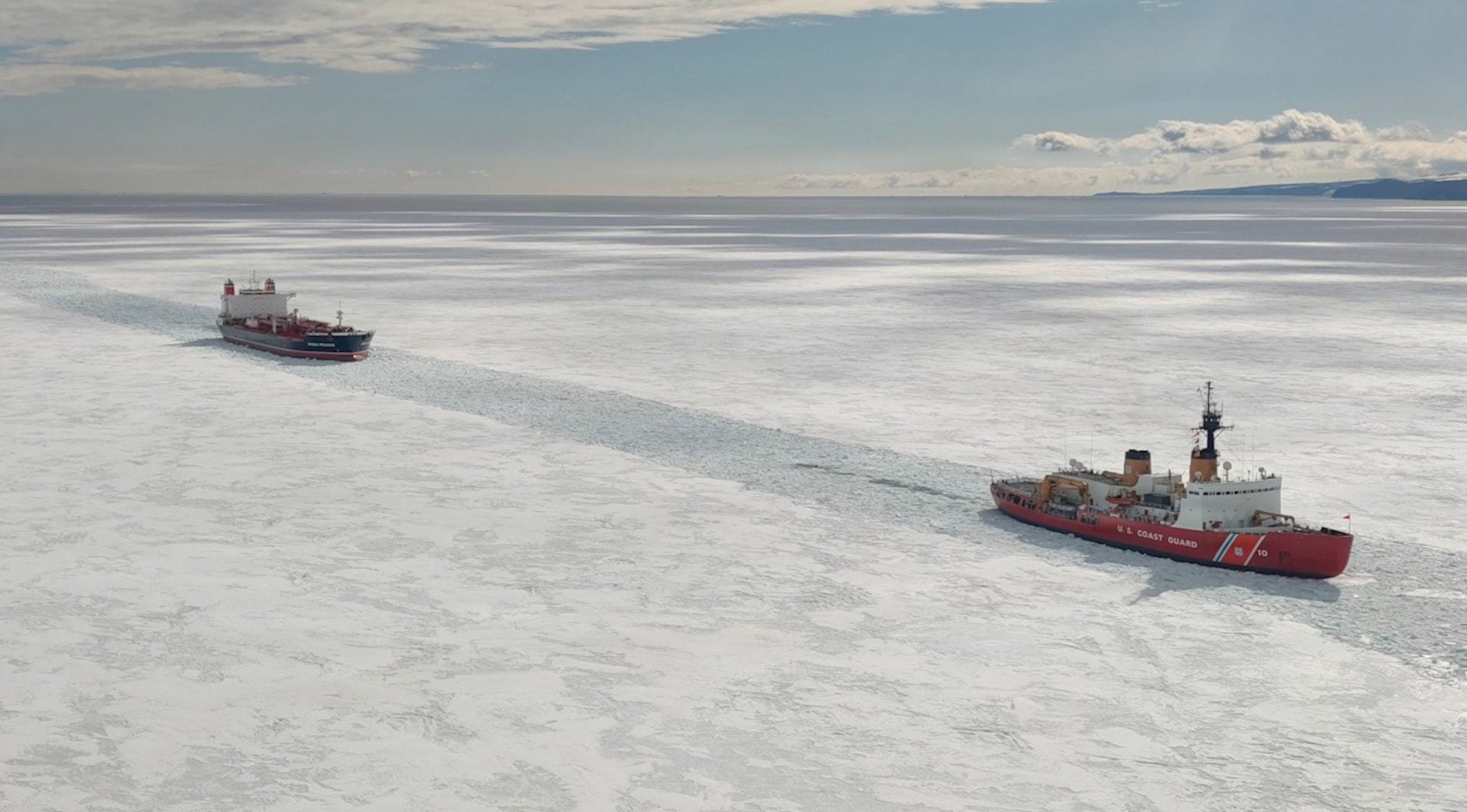
The region should also promote closer integration between commercial operators and the Coast Guard, as well as boost Arctic navigation, surveillance, and operational capabilities.
Federal coordination can drive effective U.S.-flag shipping activities on Arctic routes and meet regional freight demands. Initial efforts will be gradual, but they must be continuous rather than sporadic.
Over time, this environment can support growth in port capacity, vessel maintenance, offshore energy services, logistics technology, unmanned maritime systems testing, fisheries support, and military transport operations linked to ongoing commercial and defense needs.
The objective isn’t just about one infrastructure project but about creating a functioning maritime operating environment that supports ongoing commercial, industrial, and security operations.
Once established, an Arctic MPZ in Alaska could serve as a model for future Maritime Prosperity Zones in other U.S. maritime regions.