
Amid rising geopolitical tensions in the Strait of Hormuz, which accounts for about 20% of the world's oil and liquefied natural gas (LNG) transportation, we are seeing attacks, blockades, and pressures that reveal the fragility of global maritime fuel supply chains. The issues with safe passage through this vital waterway highlight the dangers of depending on a single point for transporting critical energy supplies. As a result, delays, rerouting, and increasing shipping costs are leading to higher, unpredictable expenses for shipping companies. This uncertainty is pushing governments, shipping firms, and investors to quickly seek out viable alternatives as supply timelines become less reliable.
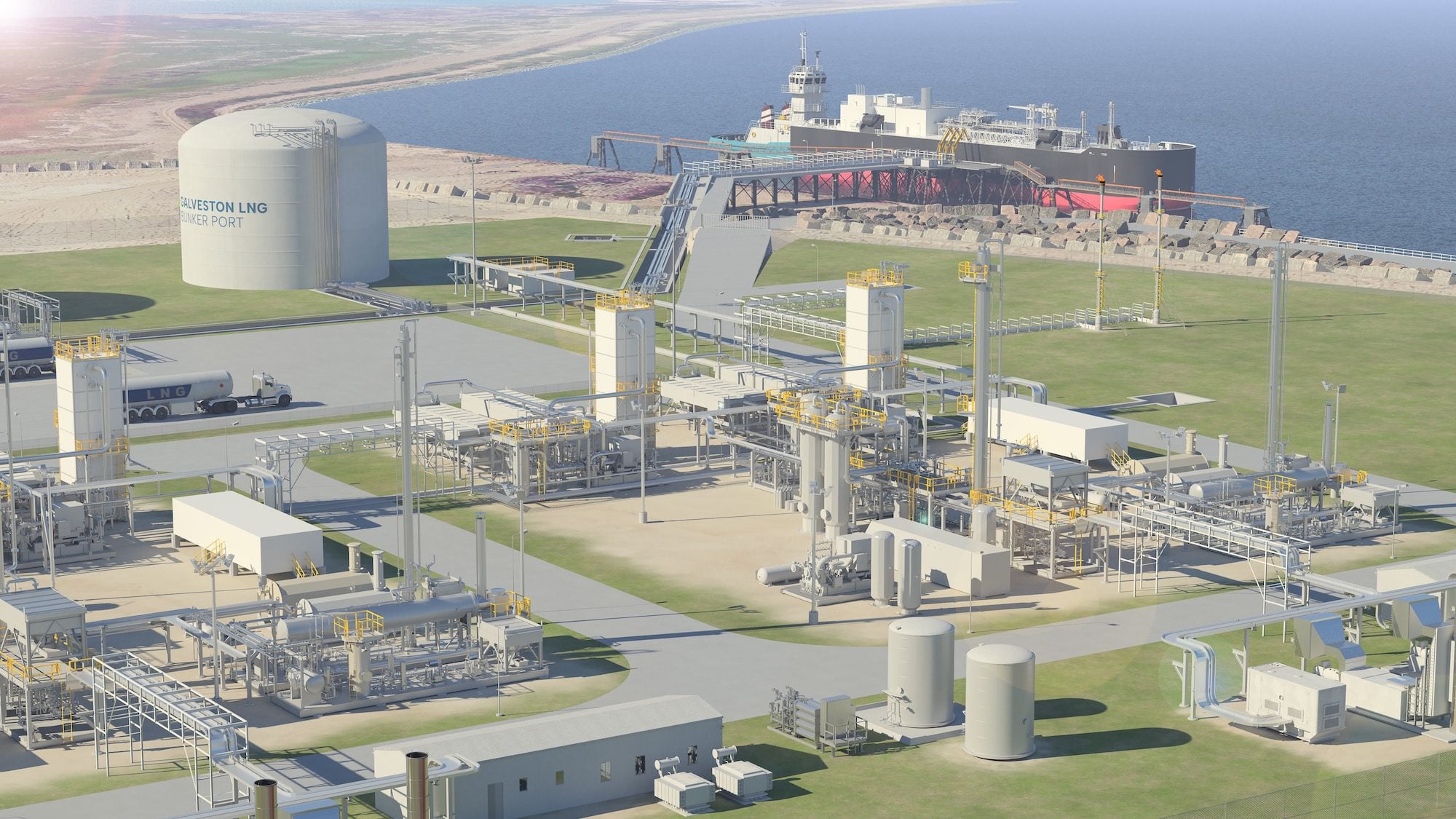
Although the United States is the largest producer of liquefied natural gas, we still lack a fully developed infrastructure for maritime fuel transportation. Many in the industry recognize this shortfall and are actively working to address it, especially as risks continue to grow. One significant development is happening in the Greater Houston Port System, where the Galveston LNG Bunkering Port (GLBP) is working on the first dedicated marine LNG fueling facility on the U.S. Gulf Coast, aiming for initial deliveries by 2027.
The GLBP is set to feature two liquefaction trains with a combined capacity of 600,000 gallons per day, alongside two storage tanks that hold 3 million gallons each, and a loading berth for bunker vessels. This facility will supply LNG by barge to ships visiting the Port of Galveston, Port Houston, and the Port of Texas City. This is a vital step in enhancing LNG capabilities in the U.S., where dedicated bunkering facilities are currently lacking along the Gulf Coast.
This development coincides with calls from Washington for a stronger and more self-sufficient U.S. maritime industrial base. There are also plans to increase LNG exports to Europe, which has pledged $750 billion in U.S. energy purchases to lessen its reliance on Russian gas. However, while agreements are being made, the U.S. still lags behind European facilities where LNG can be directly pumped into dual-fuel vessels.
The GLBP provides a straightforward model for ensuring a steady supply of U.S.-produced LNG in busy shipping lanes. We need to think strategically about how to effectively transport more LNG at sea, and quickly. While LNG terminals are located outside of Texas, including in Louisiana, Maryland, Georgia, and Alaska, they are primarily focused on exports to international markets. To expand critical LNG infrastructure, more off-take agreements are needed. In a capital-intensive field like maritime energy, developers and investors look for clear, long-term demand signals before committing to major projects. Off-take agreements offer ship operators predictable supply while guaranteeing volumes for producers and showing long-term viability for investors.
On a positive note for U.S. LNG, prices have remained stable despite geopolitical uncertainties. This stability is largely because of the Henry Hub pricing benchmark, which has remained around $3 per MMBtu since the Strait of Hormuz faced restrictions. This pricing index highlights an advantage for U.S. LNG, as it is based on plentiful domestic production and an extensive pipeline system that shields it from geopolitical disruptions, unlike other sensitive global benchmarks like the Title Transfer Facility (TTF) in the Netherlands or the Japan Korea Marker (JKM).
In addition to price stability, LNG is an environmentally-friendly shipping option that helps shipowners reduce emissions without sacrificing reliability. This allows operators to comply with tighter International Maritime Organization standards and local regulations without needing to redesign their ships.
As global energy markets become more interconnected and vulnerable to geopolitical risks, the push for a stronger, more reliable fuel system in the U.S. and worldwide is more critical than ever. The growing gap between unstable, import-reliant systems and stable domestic supplies, combined with disruptions affecting fuel markets and shipping networks, underscores the importance of access to U.S.-produced LNG. To address these challenges, we need ongoing investments in essential infrastructure like the GLBP to boost energy resilience and expand scalable fueling capacity across key U.S. maritime routes and international ports.