
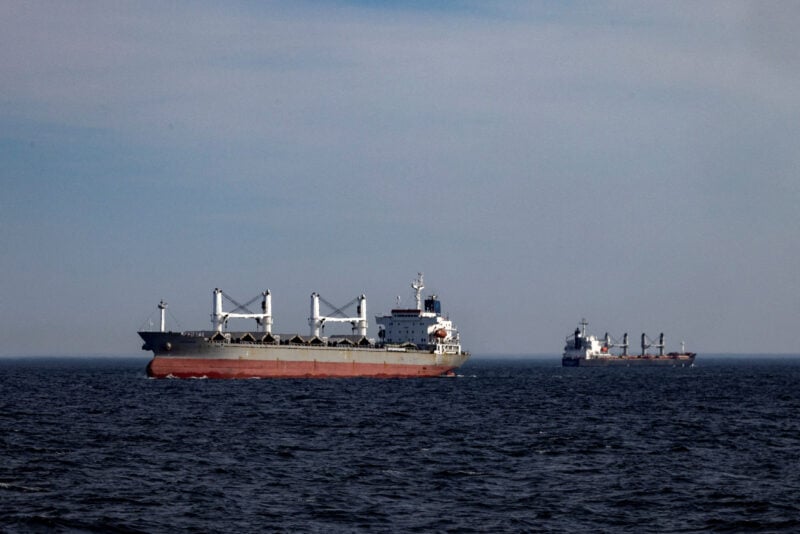
By Pyotr Kozlov (Bloomberg) — Baltic grain exporters are experiencing increased demand as blocked supplies from the Black Sea region push buyers to look for other sources.
In August, around 1 million tons of wheat have been booked for loading at ports in Latvia, Lithuania, and Estonia, according to data from market observer CM Navigator. This marks a 50% increase compared to the previous year, following a tripling of bookings in July.
Buyers from Turkey, the United Arab Emirates, and Sudan—traditional customers of Russian wheat—are showing interest. Additionally, there’s a notable rise in demand from typical Baltic grain customers like Nigeria and South Africa, as reported by the Vilnius-based trading firm Scandagra.
The increase in demand from the Baltic states, a major exporting region in the European Union, highlights the growing need for alternatives to Black Sea grain as Russia and Ukraine intensify their attacks on each other’s shipping and port facilities. This situation has disrupted shipments from the region and raised concerns about global supplies, driving wheat prices to a three-year high this week.
“We are witnessing a significant shift in demand,” said Karolis Tarasevicius, the head of agri-commodities trading at Scandagra in Lithuania and Latvia. “If the situation continues for another week or two without an agreement between Russia and Ukraine, we expect to see more shipments to less traditional destinations like Turkey, Sudan, Libya, and Egypt.”
Following the collapse of peace talks, Russia is now preparing to increase its attacks on Ukraine, particularly targeting infrastructure, according to sources close to the Kremlin. The frameworks for dialogue have effectively fallen apart, leaving both sides at a stalemate.
However, Baltic wheat is currently more expensive than Russian grain, which is holding back some buyers from finalizing contracts, noted Gintaras Pauza, the head broker at Copenhagen Merchants’ Lithuania office in Kaunas.
Despite widespread damage to the EU’s grain harvests due to a series of heat waves this summer, which has limited the bloc’s export potential, Baltic crops have benefited from wetter conditions. The region expects to have about 6 million tons of wheat available for export this season, according to CM Navigator.
“Ultimately, there has been a significant drop in wheat exports from Russia and Ukraine in August that needs to be compensated for,” said Donatas Jankauskas, an analyst at CM Navigator.