
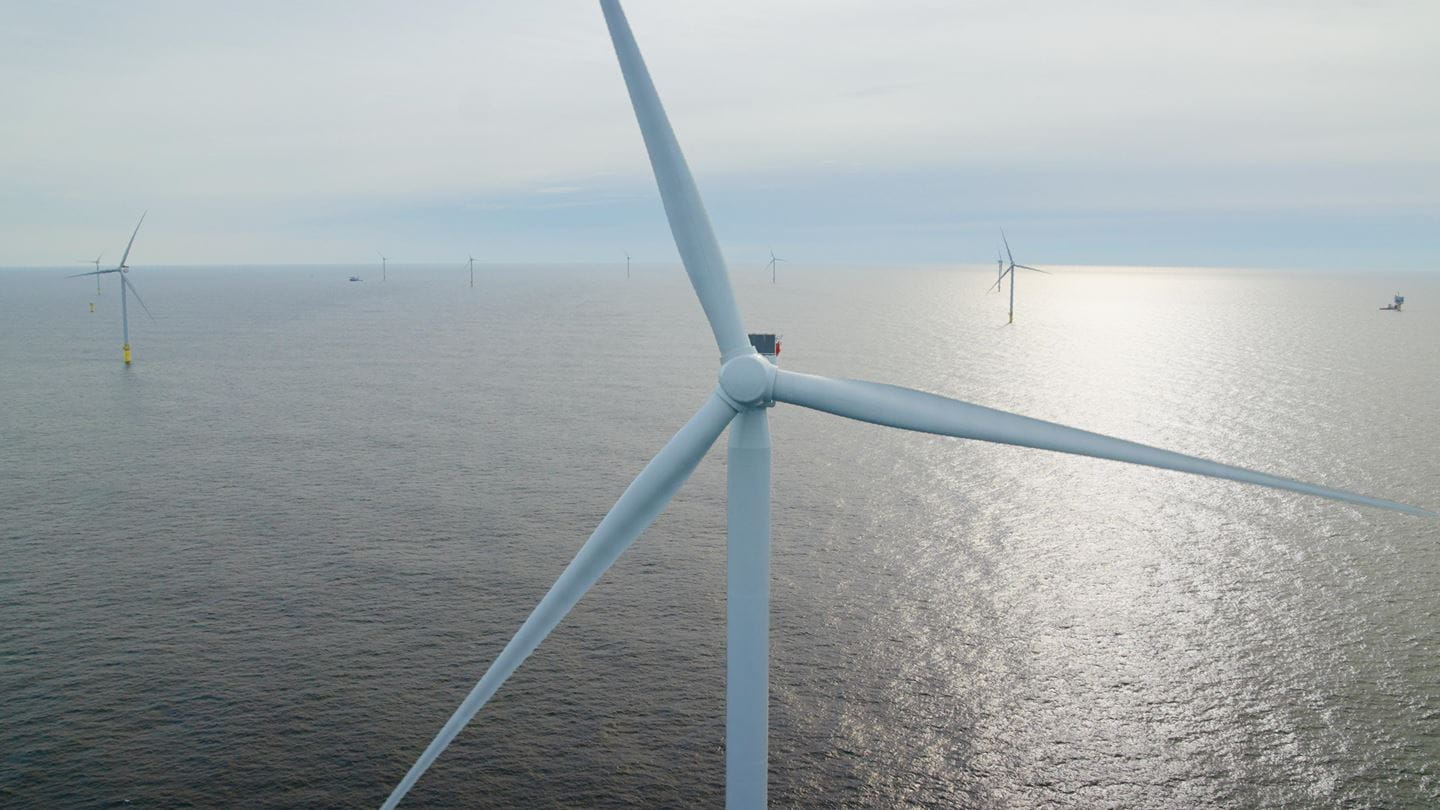
This week, the Trump administration surprised the energy industry by halted construction on five large offshore wind projects. This decision puts billions of dollars in investments at risk and leaves thousands of workers uncertain as the holiday season approaches.
On December 22, the Department of the Interior issued immediate stop-work orders for all major offshore wind projects on the East Coast, citing national security issues highlighted in classified reports from the Department of War. The projects affected include Vineyard Wind 1, Revolution Wind, Coastal Virginia Offshore Wind (CVOW), Sunrise Wind, and Empire Wind 1. Together, these initiatives involve over $10 billion in investments and have the potential to power more than 2 million homes.
“The primary responsibility of the U.S. government is to ensure the safety of its citizens,” stated Secretary of the Interior Doug Burgum. “Today’s decision addresses emerging national security threats, particularly those related to advancing adversarial technologies and the vulnerabilities posed by large wind projects close to major population centers on the East Coast.”
The administration justified the halt based on concerns about radar interference from large turbine blades and reflective structures. Officials warn that this interference, known as “clutter,” may obscure real targets and create false radar readings. A Department of Energy report in 2024 noted that while radar settings can be adjusted to minimize this clutter, such adjustments might lead to genuine targets being missed.
Projects Affected During Construction
The timing of these orders has been particularly damaging for projects nearing completion. Revolution Wind, a joint venture between Ørsted and Skyborn Renewables, was already 80% finished, with all offshore foundations in place and 45 of 65 wind turbines assembled. The project had secured 20-year power purchase agreements to deliver 704 megawatts to Rhode Island and Connecticut.
Empire Wind, developed by Equinor, was over 60% completed, featuring dozens of vessels and nearly 1,000 workers engaged in trenching, cable-laying, and installation. The project carries a gross value of about $3.1 billion and has secured roughly $2.8 billion in financing.
The Coastal Virginia Offshore Wind project, initiated by Dominion Energy, was just “months away” from generating its first power. This project aims to produce 2,600 megawatts, supporting a rapidly growing segment of the U.S. energy grid that includes crucial military installations and major data centers.
Dominion has spent several years developing the Charybdis, the first U.S.-built, Jones Act-compliant wind turbine installation vessel, which completed its sea trials in September and is awaiting final commissioning.
Industry Response Grows
The announcement has faced strong backlash from energy companies, labor unions, and industry associations, many of whom stress that all suspended projects had already passed extensive national security evaluations under previous administrations.
“All the projects suspended today underwent thorough national security reviews during both the Trump and Biden administrations,” said Jason Grumet, CEO of the American Clean Power Association. “This decision only adds unnecessary uncertainty for companies looking to develop energy projects in the U.S. Today, the biggest threat to a reliable energy system is an unstable political environment.”
AFL-CIO President Liz Shuler criticized the administration’s move as an “irresponsible policy that could take America backward,” expressing concern for the thousands of workers left in uncertainty during the holidays. She stated, “It makes no sense to eliminate solid union jobs on projects that are ready to provide power to the grid.”
Dominion Energy pointed out that CVOW has been in communication with military officials for over ten years and is situated 27 to 44 miles offshore. The company emphasized that two pilot turbines have been operational for five years, “without causing any national security issues.”
Equinor asserted that Empire Wind has worked closely with federal authorities on national security assessments since it signed its lease in 2017, complying with all national security protocols identified in regulatory reviews.
Concerns About Jobs and Grid Reliability
These suspensions could lead to massive job losses and economic reach. Revolution Wind has generated approximately 2 million labor union hours, while Empire Wind has employed about 4,000 workers during its construction phase. Ørsted’s offshore projects in the U.S. have accounted for around 4 million labor union hours so far.
Energy companies warn that extensive delays might affect the reliability of the power grid during a time of rising electricity demand. Dominion Energy has made it clear: “Halting CVOW for any substantial period may jeopardize grid reliability for crucial military, AI, and civilian resources, leading to energy price increases and threatening thousands of jobs.”
The industry also points out the successful operation of existing projects. Revolution Wind highlighted that the adjacent South Fork Wind facility maintained a capacity factor of 53% for the first half of 2025, similar to New York’s base power sources.
Legal and Political Challenges
The new orders come just weeks after a federal judge overturned a broader directive from the Trump administration that sought to pause all federal approvals for wind energy projects. Earlier this month, U.S. District Judge Patti Saris ruled that the agencies had “failed to provide sound justifications” and could not “legally deny reviews of permit applications indefinitely” as per the Administrative Procedure Act.
Secretary Burgum has also raised economic concerns, tweeting that “offshore wind will INCREASE electricity prices in the Northeast,” noting that Empire Wind charges “New Yorkers more than TWICE the local grid price for energy.”
Companies impacted by the order are now exploring their options, which may include legal action. Ørsted stated it is “reviewing all available options for a quick resolution” to aim for a commercial operation date in the second half of 2026. The company plans to update the market on the potential effects of this order on its upcoming rights issue.
As the offshore wind sector faces this latest hurdle, the broader consequences remain uncertain. With billions of dollars in investments on hold and thousands of jobs at stake, the next few weeks will be crucial in determining if these projects can navigate the new political landscape or if the administration’s security concerns will permanently alter the future of offshore wind in America.