
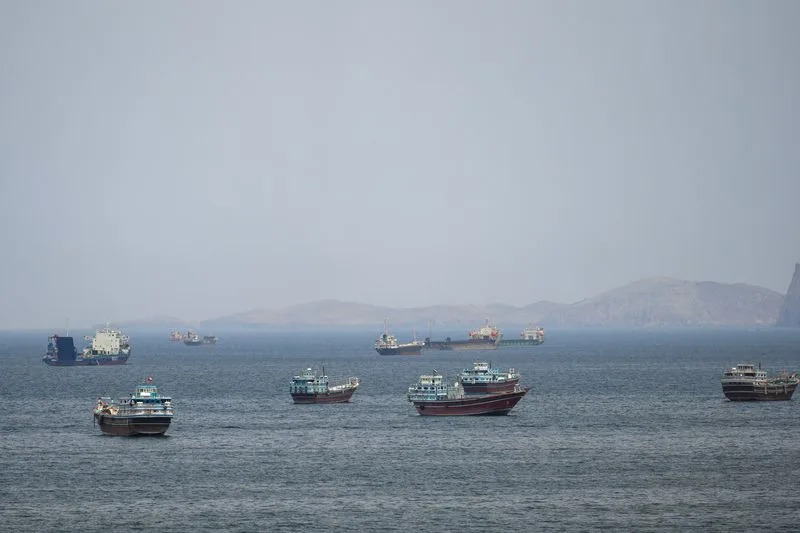
LAUSANNE, April 22 (Reuters) – Asian ship owners may start navigating through the Strait of Hormuz soon, as a fragile ceasefire between the U.S. and Iran continues. These ship owners are more willing to take risks and can afford tolls, unlike Western companies that comply with sanctions, shipping executives said at the FT Commodities Global Summit on Wednesday.
Since the end of February, hundreds of tankers and other vessels have been stranded in the Middle East Gulf, unable to cross the strait. This has severely affected global oil and liquefied gas supplies, marking the largest energy supply disruption ever.
Some tankers and cargo ships managed to leave the Gulf last Saturday, but Iran quickly interrupted this by firing shots and ordering other vessels to return to the Gulf. On Wednesday, at least three container ships were hit by gunfire in the strait.
“For companies that are willing to bypass OFAC sanctions, the safety aspect is still present. If government communications have resolved issues, can the Indian navy send a convoy through? Can a Chinese convoy make it? Yeah, probably,” said Larry Johnson, global head of freight at Mercuria. OFAC refers to the U.S. Department of the Treasury’s Office of Foreign Assets Control.
The ships that have managed to transit the strait have generally been government-owned vessels that benefit from government communications with Iran or naval support, which merchant traders do not have, he added.
"Certain regions will likely be able to pass through, and it’s probable that we will see more of this in the coming weeks, while others won't be able to," said Peter Weernink, CEO of SwissMarine, pointing out Indian, Iraqi, and Chinese vessels.
TOLLS
Tehran is also increasing its control over the strait by imposing tolls along with Iran’s Islamic Revolutionary Guard Corps, which is under sanctions.
Rising costs and ongoing safety concerns may continue to affect traffic through Hormuz, according to Andrew Jamieson, co-head of Gunvor’s Clearlake shipping arm. He noted that the Advanced War Risk Premium is expected to rise in the short term, and crews might refuse to take the risk or demand higher pay for doing so.
"If your crew doesn’t feel safe, they don’t have to go," he mentioned.
The global shipping fleet would likely respond quickly to a reopening of Hormuz, said Roger Horton, Chief Commercial Officer of Clarkson's, even though many vessels have already left the Middle East to pursue business in the Atlantic Basin due to high freight rates.