
By Yongchang Chin and Rakesh Sharma
Jul 23, 2026 (Bloomberg) – Some buyers of crude oil in Asia are discussing with Saudi Aramco the possibility of diverting shipments around Africa. This comes after Houthi attacks on tankers in the Red Sea, according to traders familiar with the situation.
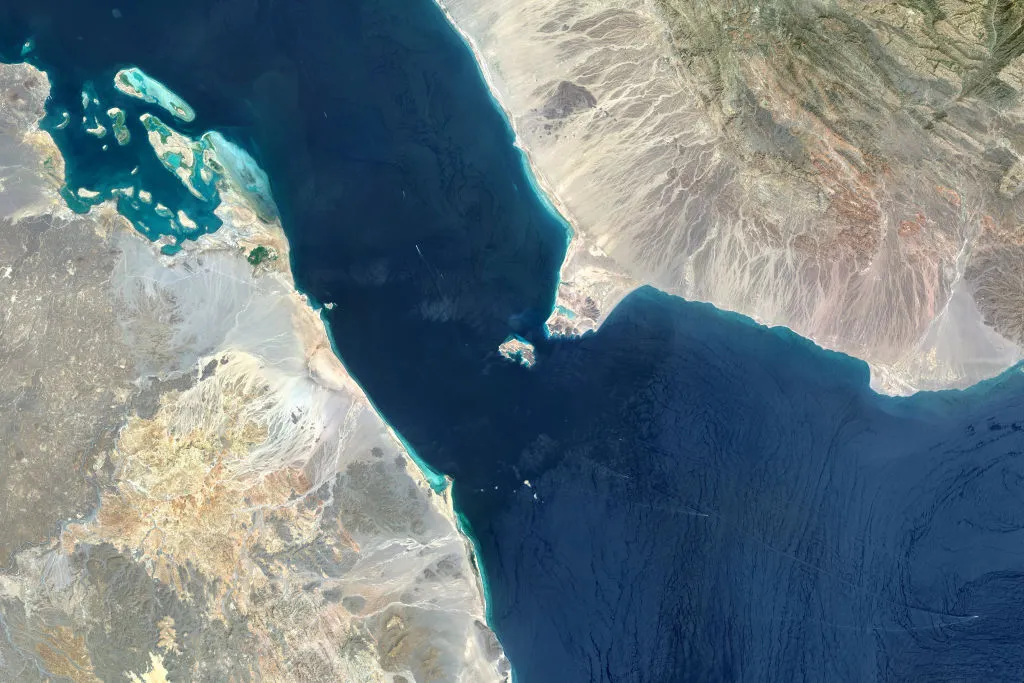
Traders, who prefer to remain unnamed due to the private nature of the discussions, said that refiners are considering alternatives to the Bab el-Mandeb Strait, located at the southern end of the Red Sea. One potential solution could involve shipping oil from Egypt’s Sidi Kerir port in the Mediterranean instead of using Saudi Arabia's Yanbu hub in the Red Sea.
If Asian buyers choose to receive crude from the Mediterranean, one option could involve Aramco transporting oil from Yanbu to Ain Sokhna, an Egyptian Red Sea port, before sending it north through a pipeline. Alternatively, buyers could manage the logistics in Egypt after picking up the oil from Yanbu.
Indian state-owned refiners are also looking into the possibility of transporting crude through the Suez Canal using smaller ships. After that, they would transfer the cargo to very large crude carriers at a European hub for delivery to South Asia, circumventing Africa. This route has not been used by these companies before.
Currently, discussions are still in progress, and no decisions have been made, as reported by the traders. Saudi Aramco has not commented on the matter.
If shipments that were originally planned for the shorter route through the Red Sea and Bab el-Mandeb Strait are redirected, it could lead to significantly longer journeys via Egypt and around South Africa, adding up to a month to transport times, according to the traders.
Indian refiners are willing to pay higher shipping costs for these more complicated routes due to tight supply conditions, sources revealed.
The global oil market is experiencing new challenges as Iran-backed Houthi militants in Yemen claim to have attacked two tankers in the Red Sea. This escalation adds further risk to regional energy supplies after months of instability. The Red Sea route is crucial for millions of barrels of crude oil that cannot pass through the Strait of Hormuz due to tensions between Washington and Tehran.
On Thursday, oil futures surged again as traders anticipated the impact of the recent attacks, which could escalate an ongoing conflict. Brent crude exceeded $98 a barrel, marking an increase of over a third this month.
Shipping oil via Egypt is usually how Saudi Arabia delivers to customers located west of the Suez Canal. Since very large crude carriers do not fit through the canal, smaller vessels or pipelines are commonly used for these shipments.