
A US dredging company is raising concerns about the bid conditions for a major concession in Argentina, led by President Javier Milei. They believe the terms favor a consortium with previous connections to China.
The Great Lakes Dredge & Dock Company plans to help deepen the Paraná River if its partner, DEME from Belgium, wins the bid they submitted in February. DEME is up against a group led by another Belgian company, Jan de Nul NV, which has worked on the Paraná since the 1990s. A winner could be announced as early as May or June.
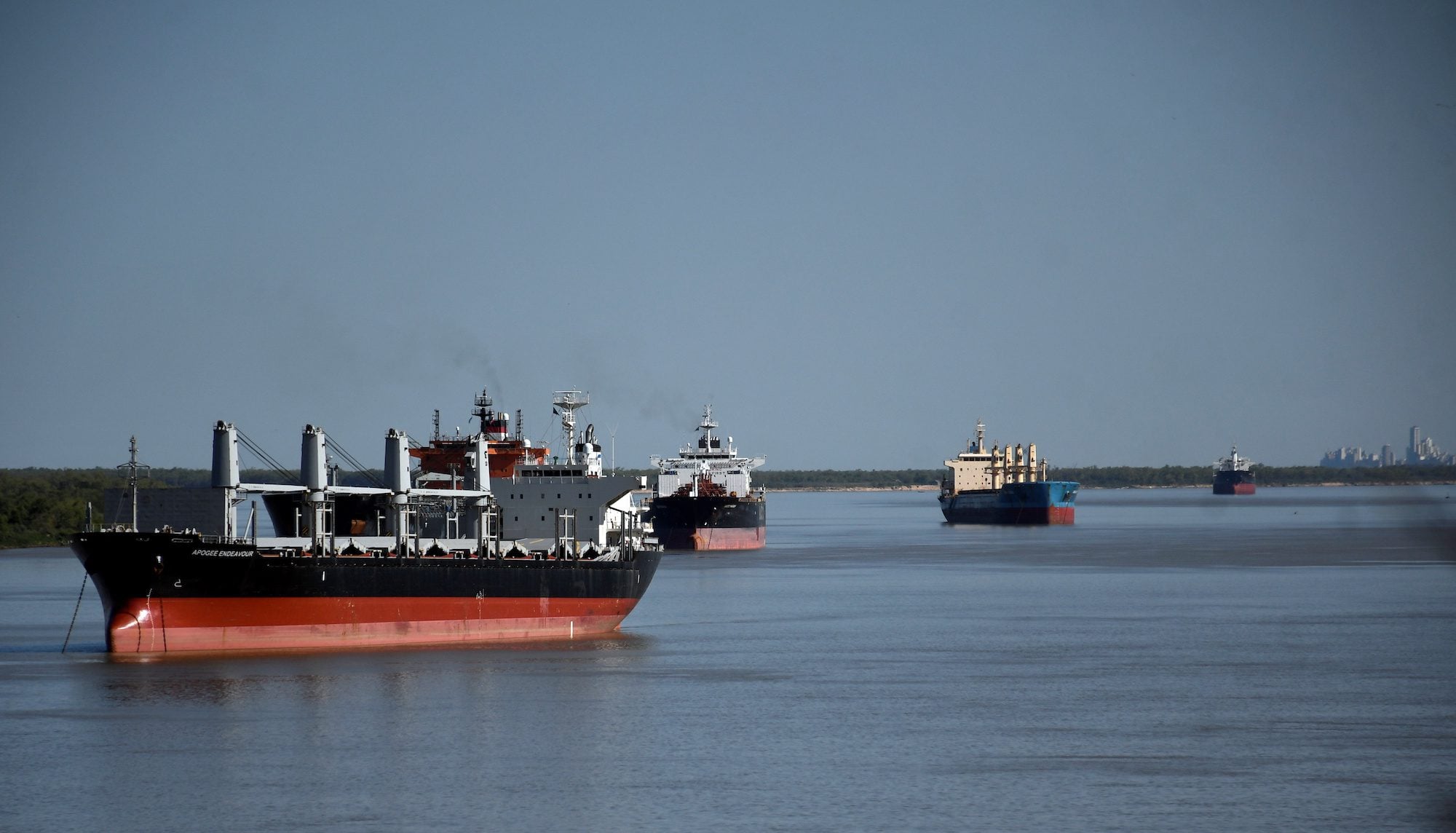
The Paraná River is crucial for Argentina’s economy, as it transports most of the country’s grain exports. Deepening this river, which has been problematic for ships, is a key infrastructure project in Milei's plan to boost Argentina’s economy.
Milei's auction excludes state-owned entities, leading to speculation that the libertarian leader aimed to limit Chinese company involvement, aligning himself with the US government's stance under President Trump to reduce Chinese influence in Latin America.
After a $20 billion bailout from the US in October, the US Treasury Secretary indicated Milei is “committed to getting China out” of Argentina, including in port operations.
The auction in Argentina, while appearing to be a contest between two Belgian dredging companies, actually has support from the US on one side and historical ties with China on the other.
The Argentine government has stated that Great Lakes did not raise any complaints during months of discussions about the concession terms. Meanwhile, China has not commented on the exclusion of its state-run companies.
DEME had previously expressed concerns over these same terms, claiming they unfairly favored Jan de Nul. Before new auction conditions were announced, DEME described Argentina as a strategic market and highlighted the importance of a fair process.
Great Lakes, the largest US dredging company, sees a disadvantage in the bidding process due to contract conditions that seem to favor Jan de Nul, which has been a long-time partner on the Paraná.
Chris Gunsten, senior vice president at Great Lakes, mentioned in an interview, “The tender seems to favor the incumbent. It raises doubts about whether the outcome is predetermined.”
Additionally, advisers from DEME and Great Lakes noted that Jan de Nul’s partner, Servimagnus SA, has previously collaborated with China’s state-run CCCC Shanghai Dredging Company. However, there are no Chinese firms listed in the current bid.
Jan de Nul did not comment through local representatives. Servimagnus acknowledged its past work with CCCC but clarified that it currently has no commercial ties with any Chinese company or government, emphasizing its own technology for operations.
DEME confirmed that it submitted its bid on February 27, which includes Great Lakes and New York-based Clear Street Group Inc. Great Lakes is focused on the dredging work, and discussions about a potential equity stake in the project are ongoing.
DEME has also worked in China as part of its global operations and had partnered with Shanghai Dredging and Servimagnus on a previous tender for the Paraná that was later canceled.
Among the issues troubling Great Lakes is Argentina's requirement for a price floor, which Gunsten described as unprecedented. The concession also specifies that bid contenders must have dredged 250 kilometers (156 miles) of river, a criterion only Jan de Nul has met during its decades of work on the Paraná.
Companies opposing any requirements must submit a $10 million "objection bond," which Argentina can keep if the objection is rejected.
Gunsten remarked, “I’ve never seen a price floor in my 34 years in the dredging industry. Normally, owners seek the best price while maintaining quality.”
DEME dredges millions of cubic meters yearly, he added, and tying the requirement to a continuous stretch of river is unrealistic.
Iñaki Arreseygor, head of the National Agency of Ports and Waterways overseeing the tender, mentioned they received over 200 inquiries from interested parties, none of which were from Great Lakes. "They showed no interest," he noted.
Arreseygor also suggested that DEME could have included Great Lakes as a partner in its bid but chose not to. “We have a transparent process in place,” he said.
He cited a UNCTAD report recommending a price floor to prevent price dumping and monopolistic practices. “We’re not surprised by actions aimed at undermining a fair process,” he added, referring to Great Lakes.
After Great Lakes initiated discussions in November, DEME secured letters of financial intent from the Development Finance Corporation and International Finance Corporation if they win the tender. Gunsten and his team met with US Ambassador Peter Lamelas in Buenos Aires last week.
Consultants advising DEME believe China's reluctance to comment on the tender is puzzling, especially with the exclusion of state firms, pointing to Servimagnus’s past connections with Shanghai Dredging.
“It seems like a shell game, where they hide the truth,” said Steve Bovo, a consultant at Corcoran Partners, advising DEME’s consortium. “The Chinese are competitive worldwide and likely have no issues with being excluded from bidding here in Argentina.”