
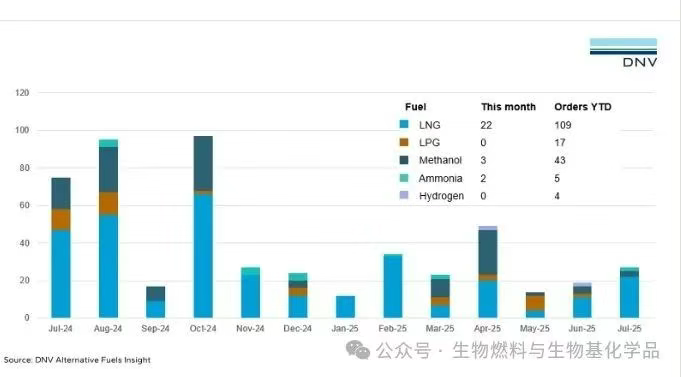
Orders for vessels using alternative fuels decreased in the first half of 2026, but LNG (liquefied natural gas) still led new shipbuilding activities. Shipowners preferred established fuel technologies while remaining open to new alternatives.
Recent data from DNV's Alternative Fuels Insight (AFI) platform shows that in the first six months of 2026, shipowners placed orders for 137 vessels powered by alternative fuels. This is a drop from 155 orders in the same period last year.
In June alone, there were 15 new orders, including 10 LNG-powered vessels—nine car carriers and one CO2 carrier—along with five LPG/ethane carriers. Additionally, there were two orders for LNG bunker vessels, bringing the total number of LNG bunker vessel orders to seven for this year.
LNG stayed the top choice for alternative fuel in 2026, making up 73 out of the 137 vessel orders. Most of these were containerships (42) and car carriers (21), showing that there is still strong demand in areas where LNG infrastructure is already in place.
Orders for LPG and ethane-fueled vessels were also on the rise, with 55 orders noted in the first half of the year, a significant increase from 15 orders during the same time in 2025. The rest of the orders included four ammonia-fueled vessels, two methanol-fueled vessels, two ethanol-fueled vessels, and one hydrogen-fueled vessel.
While new orders slowed down, deliveries of vessels continued to grow the global fleet powered by alternative fuels. In the first half of 2026, 61 LNG-fueled vessels and 38 methanol-fueled vessels were added to service.
This period also marked a significant achievement for ammonia, as the Belgian gas shipping company Exmar received the world's first oceangoing dual-fuel ammonia vessel. Unlike previous demonstration projects, this vessel is meant for commercial use, indicating steady progress toward wider acceptance of ammonia as a marine fuel.
“From the first half of 2026 viewpoint, it's clear that the alternative fuels orderbook is advancing at different rates, depending on factors like segment economics, fuel availability, and regulatory conditions,” stated Jason Stefanatos, Global Decarbonization Director at DNV Maritime.
“Shipowners and others are taking different routes based on their unique priorities and needs.”
Stefanatos mentioned that LNG remains the primary short-term fuel choice, predominantly in container shipping and car carriers. Meanwhile, the rising demand for LPG and ethane-fueled vessels, along with ongoing activities in ammonia and ethanol, shows that the industry's decarbonization efforts are still evolving.
These figures highlight a larger trend in the shipping sector's shift toward cleaner energy. Instead of settling on one alternative fuel, owners are diversifying their options as regulations tighten and factors like fuel availability, infrastructure, and economics continue to change across various trades and vessel types.