
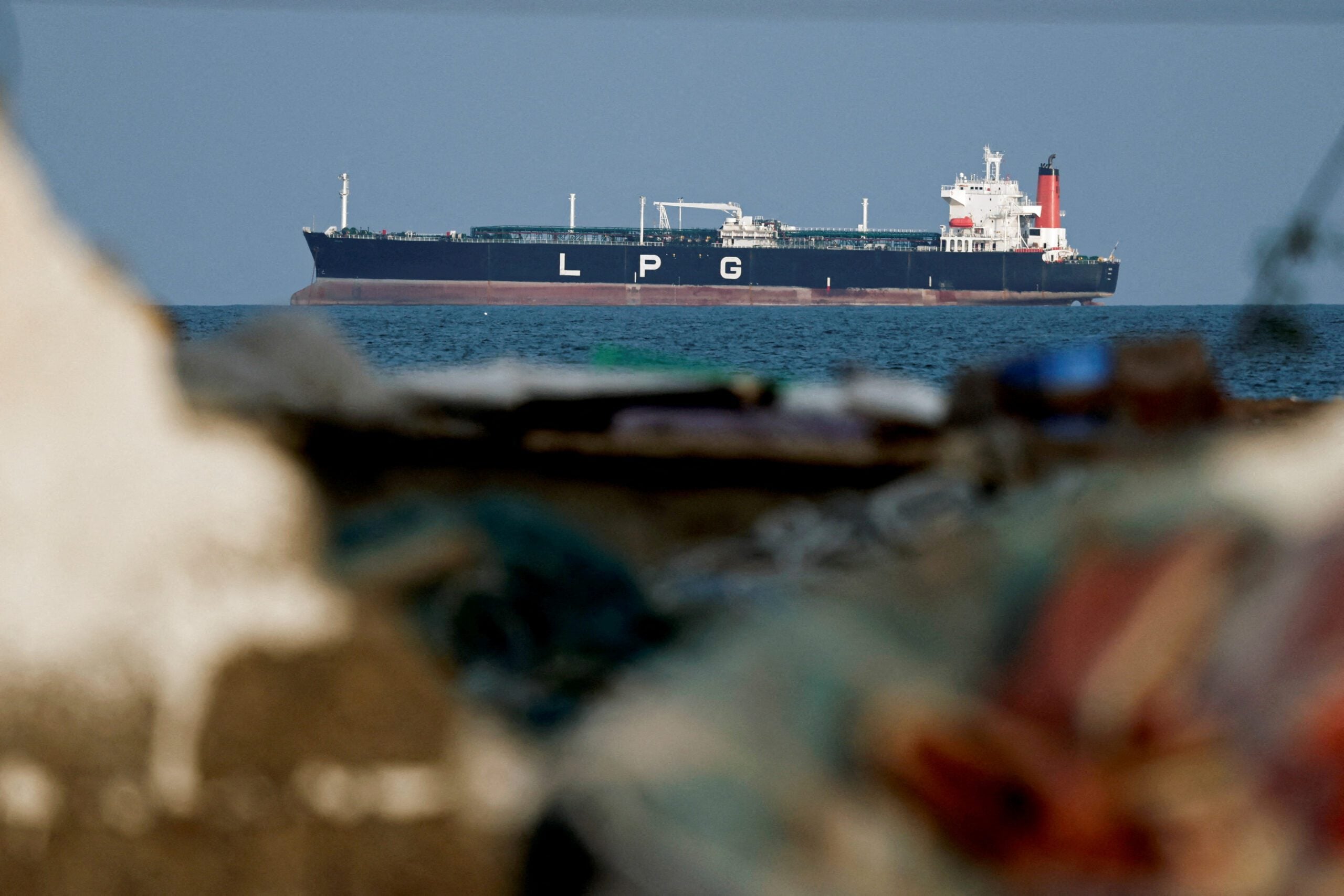
The United States has begun enforcing its new maritime blockade aimed at Iranian trade, with new information from the United Kingdom Maritime Trade Operations (UKMTO) confirming that access restrictions are now in place in Iranian waters.
In an announcement made on Monday, UKMTO stated that starting at 1400 UTC on April 13, restrictions will affect “Iranian ports and coastal areas,” covering waters in the Arabian Gulf, Gulf of Oman, and the Arabian Sea, east of the Strait of Hormuz.
The advisory emphasizes that these restrictions apply to all vessels, regardless of their flag, that are involved with Iranian ports, oil terminals, or coastal infrastructure. This reiterates earlier statements from U.S. Central Command that the blockade will be enforced fairly across all international shipping.
UKMTO mentioned that travel to and from non-Iranian destinations is currently not obstructed, but ships may face military presence, directed communications, and possible right-of-visit procedures during their journeys.
This indicates that while the route remains technically open, it is becoming increasingly complicated due to overlapping controls, regulations, and risks.
UKMTO also reported that the restrictions cover Iran’s entire coastline, including its ports and energy facilities, effectively creating a maritime boundary around Iranian trade beyond just the strait.
Meanwhile, ships currently docked at Iranian ports have been given a short grace period to leave, with further information expected through formal Notices to Mariners. Additional guidance regarding routing, authorization, and inspection processes is still being developed.
This lack of clear information is likely to make shipowners and operators cautious about returning to the area.
Early tracking data indicates that the effects of the blockade are already noticeable. According to data from Kpler shared by MarineTraffic, at least two tankers changed course near the Strait of Hormuz shortly after the blockade started. The 188-meter tanker Rich Starry, which was loaded and heading towards China, turned back just moments after approaching the chokepoint following its departure from Sharjah Anchorage on April 13. Another tanker, the 175-meter Ostria, also reversed course as it neared the Strait.
Equasis data suggests that both vessels might be using false flags, with Rich Starry likely registered in Malawi and Ostria potentially linked to a dubious Botswana registry. Both ships departed from the UAE.
Two tankers turn away from Strait of Hormuz after US blockade begins
At least two tankers reversed course near the Strait of Hormuz shortly after the start of the US blockade, highlighting the immediate impact on vessel movements. According to #MarineTraffic data, the 188-meter… pic.twitter.com/dRNi7yEgJI