
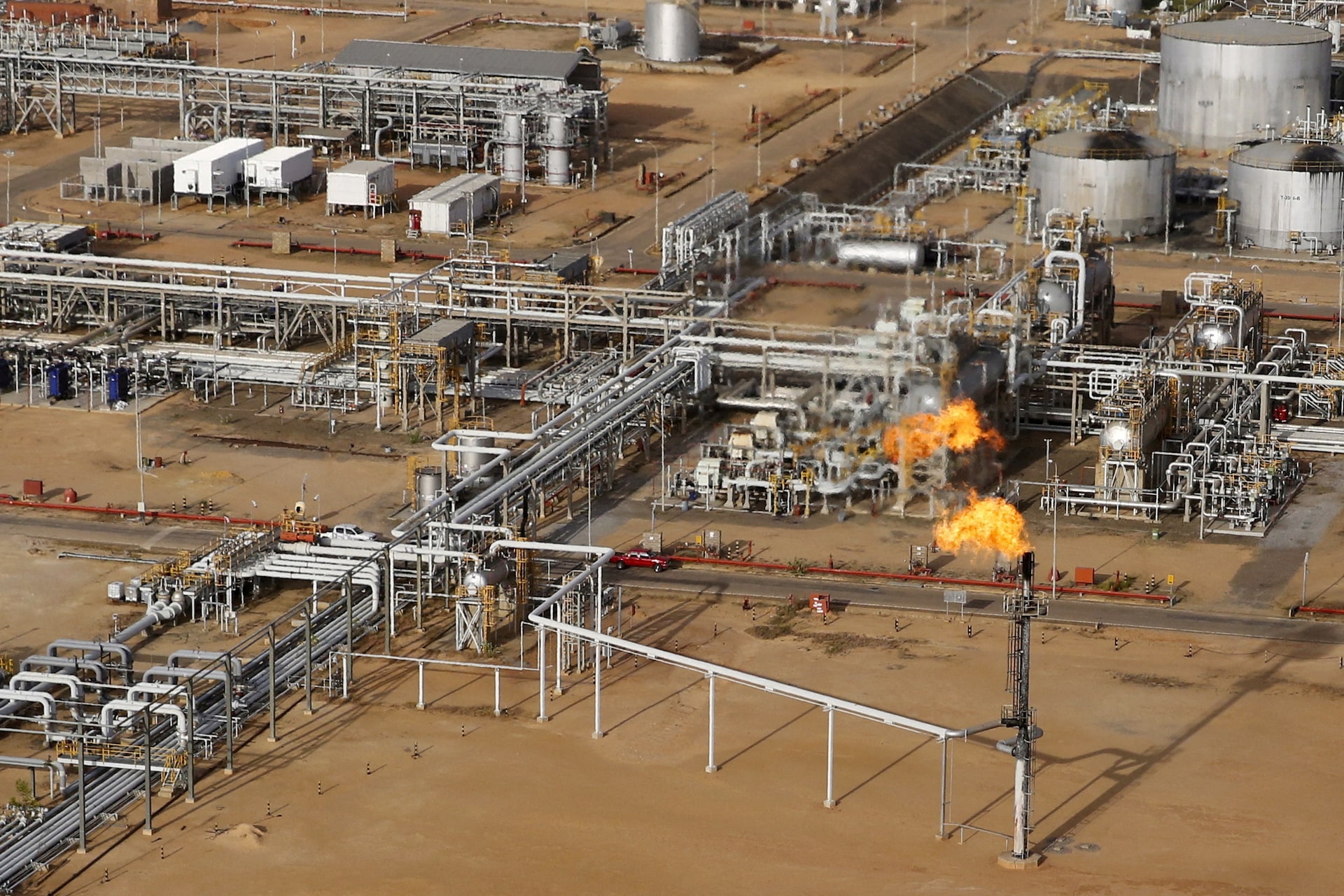
Ten years ago today, the LNG carrier Asia Vision left Louisiana's Sabine Pass Terminal with 3.3 billion cubic feet of liquefied natural gas destined for Brazil. This shipment kicked off a major change in the global energy landscape.
Now, the United States is the largest LNG exporter in the world, outpacing both Australia and Qatar. The journey from that first shipment in 2016 to the current leadership in LNG exports is impressive. U.S. LNG exports increased from 0.5 billion cubic feet per day in 2016 to an expected 15.0 billion cubic feet per day in 2025. According to the Energy Information Administration, exports could rise to over 18.1 billion cubic feet per day by 2027, which is around 136 million metric tons per year.
This milestone gained extra importance earlier this year when the U.S. became the first country to export more than 100 million metric tons of LNG in one year. Preliminary data from Reuters' LSEG indicates the country sold 111 million metric tons in 2025, almost 20 million metric tons more than Qatar and nearly 23 million metric tons above the previous year. The EIA projects 2025 exports to be about 112.4 million metric tons per year.
This transformation was supported by a plentiful supply of natural gas and reserves, flexible export contracts, and relatively low costs for feed gas. However, the shale boom wasn't always meant to fuel exports. The Sabine Pass terminal, operated by Cheniere Energy, started as an import facility in 2008. It was only when domestic shale production grew significantly that operators decided to convert the terminal for exporting.
Since that first shipment a decade ago, Sabine Pass has sent out over 3,300 cargoes worldwide, accounting for 39% of all U.S. LNG exports through November 2025.
Europe Emerges as Dominant Market
The destinations for U.S. LNG have changed dramatically in the last ten years. Initially, Asia received most of the shipments, making up 46% of exports from 2017 to 2021, according to the EIA. However, Russia's invasion of Ukraine in 2022 significantly altered these trade patterns.
In 2022, Europe received 69% of U.S. LNG exports, a sharp increase from 34% in 2021, according to the EIA. This trend has continued, with Europe accounting for 68% of U.S.-origin LNG from January to November 2025. In December alone, Europe imported 9 million metric tons as the Northern Hemisphere winter intensified and the continent reduced its purchases of Russian gas.
The American Advantage
What makes U.S. LNG stand out in global markets is the flexibility of contracts and pricing structure.
“Many other LNG-exporting countries often use strict, long-term contracts tied to Brent crude oil prices. In contrast, U.S. contracts generally allow for flexibility in destinations, enabling customers to reroute shipments or resell terminal capacity if they cannot accept the gas. Additionally, U.S. contracts often feature lower feed gas costs linked to Henry Hub futures prices,” stated the EIA.
As a result, LNG from the U.S. is often cheaper compared to LNG produced elsewhere.
Expansion on the Horizon
The U.S. currently has eight LNG export terminals, and by 2031, the export capacity is expected to almost double from December 2025 levels. The Plaquemines LNG facility started operations in late December 2024 and delivered 16.4 million metric tons in 2025 after a quick ramp-up. Corpus Christi LNG shipped its first expansion cargo in March 2025, and Golden Pass LNG—a partnership between QatarEnergy and ExxonMobil—is anticipated to ship its first cargo in early 2026.
According to Alex Munton, director of global gas and LNG at Rapidan Energy Group, the year-on-year growth in 2025 was attributed to “high utilization across onstream terminals and a rapid ramp-up at new facilities.”
With ongoing expansion, experts predict that the U.S. could boost annual production by another 20 million metric tons this year. As the first cargo from Sabine Pass fades into history, the boom in American LNG exports shows no sign of slowing down.
Read Next: How a Quiet Regulatory Power Shift Could Supercharge U.S. Energy Exports