
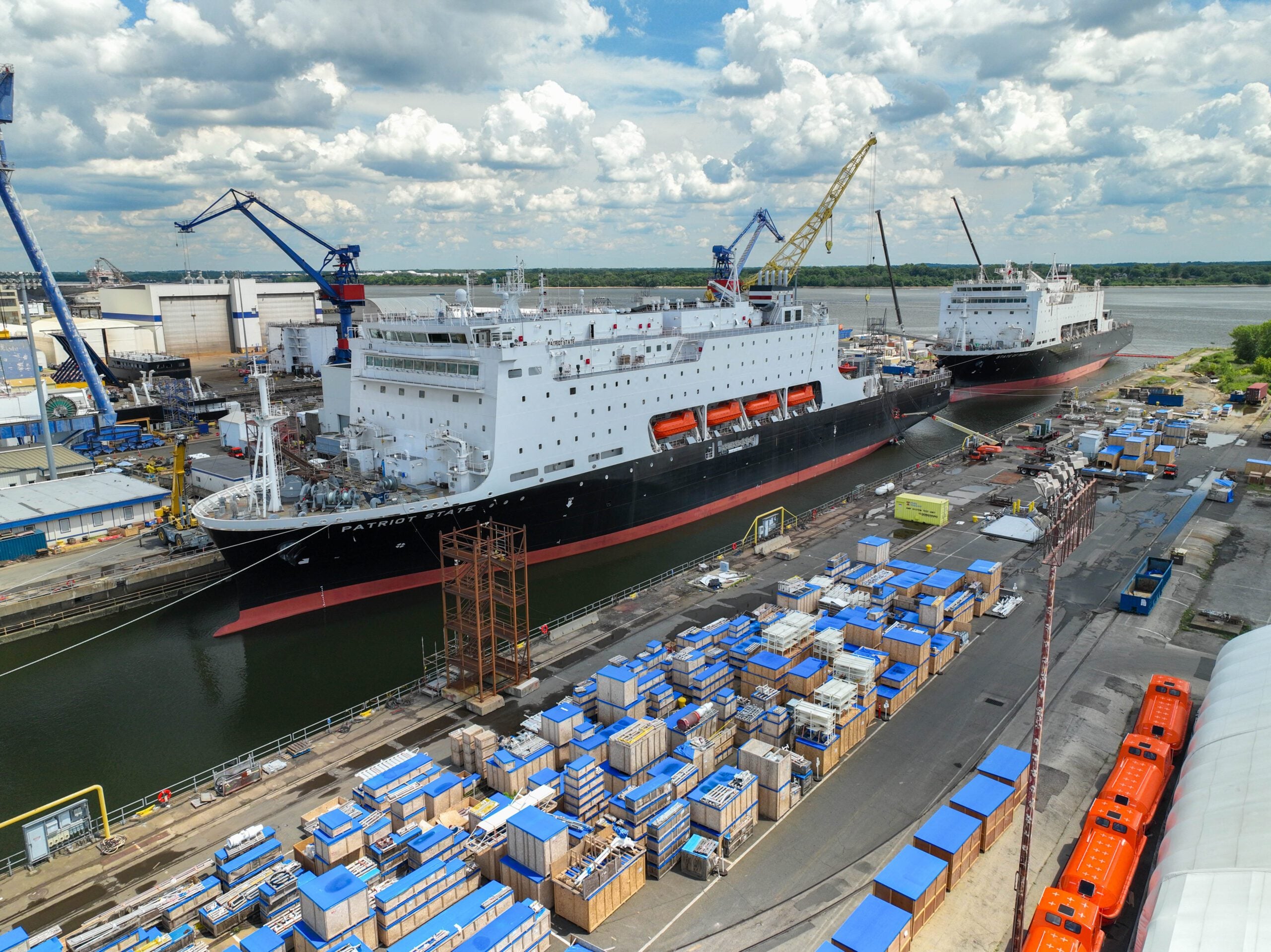
This week, the crisis in U.S. shipbuilding gained national attention as 60 Minutes highlighted the widening gap between American shipyards and their Asian competitors—a concern raised by industry experts for years.
This issue is particularly timely. The Trump administration has made shipbuilding a crucial part of its national security strategy under the agenda of “Restoring America’s Maritime Dominance,” claiming that the ongoing decline of U.S. industrial capacity poses a significant strategic threat.
This policy change follows a comprehensive Section 301 investigation started in 2024 by the Office of the U.S. Trade Representative during the Biden administration. The investigation found that China's government-backed efforts to dominate global shipbuilding and maritime logistics, through subsidies and favorable financing, have distorted competition and weakened U.S. capabilities. These findings contributed to a broader initiative to strengthen domestic maritime capacity.
Hanwha’s Philadelphia Investment Takes Center Stage
The segment focused on Hanwha Group’s investment in Philly Shipyard, one of the top commercial shipbuilders in the U.S., which it purchased from Aker ASA in 2024. This marked a significant move by the South Korean shipbuilding giant into the American market.
Hanwha plans to invest up to $5 billion to expand the shipyard's capacity, increasing annual production from fewer than two vessels to as many as 20. They have already started securing new orders as operations pick up. Executives Michael Coulter and David Kim emphasize their goal to modernize production, grow the workforce, and bring advanced shipbuilding technology from South Korea to the U.S.
The disparity in production scales was clearly highlighted in the segment. “We deliver one to one-and-a-half ships a year,” said Kim about the Philadelphia yard, “while in Korea, it’s basically one a week.”
This gap is evident across the industry. While leading shipyards in South Korea and China produce ships at scale, U.S. shipyards struggle to deliver even a few each year.
Moreover, it’s not just about quantity. The program noted that ships built in Asia can be completed in about six months, while similar vessels in the U.S. can take twice as long and cost up to five times more. Longer construction times, higher costs, and reliance on imported components—from engines to propellers—continue to hinder U.S. competitiveness.
For those involved in the maritime sector, these challenges are not new: years of underinvestment, a declining skilled workforce, fragmented supply chains, and a cost structure that makes domestic construction hard to justify outside protected markets.
Nonetheless, Hanwha executives believe that increasing production scale is vital. “If we build more ships, the cost per ship will come down significantly,” said Coulter.
A Tension Between Policy Goals and Industrial Reality
The segment also pointed out a common tension: while Washington aims to rebuild shipbuilding capacity, some of its own policies may be hindering those efforts.
Steel tariffs, labor shortages, and strict immigration policies complicate scaling production.
“This is one of the paradoxes,” stated Colin Grabow, associate director at the Cato Institute and a long-time critic of the Jones Act. “We’re artificially increasing the cost of building ships in this country.”
The program also mentioned a more fundamental issue impacting U.S. energy markets: the U.S. does not build LNG carriers.
“There aren’t any,” Grabow highlighted. Although the U.S. exports LNG globally, it cannot transport that same gas between its ports due to the lack of compliant vessels under Jones Act rules.
In a statement to gCaptain, Alex Wong, Global Chief Strategy Officer of Hanwha Group and former Principal Deputy National Security Advisor under President Trump, emphasized the need to revive American shipbuilding.
“Whether it’s LNG carriers, Golden Fleet ships, or nuclear submarines, America needs to build faster to secure our mastery of the seas. Hanwha is continuously working to bring our world-leading advanced manufacturing to Hanwha Philly Shipyard and invest in America’s workers,” Wong said.
A Broader System Challenge
As Stephen Carmel, Administrator of the U.S. Maritime Administration, recently warned, focusing solely on shipyards can overlook the larger picture.
At the CMA Shipping conference, Carmel described a broader framework for how maritime strength operates.
“Shipbuilding doesn’t lead to maritime power. Maritime systems do,” he explained. “Shipbuilding follows cargo, cargo follows logistics networks, and logistics networks depend on ports and trade architecture.”
In essence, ships are part of a huge interconnected system.
Carmel cited China as a prime example. Its dominance stems not only from shipyards but from a comprehensive maritime ecosystem encompassing logistics networks, state financing, industrial policy, and workforce development.
Initiatives like the administration’s Maritime Action Plan and proposed legislation such as the SHIPS for America Act aim to rebuild this broader system. However, aligning demands for cargo, infrastructure, labor, capital, and industrial capacity into something globally competitive remains a daunting challenge.
The urgency is evident, as disruptions in the Strait of Hormuz have revealed how fragile global energy flows—and the vessels that transport them—can be in times of geopolitical tension.
From Expert Warnings to National Awareness
For those in the maritime industry, the diagnosis remains unchanged. What has shifted is the level of attention being paid.
As this issue moves from industry discussions to national broadcasts, the focus shifts from recognition to action.
The real question is no longer whether the U.S. has fallen behind. It is whether investments like Hanwha’s in Philadelphia and the current policy efforts in Washington can realistically bridge a gap measured not only in time but in industrial scale.
“We are in a shipbuilding crisis in the United States, and every American should be aware of that,” concluded Coulter.
The complete 60 Minutes segment is available here.