
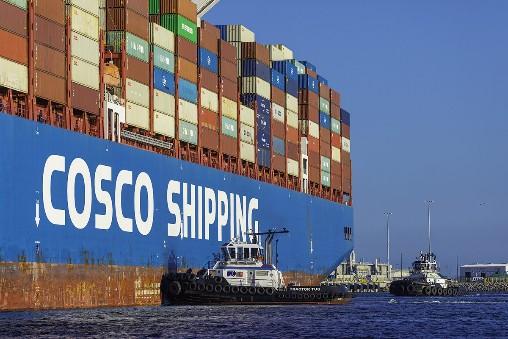
The U.S. Trade Representative's Office has started a one-day public comment period to discuss a proposed suspension of port entry fees and tariffs related to a Section 301 investigation of China's influence in maritime, logistics, and shipbuilding sectors.
This comment period was announced following a trade agreement between President Trump and Chinese President Xi Jinping on November 1.
The port fees were introduced after a Section 301 petition was filed in March 2024 by the United Steelworkers along with a group of labor organizations. They claimed that China was using non-market industrial policies and significant state subsidies to gain a dominant position in global shipbuilding.
The proposed suspension would last from November 10, 2025, to November 9, 2026. During this time, “no party would be liable for or need to pay the fees for maritime transport services under Annexes I, II, or III from the April 23 notice, as updated on October 16. Additionally, no duties outlined in Annex V.A from the October 16 notice would accrue during this period,” according to the USTR notice.
The three annexes affected different parts of maritime trade: Annex I imposed fees on vessels owned or operated by Chinese companies; Annex II set fees based on either net-tonnage or per-container, whichever was higher, for operators of Chinese-built ships not owned by China, with exceptions for U.S. national security fleets; and Annex III charged fees for foreign-built vehicle carriers while covering Maritime Security Program and U.S. Government operators. Annex V.A specified the criteria for determining if an operator or owner is “of China,” based on ownership, control, and state involvement, leading to higher fees under Annex I.
The fees were scheduled to start on October 14, 2025, after a lengthy planning phase and a year-long investigation by the U.S. Trade Representative. China responded quickly by imposing similar fees on U.S. ships. However, this standoff ended soon after the trade agreement announced on October 30, which also included China's commitment to lift retaliatory measures against various shipping entities, including units of the Korean and U.S. partnered shipbuilder Hanwha.
The reciprocal fees have disrupted global shipping, increasing freight costs and causing fleet rearrangements. Chinese carriers, particularly the state-owned COSCO, faced significant losses, with estimates of annual fees totaling around $1.5 billion. Meanwhile, U.S. carrier Matson, which was most affected by these fees, reported approximately $6.4 million in fees in just the first three weeks.
The shipping industry has welcomed the suspension. Joe Kramek, President and CEO of the World Shipping Council, stated, “Global trade works best when it is free. A suspension of ship fees by the U.S. and China is beneficial for farmers, exporters, and consumers. It helps reduce extra costs, keeping trade competitive and ensuring access to key shipping lanes.”
However, labor groups remain cautious. Roy Houseman, Legislative Director for the United Steelworkers, expressed that the “truce” raises many questions about how the U.S. plans to strengthen its domestic commercial shipbuilding industry.
Houseman highlighted that “53% of all global ship orders by tonnage during the first eight months of 2025 are currently going to one country—China. This concentration is not healthy for an industry that significantly influences global trade.”
The reciprocal fees have caused considerable changes in global shipping, leading to increased freight costs, fleet adjustments, and even changes in corporate leadership.
Parties interested in commenting have until November 7, 2025, at 5:00 p.m. Eastern Standard Time to submit their views.
U.S. and China Suspend Port Fees Central to Trump’s Shipbuilding Strategy