
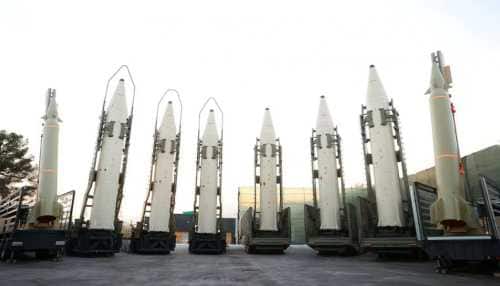
The U.S. Department of the Treasury has imposed sanctions on 32 individuals and organizations across eight countries. This is part of a coordinated effort to disrupt Iran's production of ballistic missiles and drones.
The Office of Foreign Assets Control announced the sanctions targeting procurement networks in Iran, the United Arab Emirates, Turkey, China, Hong Kong, India, Germany, and Ukraine. These networks have been supporting Iran's weapons programs. The action follows Iran's attempts to restore military capabilities that were impacted during the recent conflict with Israel, often referred to as the “12-Day War.”
John K. Hurley, the Under Secretary of the Treasury for Terrorism and Financial Intelligence, stated, “Iran uses financial systems around the world to launder money, acquire components for its nuclear and conventional weapons, and support its terrorist allies. Under President Trump’s direction, we are applying maximum pressure on Iran to address its nuclear threat.”
The Treasury's enforcement specifically targets networks that pose direct risks to commercial shipping in the Red Sea and to U.S. and allied personnel in the Middle East. Among those sanctioned are members of the “MVM partnership,” a three-person team that has been coordinating the procurement of hundreds of tons of missile propellant ingredients from China for Iran's Parchin Chemical Industries since 2023.
The sanctions also target networks supporting Iranian companies that produce UAV engines for the Shahed-131 and Shahed-136 drones. These drones have been involved in attacks against commercial vessels in the Red Sea.
This action by OFAC is the second round of nonproliferation sanctions that support the reimposition of United Nations sanctions on Iran, set for September 27, 2025, due to Iran's ongoing non-compliance with international agreements.
As a result of these sanctions, all assets and interests of the sanctioned individuals that are in the U.S. or under U.S. control will be blocked. Financial institutions and other entities engaging in certain transactions with the sanctioned individuals may face additional penalties.
The timing of these sanctions coincides with recent developments in the Red Sea crisis. The Houthis have announced a halt to their maritime attacks and officially ended their blockade of Israeli ports, which could signify a potential turning point for this critical shipping route. However, experts warn that this pause, which has not yet been confirmed by Western officials, is conditional and could be reversed, as the group still has the capability to resume operations if fighting in Gaza restarts.