
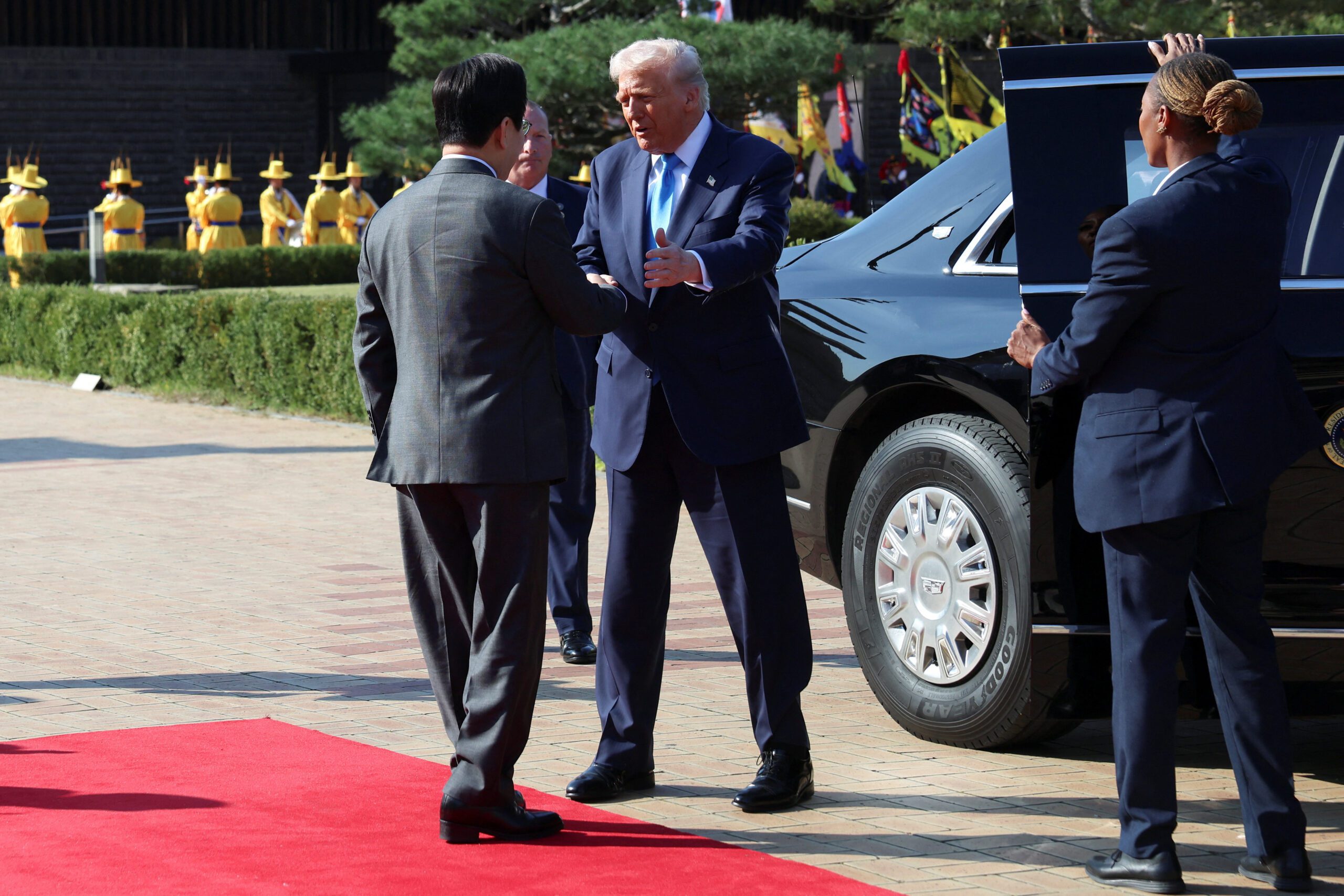
SEOUL/WASHINGTON, Nov 14 (Reuters) - The U.S. and South Korea announced a new trade agreement on Friday. This deal includes a total investment of $350 billion from South Korea, with $150 billion specifically for the American shipbuilding industry and $200 billion for other industrial sectors.
This announcement comes after a meeting in October between South Korean President Lee Jae Myung and U.S. President Donald Trump, where they agreed to reduce U.S. import duties on South Korean goods from 25% to 15%.
President Lee stated, “The South Korea-U.S. trade, commerce, and security negotiations, which were vital for our economy and security, are finally concluded.” He also praised President Trump for making decisions that contributed to this significant agreement.
This agreement ends more than three months of negotiations over tariffs imposed by Trump on various trading partners worldwide. South Korea was particularly concerned about the potential high duties on crucial exports like semiconductors and cars.
Since taking office five months ago, Lee aimed to transform economic challenges into opportunities for enhancing the country's trade and security relationships. Under the new agreement, South Korea will establish a partnership with the U.S. in shipbuilding, artificial intelligence, and the nuclear industry, helping to rebuild important sectors with U.S. assistance, just as it received help in the past.
A fact sheet from the White House indicated that the U.S. has approved South Korea to build nuclear-powered submarines and will collaborate closely to secure fuel sources.
The White House noted that South Korea's $350 billion investment package would be structured in a way that ensures $200 billion comes in installments, not exceeding $20 billion a year, to maintain stability in the South Korean won.
The two nations have established a mutual understanding that South Korea’s investments shouldn’t disturb the market. Should instability occur, South Korea can request changes in the amount and timing of funding, with the U.S. committing to consider such requests.
The U.S. plans to lower tariffs on South Korean products, such as cars and chips, to 15% from 25%. This new agreement also allows for fair tariff treatment for South Korean chip exports, similar to those for Taiwan.
With this agreement, President Lee has made strides in enhancing security and energy initiatives, particularly by paving the way for building nuclear-powered submarines and expanding nuclear energy capabilities in South Korea.
Lee’s national security adviser mentioned discussions regarding the nuclear submarines, which are expected to be built in South Korea. Trump has previously indicated that these submarines would be constructed in a Korean-owned shipyard in Philadelphia.
The U.S. has pledged to work with South Korea on uranium enrichment and reprocessing spent nuclear fuel for peaceful purposes.
Experts believe it's too early to determine if South Korea's deal is better than those struck by Europe and Japan. Analyst Doo Jin-ho stated that while obtaining nuclear submarines isn't a significant shift, it’s still a superior option compared to other weapon systems for enhancing deterrence against North Korea.
Kim Dong-yup, a former Navy officer, noted that the agreement on nuclear energy and security could mean higher defense costs for Seoul, but it was a necessary choice for President Lee.
The trade deal was initially announced in July when South Korea agreed to invest billions in U.S. projects in exchange for lower tariffs.