
The U.S. government is facing criticism again for a long-standing issue in shipbuilding: starting construction before finalizing designs. This practice has led to extra costs, delays, and technical problems in several major maritime programs, as highlighted by the Government Accountability Office (GAO) in its reports.
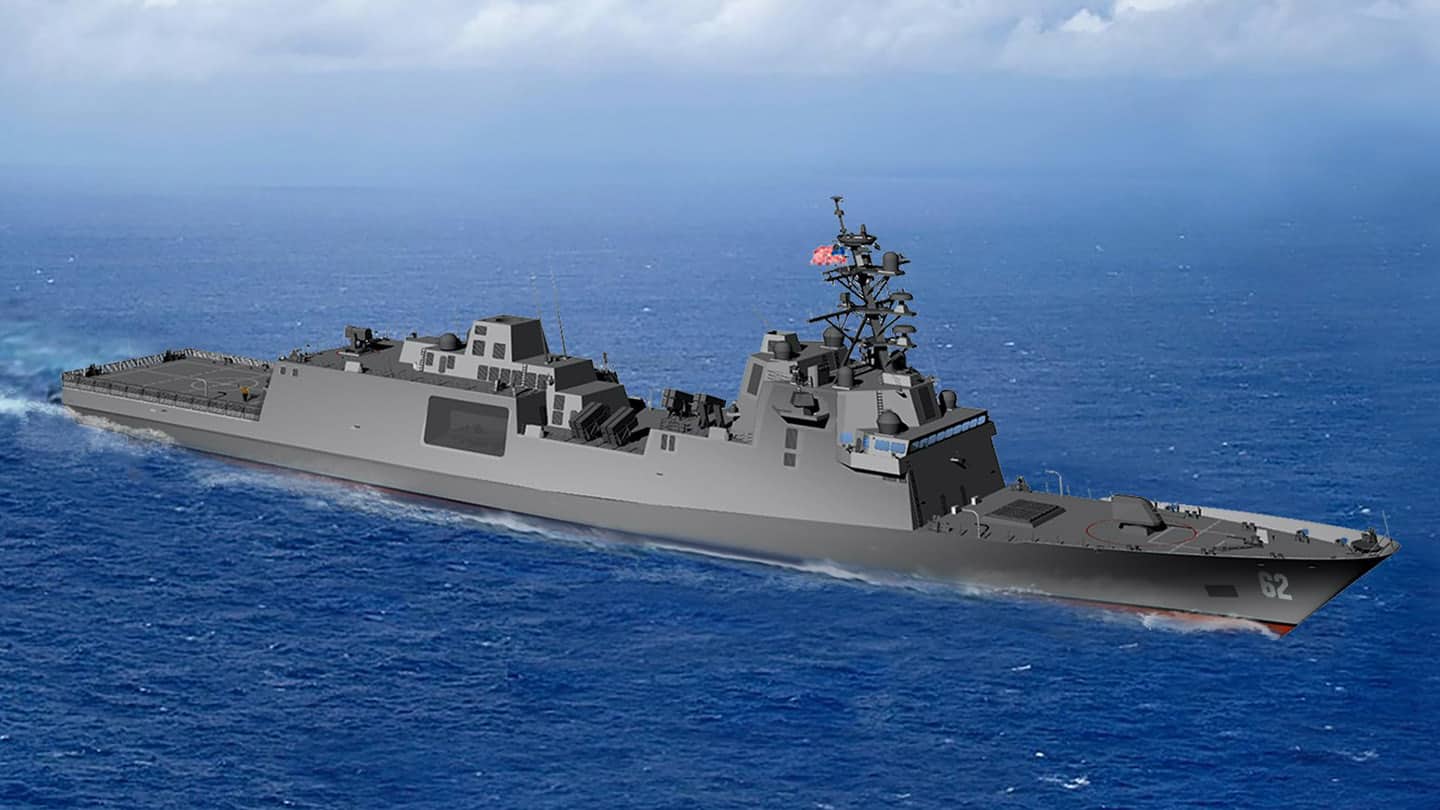
Earlier this week, the Navy announced the cancellation of four ships from its struggling Constellation-class frigate program. Only the first two ships of this program will be completed, following a 36-month delay that has moved the delivery date to April 2029.
For over a decade, the GAO has warned defense and homeland security officials against “concurrency”—the risky approach of overlapping the design and construction phases. Yet, despite these warnings, this trend continues.
In recent reports, the GAO has cited the Coast Guard’s Polar Security Cutter and Offshore Patrol Cutters, along with the Navy’s Constellation-class frigates, as examples of this ongoing issue. The Zumwalt-class destroyers also illustrate the problem, as construction began before the design was completed, resulting in huge cost increases and a reduction of the initial order from 32 ships to just three.
The Polar Security Cutter, which the Coast Guard urgently needs to replace its old icebreaking fleet, has become a key example. In several Congressional hearings, experts urged Coast Guard leaders to ensure full design maturity before starting construction.
“We will not achieve the level of design maturity that the GAO suggests when we start construction,” stated Vice Admiral Paul Thomas, Deputy Commandant of the Coast Guard for Mission Support, during a Congressional session last year.
GAO auditors noted that construction on the vessel began before the design was stable, resulting in significant redesign work. The design for the Polar Security Cutter, adapted from the future German icebreaker Polarstern 2, has changed so much that the final vessel will be 40 percent larger, going from 14,000 tons to 18,000 tons, compared to its original design.
These changes have led to further delays for a project that is now years off schedule, with the costs for the first ship nearly doubling from $1.3 billion to $2.4 billion. The delivery of the first PSC is now expected no earlier than 2030, which is six years behind schedule and eleven years after the contract signing.
The Offshore Patrol Cutter, one of the Coast Guard’s largest ongoing acquisition efforts at $17 billion, has also faced issues due to premature construction starts. A new GAO report released this week reveals serious problems in the OPC program, with no vessels delivered despite years of construction.
The GAO investigation found that starting to build ships before their designs were completed has been disastrous. The initial stage contractor, Eastern Shipbuilding Group, has made little progress since the last GAO assessment, leading the Coast Guard to terminate half of the original four-ship contract in July 2025. The situation worsened further when Eastern announced this month that it had suspended work on the remaining two vessels due to “severe financial strain.”
The GAO report notes that “construction of OPCs 1-4 began without a stable design, which goes against leading shipbuilding practices,” leading to rework and delays in ship deliveries. The delivery date for OPC 1 has been pushed back more than five years, from June 2023 to at least late 2026.
On a concerning note, the second-stage contractor Austal USA seems to be following the same problematic path. According to the GAO, “construction of OPC 5 began in August 2024 without a stable design.” The report warns that building additional second-stage vessels before the design is stabilized increases the risk of costly rework and delays.
The Constellation-class frigates of the Navy are seeing a similar trend. While based on the Italian Navy's version of the European multipurpose frigate (FREMM), the American version has required significant modifications. These changes have increased the size and displacement of the ship, altered the bow design to remove the sonar dome, and modified the topside to fit U.S. combat systems.
The GAO found that design work lagged behind the start of actual construction, forcing the shipbuilder to redo completed sections and slowing the production of a new ship class meant to be a cornerstone of the Navy’s fleet renewal.
According to the GAO, starting work without finalized designs contributed to avoidable delays and technical challenges. The watchdog has repeatedly emphasized that “design stability before construction” is one of the best predictors of a program's success; advice that decision-makers at the Navy and Coast Guard recognize in theory but struggle to implement in practice.
Together, these troubled programs highlight a systemic issue in U.S. shipbuilding: the pressure from politics and the public to start visible work and meet deadlines often overshadows the more important task of finalizing design work.
The Polar Security Cutter exemplifies this: under pressure to show progress and meet deadlines, the Coast Guard announced the start of construction several times within six months. This situation illustrates how the rush to demonstrate progress on significant shipbuilding projects can lead to nearly absurd outcomes.