
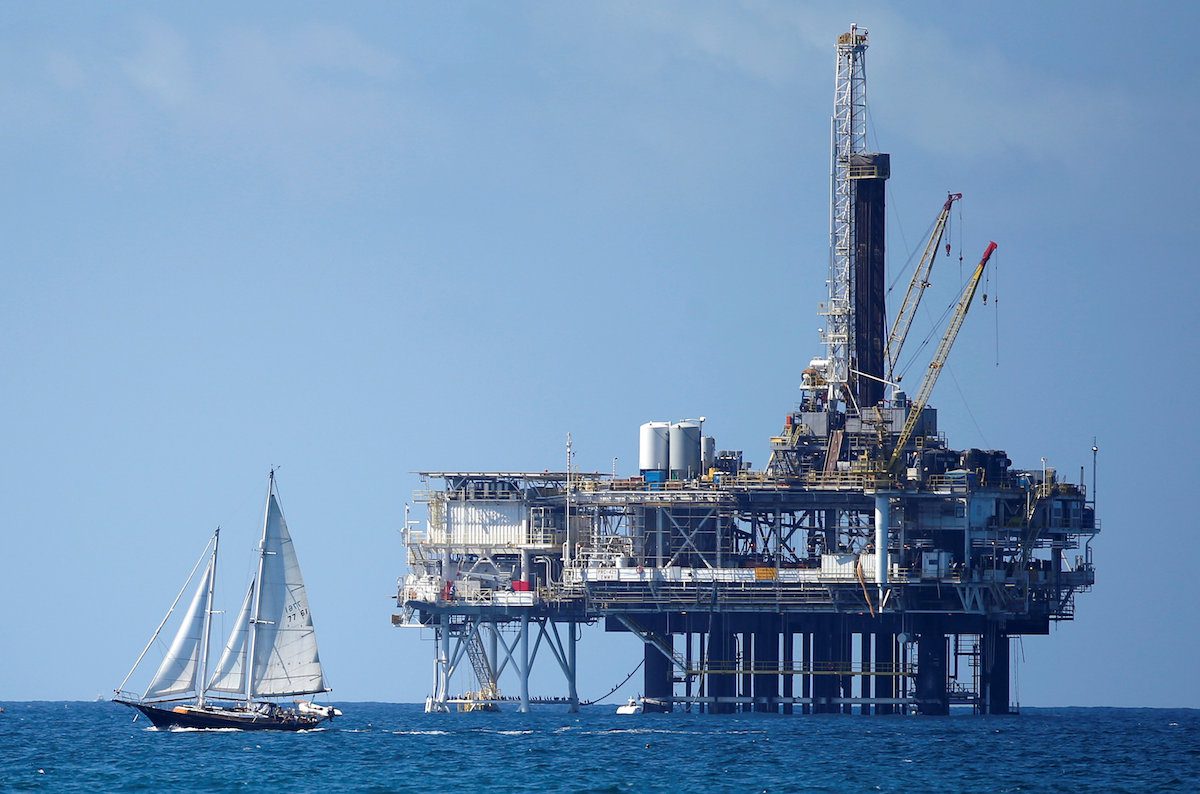
October 23, 2025 — The Trump administration is preparing a new plan to allow offshore oil drilling in almost all US coastal waters, despite opposition from governors and previous efforts to protect some areas.
The proposal for selling oil leases includes regions close to the southeastern US that Trump had aimed to safeguard during his 2020 reelection campaign. This shift is likely a response to Republican allies concerned about the potential for oil spills affecting beaches and tourism.
Bloomberg News has reviewed documents related to the Interior Department's broad proposal. It's uncertain if these plans have been shown to Trump yet, and they may change before being officially released.
An Interior Department spokesperson avoided commenting on the details of the plan but mentioned the “national energy emergency” and that “all options are being considered” to address it and compete with China.
While the final sale schedule might be adjusted, the initial proposal indicates a significant expansion of US areas for oil and gas leasing, including areas near coral reefs and Arctic waters that many environmentalists warn could be endangered by drilling. This initiative comes fifteen years after the Deepwater Horizon disaster, which resulted in the largest marine oil spill in US history. Trump's push for drilling also extends beyond the Gulf of Mexico, which he has referred to as the Gulf of America.
The draft from the Bureau of Ocean Energy Management outlines possible auctions for drilling rights along the East and West coasts, around Alaska, and in the Gulf of Mexico. However, protected areas like the Northeast Canyons and Seamounts Marine National Monument and the Papahānaumokuākea Marine National Monument are likely to remain off-limits for drilling.
Environmental groups reacted strongly against the proposed plan, stating it could jeopardize many coastal communities and marine ecosystems. Joseph Gordon, a campaign director at Oceana, pointed out that Trump would be ignoring widespread opposition from local leaders and the public.
Oil companies have shown limited interest in exploring new waters outside of the Gulf, where they would face political and geological challenges. There is little current data on potential oil reserves in these areas, as most information comes from outdated geological surveys and a handful of wells drilled in the 1970s and 1980s.
Despite this, documents indicate some “industry interest” in drilling in the Atlantic and Pacific. While companies have focused mainly on the Gulf, there is general support within the industry for expanded access.
This draft is an early step toward creating a new five-year plan for selling Outer Continental Shelf oil leases from 2026 to 2031, replacing a previous program under President Biden that planned just three auctions from 2024 to 2029.
The process generally starts with more proposed auctions than what eventually gets finalized, as regulators refine the plans. These proposals will also undergo extensive public and congressional review.
Several states have already voiced their disinterest or outright disapproval of new offshore oil leases. Federal law requires the Interior Department to consult with states during the planning phase.
Documents from September 17 reveal that no East Coast states requested to be included in the leasing plan. Florida remained silent, and four states—Connecticut, Georgia, Virginia, and New Hampshire—failed to respond. Eight states explicitly opposed the expansion: Delaware, Maine, Maryland, Massachusetts, New York, North Carolina, Rhode Island, and South Carolina.
On the West Coast, California, Oregon, and Washington are united against new offshore drilling.
A similar initiative during Trump's first term faced strong pushback from coastal states, especially Florida, where Republican leaders criticized the plan.
It's unclear if this new attempt will fare better. Some Republicans opposed offshore wind farms due to concerns about impact on endangered species, which could lead to similar objections about oil drilling.
Any new drilling in the US Atlantic would take years, requiring lease auctions and likely new seismic surveys to locate possible oil and gas reserves.
During his 2020 reelection campaign, Trump expressed some concern about offshore drilling, referencing federal law to prohibit new oil and gas rights sales near Florida, Georgia, and the Carolinas until June 30, 2032.
Similarly, Biden used the same statute to block development in most East and West coast waters in the final weeks of his administration, but Trump later revoked this ban in January.