
By Andrew Chung and John Kruzel
WASHINGTON, Nov 5 (Reuters) - The lawyer for Donald Trump's administration faced challenging questions from both conservative and liberal justices of the U.S. Supreme Court on Wednesday regarding the legality of the president's broad tariffs. This case could have significant implications for the global economy and tests the limits of Trump's powers.
The justices questioned U.S. Solicitor General D. John Sauer, who was representing the administration, about whether Trump overstepped Congress's authority by imposing tariffs under a 1977 law that is intended for national emergencies. They also asked Sauer if Trump’s interpretation of this law, which allows for tariffs without a time limit, required explicit approval from Congress due to its significance.
The arguments arose from appeals by the administration after lower courts decided that Trump’s unprecedented use of the federal law to impose tariffs exceeded his powers. Businesses affected by the tariffs, as well as twelve states led mostly by Democrats, challenged these tariffs.
Trump has pressured the Supreme Court, which has a conservative 6-3 majority, to maintain the tariffs that he views as crucial tools for both economic and foreign policy. These tariffs, which are taxes on imported goods, could cost the U.S. trillions of dollars over the next decade.
During his opening statement, Sauer defended the legal reasoning behind the tariffs but quickly faced skepticism from justices about the administration's interpretation of the law in question.
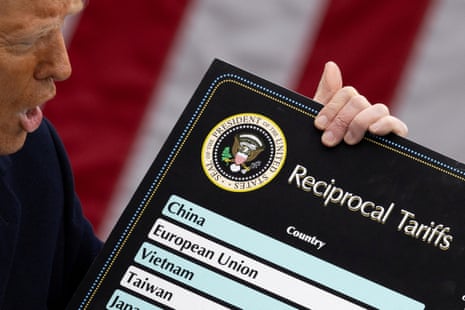
Trump used the International Emergency Economic Powers Act (IEEPA) to impose tariffs on almost every U.S. trading partner. This law permits the president to regulate commerce during national emergencies.
'RUTHLESS TRADE RETALIATION'
Sauer argued that Trump believed the U.S. trade deficits had pushed the country close to an economic disaster. He claimed that the tariffs have assisted Trump in negotiating trade deals, stating that rolling back these agreements would expose the U.S. to severe trade retaliation from more aggressive countries and could lead to economic downfall and compromised security.
The U.S. Constitution gives Congress, not the president, the power to impose taxes and tariffs. The administration contends that IEEPA empowers the president to regulate imports during emergencies.
Chief Justice John Roberts, a conservative, emphasized that imposing taxes on Americans has always been a key power of Congress, pointing out that these tariffs appear to generate revenue, which is a role intended for Congress under the Constitution.
Justice Amy Coney Barrett raised concerns about whether the statutory phrase "regulate importation" truly grants tariff-levying authority to the president.
U.S. Treasury Secretary Scott Bessent indicated before the arguments that if the Supreme Court rules against Trump's use of IEEPA, the tariffs might still remain in effect through different legal provisions, as Trump has imposed additional tariffs under other laws not covered in this case.
MAJOR QUESTIONS DOCTRINE
Sauer maintained that the president's tariff actions do not conflict with the Supreme Court's "major questions" doctrine, which mandates that significant economic and political actions by the executive require clear Congressional authorization. A lower court previously ruled that the tariffs violated this doctrine.
Some justices pointed out that Congress did not specifically mention "tariffs" in IEEPA, implying that this omission should be considered in evaluating the legality of Trump's tariffs.
Roberts challenged Sauer to clarify why the major questions doctrine should not apply to the tariffs under IEEPA, questioning if the justification for such broad authority seemed misplaced.
Sauer argued that this doctrine does not apply in matters of foreign affairs; however, Roberts expressed doubts about whether the president's powers in this area could override Congress's inherent authority.
Trump is the first president to use IEEPA to impose tariffs, reflecting his tendency to push the boundaries of executive power in various areas, including immigration and military deployments.
Liberal Justice Elena Kagan probed Sauer about the claim that Trump's tariffs stem from inherent presidential powers, asserting that the powers to regulate foreign commerce and impose taxes are generally seen as congressional, not presidential, powers.
Justice Ketanji Brown Jackson remarked that IEEPA is meant to restrict, not broaden, presidential authority.
Conservative Justice Brett Kavanaugh asked about a 10% tariff imposed by President Richard Nixon in the early 1970s, seeking to understand its relevance to the current case.
'SIMPLY IMPLAUSIBLE'
Neal Katyal, a lawyer representing businesses challenging the tariffs, argued that it is unreasonable to think that Congress intended to grant the president the power to completely overhaul the tariff system and the economy when enacting IEEPA.
Justice Neil Gorsuch expressed concern that Sauer's claims about the extent of the president's foreign powers could undermine the Constitution’s separation of powers.
Gorsuch highlighted that if IEEPA is interpreted to hand tariff authority to the president, Congress risks permanently losing this power, leading to an ongoing shift of authority away from elected representatives.
According to estimates, the tariffs based on IEEPA have generated $89 billion in revenue from February 4 to September 23, as reported by U.S. Customs and Border Protection.
The Supreme Court has previously supported Trump in emergency rulings regarding policies challenged by lower courts, drawing criticism from opponents who argue this shows the justices are not providing a necessary check on presidential power.
GLOBAL TRADE WAR
Trump initiated a global trade war upon returning to the presidency in January, straining relationships with trading partners, increasing volatility in financial markets, and heightening global economic uncertainty.
He invoked IEEPA to impose tariffs on goods from various countries in response to what he described as a national emergency due to trade deficits, as well as to pressure China, Canada, and Mexico regarding drug trafficking issues.
Trump has used tariffs to gain concessions, renegotiate trade agreements, and to penalize countries for various non-trade political issues.
Historically, IEEPA was utilized for imposing sanctions against enemies, not for tariffs. When Congress passed IEEPA, it added restrictions on presidential power compared to earlier laws.
Although the Supreme Court typically takes months to issue rulings post-arguments, the Trump administration has requested prompt action in this case.