
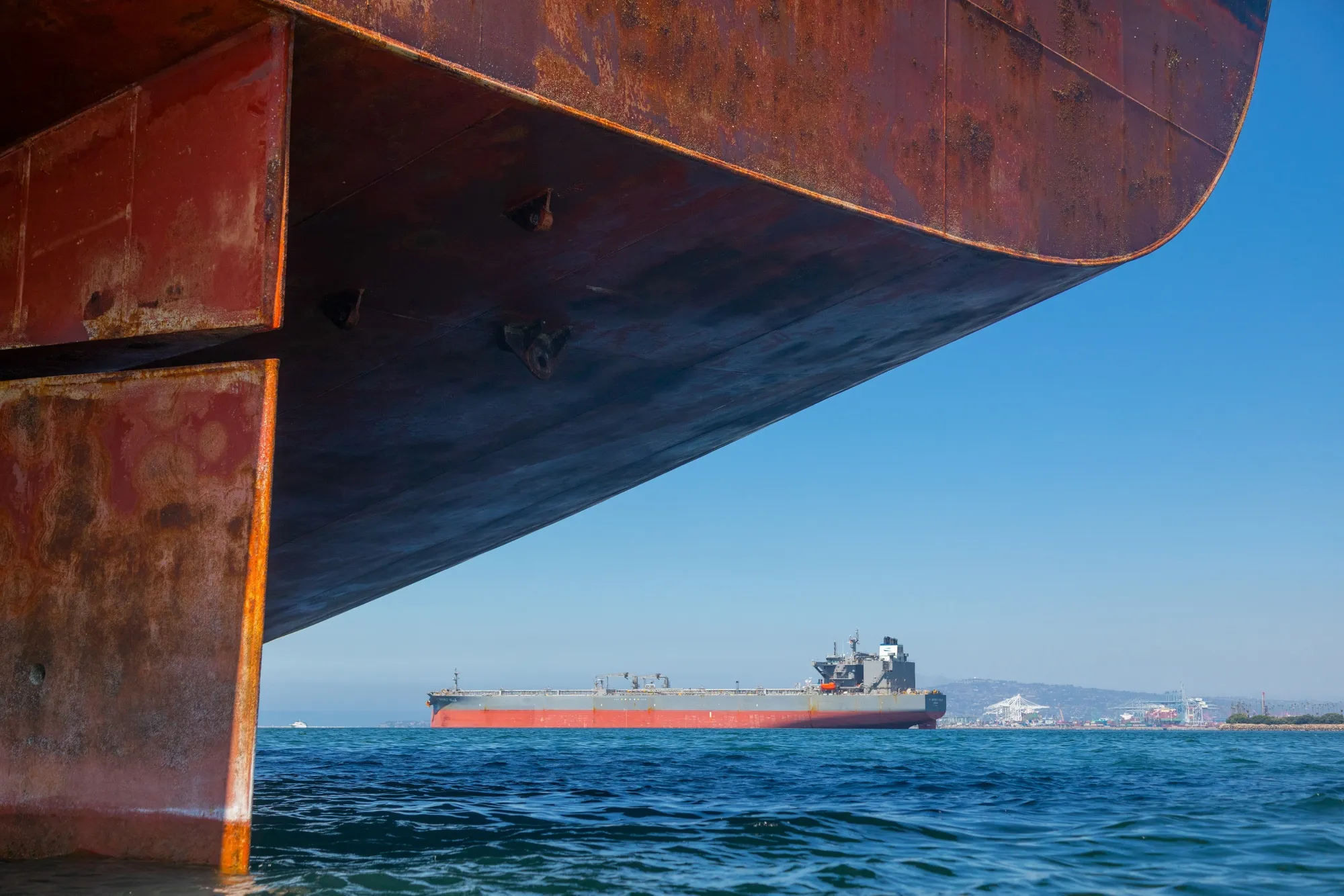
(Bloomberg) — The recent energy crisis is affecting the global economy, and we can see this reflected in supply-chain pressures that had previously surged during the pandemic. Central banks are now on alert for another wave of high inflation.
A recent overview of logistics activity indicates that some metrics are reaching levels not seen since the 2020-2023 period, marked by lockdowns, shortages, and shipping delays. While these indexes are not at their pandemic peaks, they do signal disruptions in global trade, particularly due to the conflict in Iran, reminiscent of earlier challenges.
Logistics, which tracks the movement of goods from suppliers to consumers, represents about 10% of the world's GDP, highlighting its critical role in the economy. “As we face potential supply constraints on essential commodities, we are likely to see upward pressure on prices,” comments Shanella Rajanayagam, a trade economist at HSBC Holdings Plc.
Data from the US Bureau of Labor Statistics released earlier this week shows rising prices for gas and groceries, with the consumer price index increasing the most since 2023. After adjusting for inflation, wages have dropped for the first time in three years.
Fed Gauge
Fresh supply-chain strains are evident in the Federal Reserve Bank of New York’s Global Supply Chain Pressure Index. After being stable for the past three years, it has increased for three months in a row, with a significant rise in April — reaching its highest level in nearly four years.
World Bank
The Global Supply Chain Stress Index from the World Bank is approaching its pandemic peak, focusing on the flow of container shipping and ports, particularly for larger vessels on long international routes. Many cargo carriers have opted to avoid the Red Sea since late 2023 for safety and insurance reasons. This detour around southern Africa increases transit times and expenses, putting a strain on shipping capacity.
One Big Carrier’s Plans
Vincent Clerc, CEO of A.P. Moller-Maersk A/S, discussed on Bloomberg TV last week how the second-largest global carrier plans to manage an additional $500 million in expected monthly costs through the second quarter. The Copenhagen-based company intends to increase prices for customers to offset these higher energy costs and may reduce ship speeds to save fuel. Balancing shipping rates and maintaining demand will be a key challenge.
“The energy shock is affecting freight rates, and we believe these energy costs are so high that no one can absorb them,” Clerc said. He also mentioned that as the year progresses, secondary impacts from this conflict could include inflation and a potential decrease in demand.
Japan PMI
Some recent economic data from Japan appears strong at first glance, but a closer look reveals underlying uncertainty and concerns rather than robust demand. Japan’s manufacturing purchasing managers' index has reached its highest point since January 2022, indicating its production is thriving, with new orders on the rise. However, this increase is partially due to companies stockpiling amid concerns over war. The delivery times for inputs have extended the most since April 2011, right after the Tohoku earthquake.
“The current boost to manufacturing could quickly fade unless we see reduced uncertainty in the market and more stable supply chain conditions, especially if market demand weakens and stock-building efforts start to reverse,” said Annabel Fiddes, Economics Associate Director at S&P Global Market Intelligence, in her report on Japanese manufacturing.
Delivery Times
In the US, the Institute for Supply Management has reported that delivery times have increased at the fastest pace since 2022, while input prices have risen the quickest in four years, notes Rajanayagam from HSBC. “This situation does not take into account the additional uncertainty from potential US tariff actions in the upcoming months,” she added. “So even though global trade ended last year strongly, we could see a sharper slowdown than expected in world trade growth this year.”
Logistics Managers
Another US indicator showing inflationary pressure is the Logistics Managers’ Index, a monthly survey conducted by Associate Professor Zac Rogers of Colorado State University. The index measures costs and capacity across three key supply chain areas — transportation, inventories, and warehousing.
The latest LMI reveals that pressure is mounting in several areas. Warehousing capacity is “tight everywhere” and is shrinking at the fastest rate since March 2024. Looking ahead, predictions for inventory cost growth are approaching “extreme rates of expansion,” suggesting that even with freight consolidation, costs will continue to rise significantly over the next year.
Transport costs have reached their highest levels since spring 2018 and are close to an all-time record, according to the LMI survey. One significant question that arises is whether these higher costs and slower deliveries will lead to shortages of parts needed for factory production. The general answer is not yet, although some specific areas require attention.
Parsing the Data
Jason Miller, a professor of supply chain management at Michigan State University, analyzes data on shortages among other research topics. He noted that ISM numbers for the US showed a slight increase last month, identifying six commodities currently in short supply, including aluminum, bearings and electrical components, semiconductors, and the industrial chemical propylene glycol.
This is nowhere near the peak of over 25 items during the pandemic and resembles pre-pandemic shortages seen in 2017 and 2018, but demand growth, as measured by new orders, is weaker today than it was back then, according to Miller.
German Manufacturing
In Germany, Europe’s largest manufacturing economy, the situation appears more complicated due to greater reliance on Middle Eastern energy. According to Miller, demand is a more significant issue restraining production than supply problems. Last month, German chemical and plastic manufacturers reported significant increases in material shortages, while automakers and parts producers noted a slight jump in shortages but nothing beyond historical norms.
For the US and Germany, Miller suggests that it’s too early to determine if this marks the beginning of another Covid-like supply shock. So far, both countries have experienced “relatively limited impacts from the Strait of Hormuz crisis in terms of supply chain issues significant enough to hinder production.”