
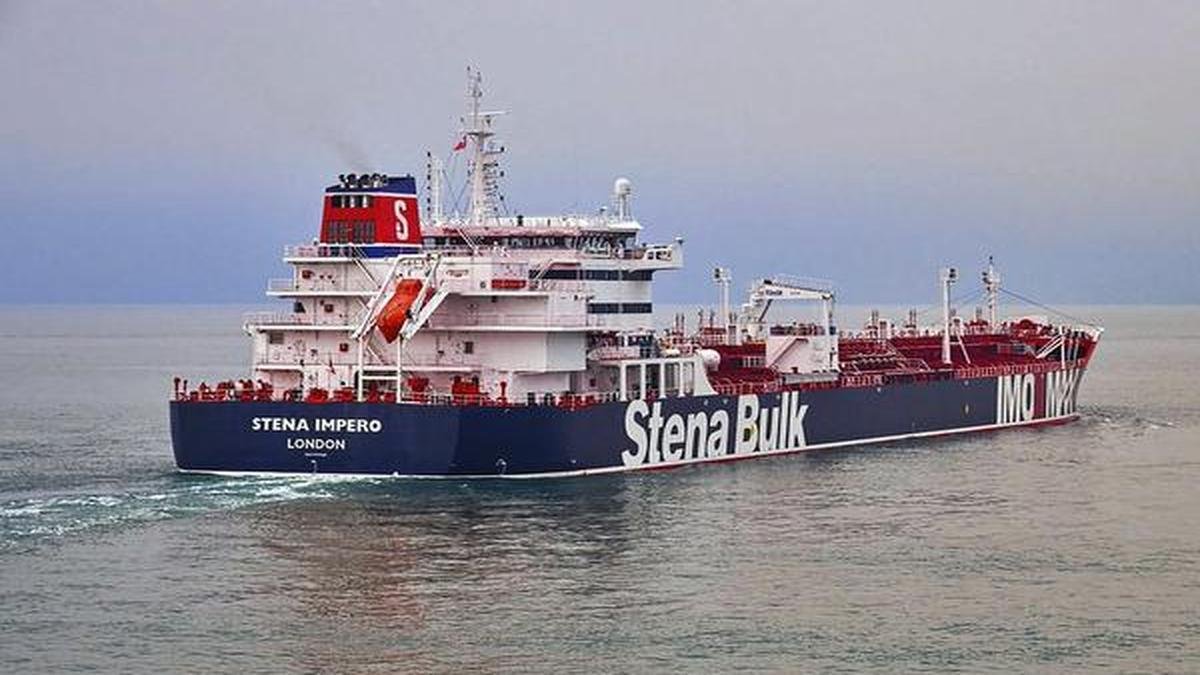
The Stena Imperative incident is a clear example of maritime tension in a highly sensitive waterway.
By Paul Morgan (gCaptain) - This week, the US-flagged tanker Stena Imperative faced a confrontation in the Strait of Hormuz, illustrating how quickly normal shipping routes can turn tense, even without shots fired or ships seized.
According to various maritime security sources, US officials, and international media, the incident began when several fast Iranian Revolutionary Guard Corps boats approached the tanker while it was in international waters near Oman. The small boats reportedly contacted the tanker over radio, instructing it to slow down or prepare for boarding. Instead of complying, the tanker kept its course and increased speed while reporting the situation through the proper security channels.
Shortly after, a US Navy destroyer in the area arrived to escort the tanker, supported by aircraft. US Central Command later confirmed that Iranian vessels and a drone had approached the tanker quickly, and US forces intervened to deter what was seen as a credible threat of seizure. The situation calmed down without any physical confrontation, allowing the tanker to continue its journey.
For maritime security experts, this incident stood out due to the presence of multiple Iranian boats and an aerial drone, highlighting the increasing complexity of encounters in this region. Charlie Brown, a senior advisor at UANI, noted that this incident shows how Iran's aggressive tactics are extending into international waters, challenging accepted norms beyond their territorial waters.
Normally, such encounters might be viewed as typical maritime posturing that has marked the Strait of Hormuz for over a decade. US-flagged and affiliated vessels have faced challenges, shadowing, and radio requests from Iranian forces operating right up to the brink of military escalation. However, this incident is significant due to its timing, target, and the proximity of other military events occurring simultaneously.
The Stena Imperative is not just any commercial ship; it is part of the United States Maritime Administration's Tanker Security Program, a fleet that ensures the US has access to tanker capacity for defense and logistics in times of crisis. This status gives the ship both symbolic and strategic importance, making it a target for Iranian forces wishing to showcase their influence without igniting open conflict. Brown suggests that the encounter reflects a broader trend where Iran is willing to challenge both navigation freedoms and US military presence, risking miscalculations in this crucial maritime area.
The episode occurred amid increasing military tensions in the region. On the same day, US forces reported downing an Iranian drone that approached a nearby US aircraft carrier. Although the drone and tanker incidents were not officially connected, their timing highlighted the crowded and volatile environment. The arrival of the USS Abraham Lincoln carrier strike group raised concerns over Iran's internal issues and regional destabilization, intensifying the sense that various confrontations are converging at sea.
For ship operators and insurers, a key concern from the Stena Imperative incident was that the ship did not appear to have close naval escort during the initial approach, even though other commercial vessels reportedly received extra protection amid rising tensions. Verified reports show that a US warship intervened quickly once the situation escalated and provided escort. However, it remains unclear whether a dedicated escort was planned before the transit or if the response relied on established protocols that depend on nearby naval forces rather than having escorts permanently assigned to each vessel.
This issue is important as it emphasizes the ongoing balance naval planners must maintain between deterrence and resource management. Many large merchant ships pass through the Strait of Hormuz every day. Providing permanent escorts for all US-linked vessels would be operationally unfeasible and could escalate tensions. Instead, the current strategy focuses on rapid responses and visible presence, signaling that any attempt to seize a ship will result in military action. However, Brown highlights that "shipping and seafarers are often on the front lines of this dangerous situation, which they cannot control or easily avoid."
Recent events support this concern. In July 2023, Iranian forces attempted to seize several tankers in the Gulf of Oman, including the Richmond Voyager, but were deterred by the quick arrival of US naval forces. That incident represented one of the most serious attempts at interdiction in recent years and led to renewed warnings from security organizations about escalation risks. The recurrence of similar patterns now, even without conflict, will not go unnoticed by bridge crews navigating the region.
Adding to the complexity is broader geopolitical activity beyond the Strait. Iran, Russia, and China are preparing for another round of joint naval exercises in the northern Indian Ocean, while separate multinational drills involving these nations occur elsewhere. While these exercises are not focused specifically on the Strait of Hormuz, their timing fosters an environment where maritime actions are increasingly viewed through a strategic lens rather than as isolated incidents.
For the shipping industry, the immediate outcomes are clear. The Strait has not been closed, traffic flows remain unaffected, and there is no indication that Iran seeks wider confrontation at sea. Energy markets reacted cautiously instead of sharply, suggesting this was a controlled encounter rather than the start of an aggressive campaign. Nevertheless, risk premiums are expected to stay high, and insurers will continue to thoroughly assess voyage planning, security reporting, and adherence to naval coordination procedures.
However, the deeper issue lies in the cumulative impact of such incidents. Brown pointed out that "illicit dark fleet tankers continue to export Iranian oil to buyers in China almost daily, despite US sanctions, with near-total immunity, using the same sea routes Iran challenges." This contrast between strict enforcement against some vessels and tolerance for sanctioned trade elsewhere demonstrates the political complexities involved in keeping the Strait open.
Ultimately, the incident with the Stena Imperative concluded as many previous encounters have: with naval forces maintaining control, commercial shipping proceeding safely, and all parties stepping back from potential conflict. Yet, it serves as a reminder that stability in the Strait of Hormuz is upheld not through the absence of confrontation, but through consistent and careful management of tensions. As regional conflicts continue and military operations ramp up, the real danger for merchant shipping may lie not in blatant acts of seizure but in the potential for unexpected developments in familiar scenarios.