
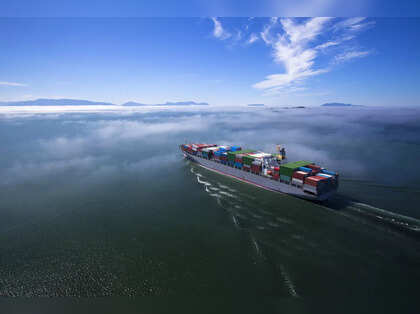
February 4, 2026 (Bloomberg) – Global shipping companies are preparing for lower profits in 2026 as the possible reopening of the Red Sea shipping route threatens to lower freight rates, worsen oversupply problems, and complicate trade challenges.
Major companies like Denmark's A.P. Moller-Maersk, Germany's Hapag-Lloyd, Japan's Nippon Yusen, and China's Orient Overseas International and Cosco Shipping are expected to see weaker earnings in 2026 after a tough 2025, which was impacted by tariff issues.
Analysts at Bank of America say that increased traffic through the Red Sea would worsen current “structural overcapacity issues.”
New vessel capacity is expected to rise by 36% from 2023 to 2027, according to Kenneth Loh from Bloomberg Intelligence. At the same time, demand for container shipping might drop by 1.1% in 2026 if container shipping returns fully to the Red Sea.
Shipping rates globally are declining, with a 4.7% drop to $2,107 per 40-foot container in the week ending January 29, as reported by the Drewry World Container Index.
While it is not guaranteed, a restart of Red Sea shipping seems more likely now that Maersk has successfully made two passages for the first time since the Houthi attacks on vessels in 2023.
HSBC analyst Parash Jain had previously predicted that disruptions in the Red Sea would lead to a 9% to 16% drop in freight rates this year. However, with Maersk's return indicating a quicker move towards normalcy, HSBC now suggests there could be an additional 10% decrease that may push Maersk and Hapag-Lloyd into losses.
At first, a quick return of traffic might cause port congestion in Europe, which could temporarily support rates, Jain notes. A reopening as Western economies begin to restock inventory in early 2026 may also initially boost rates, according to Citi analysts led by Kaseedit Choonnawat.
However, rates are expected to stabilize at lower levels, with Maersk likely to provide “soft” profit guidance for 2026 and reduce its share buybacks by 50%. There are expectations that Maersk could report its first annual loss since 2017 this year.
Major shipping companies are being cautious, reluctant to revamp their networks due to the risk of sudden changes in Houthi activities that could reverse their decisions overnight, according to Arya Anshuman and Simon Heaney from Drewry Shipping Consultants.
“Cargo owners are also concerned about risking valuable goods and have gotten used to longer transit times, while ports would struggle to handle a sudden influx of ships all at once,” they explained.
While Maersk has resumed voyages, CMA CGM SA decided to halt its return to the same route after previously re-establishing three services. “This shows the volatile and unpredictable situation in the region,” Loh remarked.
Asian shipping companies are facing similar hurdles. The full reopening of the Red Sea route will be a significant factor in Asian shipping this year, even more so than tariffs, considering the US-China trade truce and the continuing separation of their economies, according to Loh.
For Japanese companies like Nippon Yusen, challenges in profitability will primarily come from oversupply and tariff uncertainties, as noted by Jefferies analyst Carlos Furuya. The company’s third quarter operating income fell short of estimates, and BI predicts the container shipping business will continue to decline due to lower freight rates and reduced demand.
Ocean Network Express, a container shipper owned by Nippon Yusen, Mitsui OSK Lines, and Kawasaki Kisen Kaisha, reported a net loss of $88 million in its fiscal third quarter last week, blaming an increase in new ships and sluggish cargo movement on routes from Asia to North America and Europe. They expect vessels to keep routing around the Cape of Good Hope, leading to a slight increase in fourth-quarter rates.
Asian shipping companies might have a better outlook than their European counterparts regarding margins, as they benefit from stronger regional demand and more stable spot rates compared to global averages, according to Anshuman and Heaney from Drewry.
“Intra-Asia trade has greater operational stability, less affected by geopolitical disruptions like tariffs and security risks in the Red Sea, which continue to impact major global trade routes such as Transpacific and Asia-Europe,” they stated.