
By Lisandra Paraguassu and Lais Morais
BELEM, Brazil, Nov 13 (Reuters) – A Canadian anti-whaling activist, who has avoided arrest in Japan for over ten years, pledged at COP30 in Brazil to keep fighting for marine protection, focusing especially on deep-sea mining and Norway’s krill industry.
Paul Watson urged attendees at the U.N. climate summit in the Amazon city of Belem to pay attention not only to the world's forests but also to the oceans, which play a vital role in mitigating climate change, as phytoplankton produces much of the oxygen we rely on for breathing.
These small photosynthetic organisms, along with various ocean creatures, are at risk due to climate change, which is increasing ocean temperatures and melting polar ice.
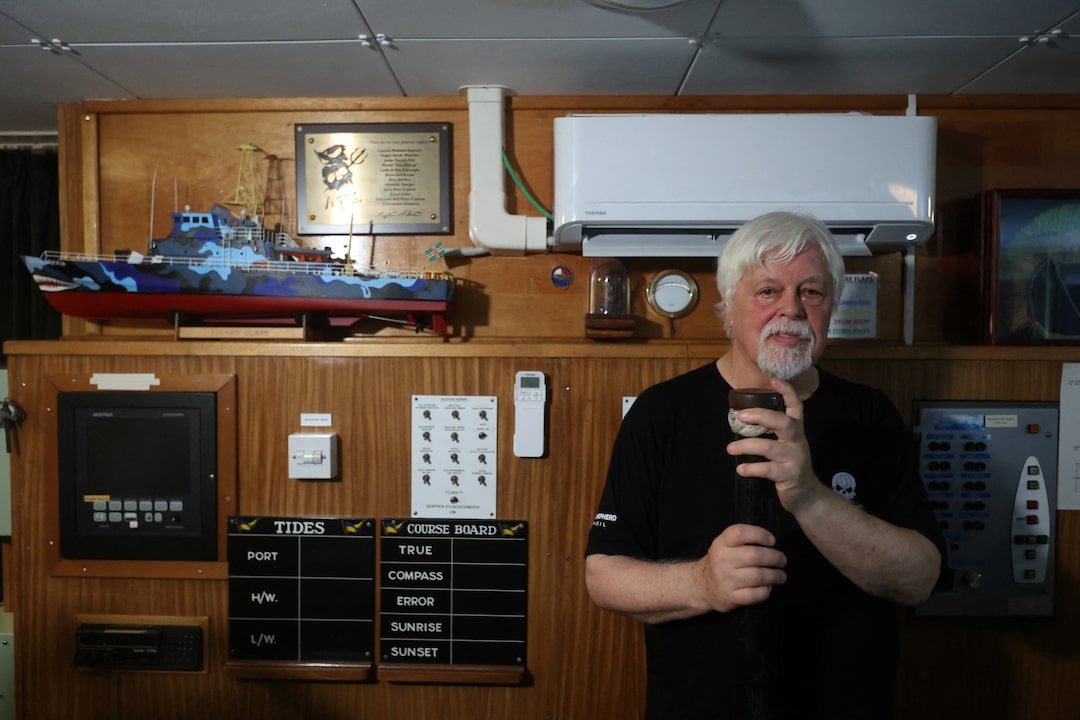
“If phytoplankton were to disappear from the sea, we would die,” Watson told Reuters during an interview on his boat, the John Paul Dejoria. “But it tends to be out of sight, out of mind. You can see the rainforest; you can’t see the phytoplankton.”
A key figure in Greenpeace during the 1970s, Watson founded Sea Shepherd to concentrate on ocean conservation. The group gained global recognition for chasing trawlers and whalers on the high seas and disrupting ocean exploration activities.
Watson celebrated the end of Japan’s whaling in international waters in 2019, following a ruling by the International Court of Justice that deemed the hunt in the Southern Ocean illegal. In 2022, he established the Captain Paul Watson Foundation.
Now, he is focusing on protecting smaller marine creatures, particularly krill, which serve as a primary food source for certain whale species.
Once the High Seas Treaty comes into effect in January, Watson plans to tackle Norway’s harvesting of krill intended for its salmon farms.
“We want to confront the Norwegian krill fishery on that day,” he stated. “They’re taking 620,000 metric tons of krill out of the Southern Ocean, right from the mouths of whales and penguins.”
Additionally, he hopes to challenge efforts to mine rare earth minerals from the sea floor, a process that scientists warn could disrupt little-known ecosystems.
U.S. President Donald Trump has called for an acceleration of the country's deep-sea mining initiatives.
Upon his arrival in Belem two weeks ago, Japan sent a request to Brazil for Watson's arrest over trespassing charges related to alleged damage to a whaling boat and injury to a whaler.
Watson remains unconcerned. In recent days, he has participated in various public events alongside Brazilian officials, including Environment Minister Marina Silva and First Lady Rosangela da Silva.
A government source from Brazil informed Reuters that they would not pursue Watson.
“Japan follows me everywhere. And everywhere I go, they try to get me arrested,” he commented regarding his 14 years of evading Japanese authorities. In July, Interpol dismissed a 2012 international arrest warrant for Watson, who denies the Japanese accusations.