
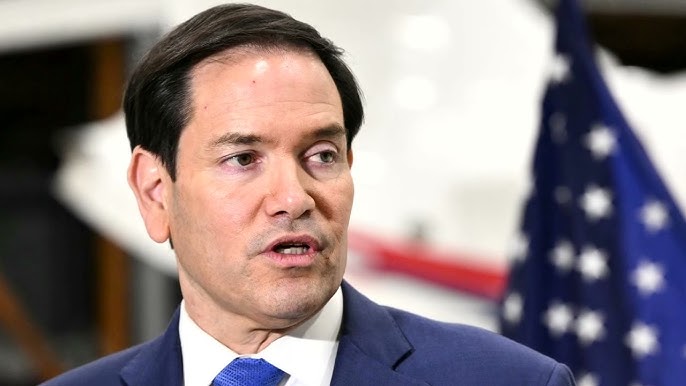
NIAGARA-ON-THE-LAKE, Canada, Nov 12 - U.S. Secretary of State Marco Rubio responded to criticism from some U.S. allies regarding the legality of U.S. strikes in the Caribbean, stating that Europe should not dictate how the U.S. protects its national security.
Rubio was at a Group of Seven (G7) foreign ministers meeting in Niagara, Canada, where discussions included the situations in Ukraine and Gaza. However, some attending countries voiced concerns about U.S. strikes on boats that the Trump administration claims are involved in drug trafficking.
French Foreign Minister Jean-Noel Barrot expressed at the start of the meeting on Tuesday that these strikes “violate international law” and could pose risks to French territories in the region.
So far, the U.S. military has conducted at least 19 strikes against suspected drug vessels in the Caribbean and along Latin America's Pacific coasts, resulting in the deaths of at least 76 people.
Before leaving Canada, Rubio told reporters that no one raised the issue of these operations during the G7 meeting. He defended the strikes, labeling the targets as “narco-terrorists,” and pointed out that drugs are also sent from Venezuela to Europe, arguing that the U.S. should be thanked for its actions.
“I don’t think the European Union gets to determine what international law is,” Rubio remarked. “They certainly don’t get to decide how the United States defends its national security.”
EU foreign policy chief Kaja Kallas mentioned to Reuters that such strikes could only be justified in self-defense or with a resolution from the U.N. Security Council.
When asked about a CNN report suggesting that the U.K. had suspended intelligence sharing on drug trafficking due to concerns about these strikes, Rubio dismissed it as a “false story,” asserting that the U.S. maintains a strong partnership with the U.K.
“Nothing has changed or happened that has impeded our ability to do what we’re doing,” he said. “Nor are we asking anyone to assist us with our actions.”
The Trump administration stands by its claim that those attacked were transporting drugs, but it has not publicly clarified the legal grounds for attacking the boats instead of capturing those aboard.
The U.S. has justified its actions under Article 51 of the U.N. Charter, which mandates immediate notification to the U.N. Security Council for any self-defense actions taken against armed attacks.
In a statement, the G7 ministers reiterated their commitment “to strengthening partnerships in securing maritime ports and routes against the trafficking of illegal drugs,” but they did not specifically mention the enhanced U.S. military operations in Latin American waters.
An independent group of U.N. experts acknowledged the U.S. justification for the strikes last month but commented, “Even if such allegations were substantiated, the use of lethal force in international waters without a proper legal basis violates international law and amounts to extrajudicial executions.”
Colombian President Gustavo Petro ordered Colombian security forces to stop intelligence sharing with U.S. agencies until the attacks on boats in the Caribbean cease.
In another discussion at the G7 meeting, Ukrainian Foreign Minister Andrii Sybiha urged allies to enhance Ukraine’s long-range missile capabilities and improve its energy sector as the country faces another winter of conflict.
U.S. President Donald Trump has attempted to engage with Moscow, having held a summit with Vladimir Putin in Alaska in August. He has supported calls for a ceasefire in Ukraine, but Moscow demands more territory from Kyiv.
Rubio noted, “What they want is the rest of Donetsk. And obviously, the Ukrainians aren’t going to agree to that,” adding that the U.S. believes Russia is currently not interested in pursuing peace.
The ministers concluded their statement by calling for an immediate ceasefire and confirming, “we are increasing the economic costs to Russia and exploring measures against nations and groups financing Russia’s war efforts.”
Plans for a summit between Putin and Trump have been postponed, as Moscow’s refusal to consider an immediate ceasefire in Ukraine complicates negotiations.
Following discussions with G7 foreign ministers, Sybiha praised Washington for the new energy sanctions imposed on Russian oil companies last month.
“We need to continue to increase the cost of war for Putin and his regime, forcing Russia to end the conflict,” he expressed on X.
Canadian Foreign Minister Anita Anand announced additional sanctions against Moscow, targeting its drone program, liquefied natural gas companies, and vessels associated with Russia’s shadow fleet, according to a statement.