
A recent intervention by Washington in Venezuela has sent shockwaves through the shipping market. With more oil expected to be exported to the US, tanker rates in the region have surged to their highest levels in nearly two years.
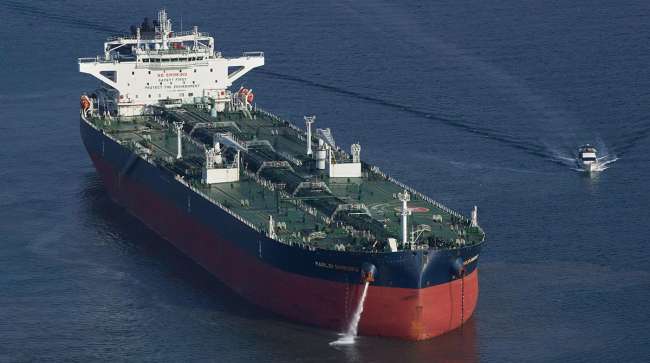
After US forces captured Nicolás Maduro and took control of the country's energy sector, American refiners will receive increased shipments of crude from Venezuela, primarily on mid-sized tankers. As a result, more US-produced West Texas Intermediate crude will also be sent to Europe on similar vessels, tightening the availability of ships.
The global oil industry, including producers, refiners, and traders, is adjusting to the implications of the US actions earlier this month, where special forces captured the leader of Venezuela. President Donald Trump has emphasized controlling the country’s oil industry as a key objective, with Energy Secretary Chris Wright stating plans to manage future sales of Venezuelan crude “indefinitely.”
For shipowners, this means rising rates on certain routes as both current and future oil flows shift, especially with the US beginning to ease sanctions on Venezuela. Before the intervention, most of Venezuela’s oil was sent to China aboard "dark fleet" vessels.
Georgios Sakellariou, a chartering analyst at Signal Maritime, noted that the expected shift of Venezuelan crude from China to the US Gulf is causing significant changes in the Aframax tanker segment, which carries about 700,000 barrels. He explained that this trend highlights how geopolitical events directly affect shipping operations.
On the route from the Caribbean to the US Gulf, known as TD9, daily rates reached $78,795 on Wednesday, marking the highest level since early 2024. Meanwhile, on the TD25 route from the US Gulf to the important refining hub in Amsterdam-Rotterdam-Antwerp, rates have increased for five consecutive days to reach $64,404.
Other routes are also benefiting from the tight availability of ships. On the TD26 route, which tracks tanker fees from the east coast of Mexico to the US Gulf, rates skyrocketed to $90,681 on Wednesday, following a 21% jump the previous day.
The US confrontation, which included a naval blockade, dramatically impacted monthly oil flows that were around half a million barrels per day. In November, ships loaded an average of 586,000 barrels of Venezuelan crude daily, according to shipping reports and data from Kpler and US Customs. This figure was a 37% increase from the prior month but 12% lower year-on-year.
Attracting Tankers
The increased potential for Venezuelan crude imports is attracting tankers from other regions, with some vessels willing to travel empty across oceans to pick up cargoes from South America.
For example, the Front Siena is currently making its way west across the Atlantic from Spain, en route to Guyana, close to Venezuela, and is awaiting further instructions. Similarly, the Mare Siculum is also crossing the Atlantic without cargo and has been scheduled for a route from the east coast of Mexico to Europe.
Shortly after the US operation, President Trump announced that Venezuela would offer up to 50 million barrels of oil to the US, with plans for the profits to benefit both nations. He also hosted a meeting at the White House for industry leaders to advocate for investment in the country’s deteriorating energy infrastructure.
Despite these efforts, the future of Venezuela's oil supplies remains uncertain. While the head of Exxon Mobil Corp. labeled the nation as currently “uninvestable” due to various challenges, the consulting firm Enverus predicts that Venezuelan crude production could increase by about 50% over the next decade.