
February 26, 2026 – A major shift in the oil tanker market is happening as South Korea's Sinokor group, backed by Mediterranean Shipping Co., takes control of a large portion of supertankers that will be able to transport American oil starting next month.
Sinokor's aggressive strategy to acquire very-large crude carriers has given it an unusual level of influence over the global fleet available for immediate hire. Industry insiders have referred to this move as "seismic," resulting in skyrocketing hiring costs that have reached multiyear highs.
This week, it became clear how significant Sinokor's dominance is, as they control almost all of the VLCCs ready for hire to pick up oil from the US Gulf Coast, a key area for oil exports. In the coming 30 days, they control all 14 ships that could arrive in the US Gulf and currently have no cargo, based on estimates from the shipping analytics platform Signal Ocean.
If we consider vessels that already have cargo but can still reach the US Gulf within the next month, Signal Ocean estimates that Sinokor controls around two-thirds of those 24 ships. This aligns with the views of many professionals in the tanker market who agree that Sinokor has a major hold over the available carriers in that area.
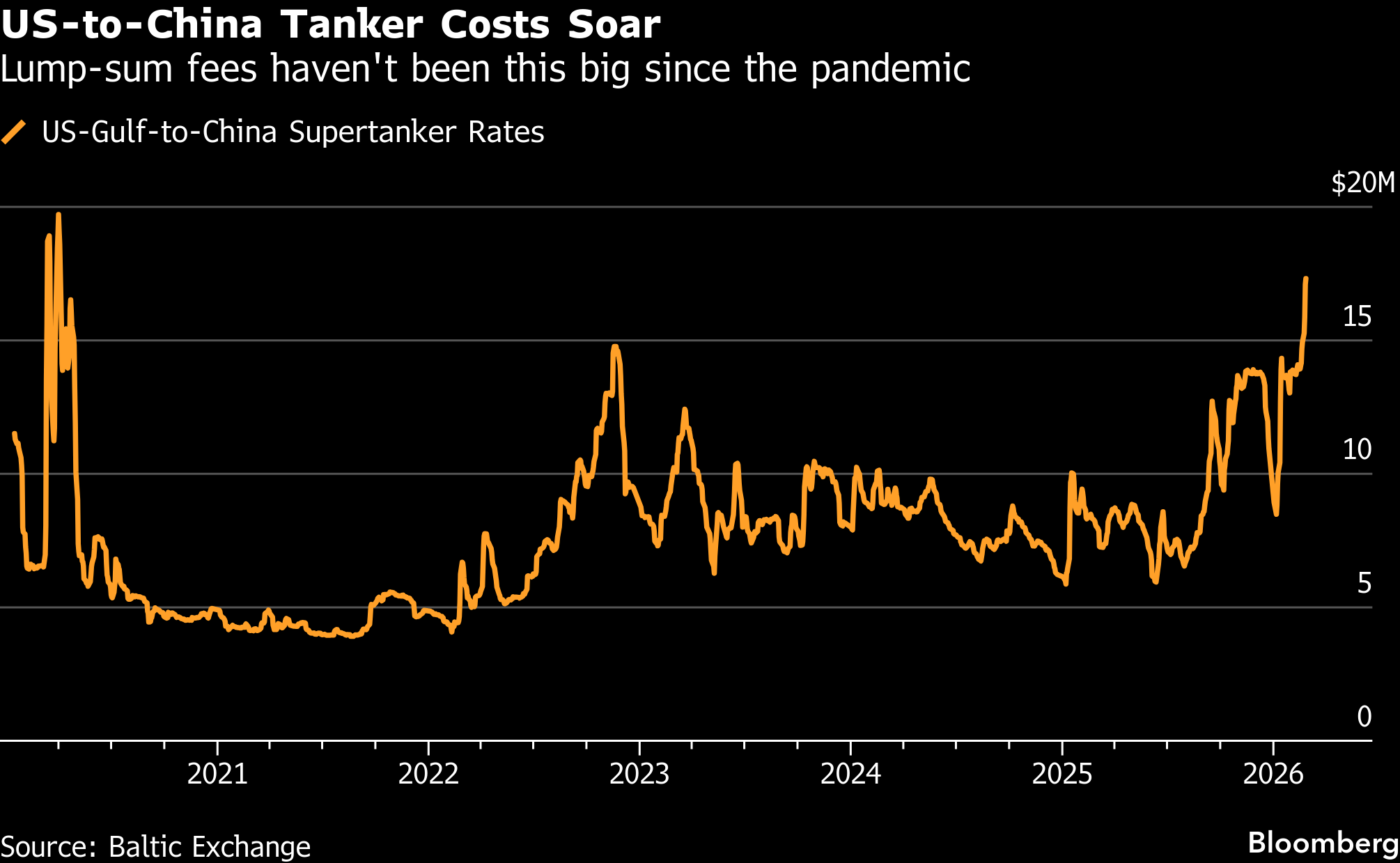
The situation in the Gulf is a clear indication of how Sinokor's actions are reshaping the tanker market and increasing profits for shipowners. On Thursday, the cost to book a supertanker from the US Gulf Coast to China reached over $17.3 million, the highest figure since 2020. This large control of the fleet allows Sinokor to significantly influence the rates at which they can charter out ships, according to industry insiders.
“It’s not quite a ‘one stop’ yet, but options are limited, especially for those seeking an empty ship,” noted Halvor Ellefsen, a director at Fearnley’s Shipbrokers in London.
Tanker earnings have been on the rise due to increased oil production, the return of Venezuelan oil to the market, and geopolitical tensions like potential conflicts involving the US and Iran. A recent estimate suggested that Sinokor manages about 150 vessels, which represents nearly 40% of the unsanctioned ships available globally that are not already tied to contracts. This situation has pushed the rates for the popular Middle East-to-China route to soar.
Sinokor Merchant Marine has not responded to requests for comments regarding their significant acquisitions of supertankers.
Market Positions
Shipowners typically share their vessels' positions with brokers and clients looking to hire tankers. These aggregated lists are then circulated within the market, providing an overview of how many tanks are available at any given time. Consequently, broker estimates can vary based on each agent's predictions about when ships will be free.
The increase in Sinokor's vessels traveling empty across the Atlantic comes after many of them offloaded cargoes in Asia around mid-January.
When the VLCC fleet is particularly stretched, there are alternative solutions. As rates rise, it can be more economical for two smaller ships to transport a load that would typically require a larger one. Earnings for vessels transporting 1 million barrels of oil have also increased recently.
Further increases in fees are anticipated. Reports indicate that a Sinokor VLCC was booked for $18 million to travel from the US Gulf to China in late March.
“It represents a fundamental shift in ownership," said Lois Zabrocky, CEO of supertanker owner International Seaways, when discussing Sinokor's acquisitions during a recent earnings call. “This has staying power.”