
Hapag-Lloyd is the fifth-largest container shipping company in the world. It operates 300 vessels across 133 routes and transports 13.5 million twenty-foot equivalent units (TEUs) each year to 600 ports globally. With such large-scale operations, every decision impacts thousands of containers per ship, and any mistakes can affect the entire supply chain.
To tackle this complexity, the company is focusing on digitalization across its fleet with the aim of simplifying operations.
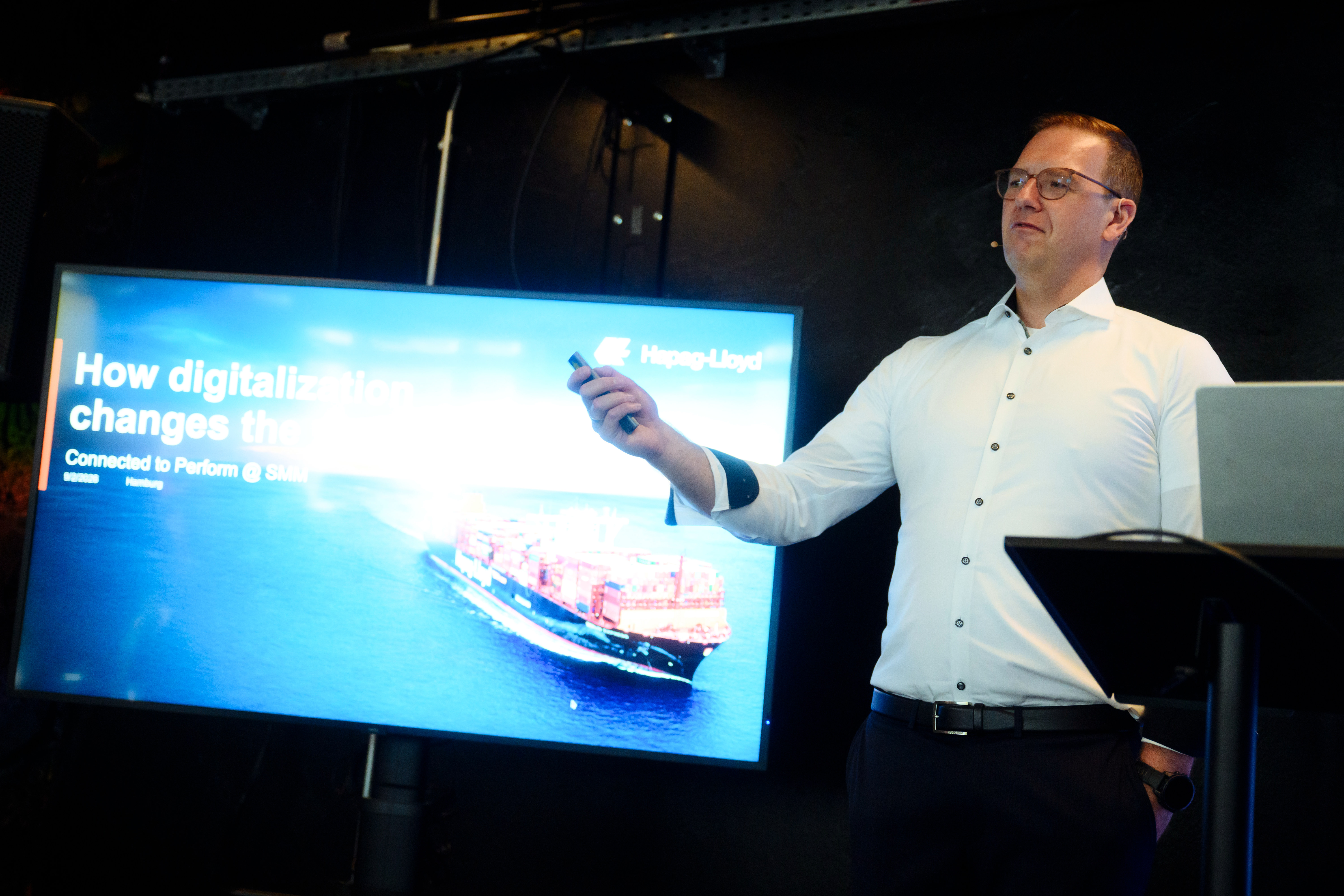
Patrick Briest, Senior Director of Operations and IT Products at Hapag-Lloyd, states that while digitalization offers various benefits, its main strength lies in simplifying processes from both commercial and operational angles.
The effectiveness of digitalization and its connectivity features is increasingly measured by their actual impact on business and operations. Briest mentioned during a recent seminar that they do not pursue digitalization just for the sake of it. Instead, they focus on cases where it adds real value.
Hapag-Lloyd has set clear targets: maintaining a schedule reliability of over 90% across its network, cutting emissions per TEU by 30% by 2030, and aiming for net-zero emissions by 2045, all the while reducing operating costs by around $100 per TEU.
To achieve these goals, the company is leveraging digitalization to make quicker and more informed decisions, as Briest explained: “We want our team to make faster, better decisions by having the right data and tools to understand the impact of even the small operational choices we make regularly.”
He illustrated the advantages of digitalization using a hypothetical journey of a container ship moving perishable goods from the west coast of South America to Northern Europe.
For example, if the crane fails during the final port call in South America, it could delay the ship and cause it to miss its Panama Canal crossing time. However, by accessing operational data from the ship's digital cargo logbook, Hapag-Lloyd would know how long to extend the port call without losing its canal slot.
If extreme weather were to arise in the Atlantic, the team could gather specific vessel data and combine it with shore-based analysis to assess routing, speed, fuel usage, and arrival times. This way, Hapag-Lloyd could minimize both commercial and environmental impacts while ensuring safety throughout the journey.
Thus, digitalization and connectivity enable shipping companies like Hapag-Lloyd to make smarter operational choices based on a more immediate and comprehensive view of ship and network activities. Briest also pointed out that these technologies help bridge the gap between the ship and shore.
In another illustration, IT support teams can now directly connect with vessels, even accessing the engine room remotely to solve technical issues quickly. Ships, which once functioned as isolated entities, are increasingly becoming extensions of the headquarters, with crew and shore staff collaborating as one team, making the Atlantic Ocean feel as connected as an urban center.
Digitalization not only connects vessels to the company headquarters but also to the clients whose goods they carry.
For instance, using the Hapag-Lloyd LIVE tool, customers can monitor refrigerated cargo and respond to changes in real-time. If a vessel is delayed, temperature settings can be adjusted remotely to ensure the cargo is maintained in optimal condition. “By embracing digitalization, we aim to simplify business interactions for our customers,” he noted.
However, Hapag-Lloyd's digital strategy also addresses challenges related to increased connectivity, prioritizing cybersecurity and preserving the autonomy of seafarers to maintain operational resilience.
Briest acknowledged that with more connected systems onboard, the risk of cyberattacks increases significantly. The company is actively deploying numerous updates every week to address these vulnerabilities. He emphasized that cybersecurity must be considered at the design stage, rather than being an afterthought.
At the same time, Hapag-Lloyd is committed to ensuring that digitalization enhances, rather than undermines, the skills and judgment of its seafarers. Briest remarked, “Digitalization can offer immense help, but we must also preserve the inherent culture, capabilities, and skills of our seafarers.”
These points are becoming more crucial as Hapag-Lloyd continues to advance its digital strategy. With more systems and interactions relying on ship-to-shore connectivity, it is becoming a vital component of the operational framework.
Inmarsat Maritime's NexusWave plays a crucial role in supporting Hapag-Lloyd’s digital transformation. This managed multi-network connectivity solution provides reliable high speeds, global coverage, and secure infrastructure necessary for the company to meet its operational goals confidently.
In conclusion, Briest stated that digitalization is helping Hapag-Lloyd manage its workload, make informed decisions, and improve teamwork both onboard and between ship and shore. While emphasizing the responsible management of connectivity for cybersecurity and crew independence, he firmly believes that “the future of shipping is connected.”