
By Michael Kei, ABS Vice President, Technology
Interest in carbon capture and storage (CCS) is growing quickly as industries react to new regulations, customer demands, and competition. For industries with high energy consumption like cement, steel, chemicals, and refining, scalable CO2 management solutions are becoming crucial for maintaining market access and ensuring long-term resilience. Offshore storage is emerging as a key part of the carbon value chain, and ABS is actively working to build the collaborative networks necessary to move from concept to implementation.
Capturing CO2 at land-based facilities and transporting it to offshore sites for permanent geological storage is increasingly seen as a viable way to achieve compliance and reduce risks. While the technology has been proven, the various stakeholders involved in this complex ecosystem are still working to find a consensus on a feasible economic and regulatory model. This is where Floating Storage and Injection Units (FSIUs) could be crucial.
Understanding the Offshore Carbon Value Chain
The offshore CCS value chain consists of three main components: the land-based industrial emitter where CO2 is captured, the CO2 transport provider (often a specialized liquefied CO2 carrier), and the offshore storage operator. Each part faces unique challenges related to regulation, technology, financing, and risk management. Any misalignment, whether it's due to incompatible CO2 specifications or transportation issues, can lead to project delays or failures. Increased collaboration across this chain is essential to ensure compatibility and smooth operation.
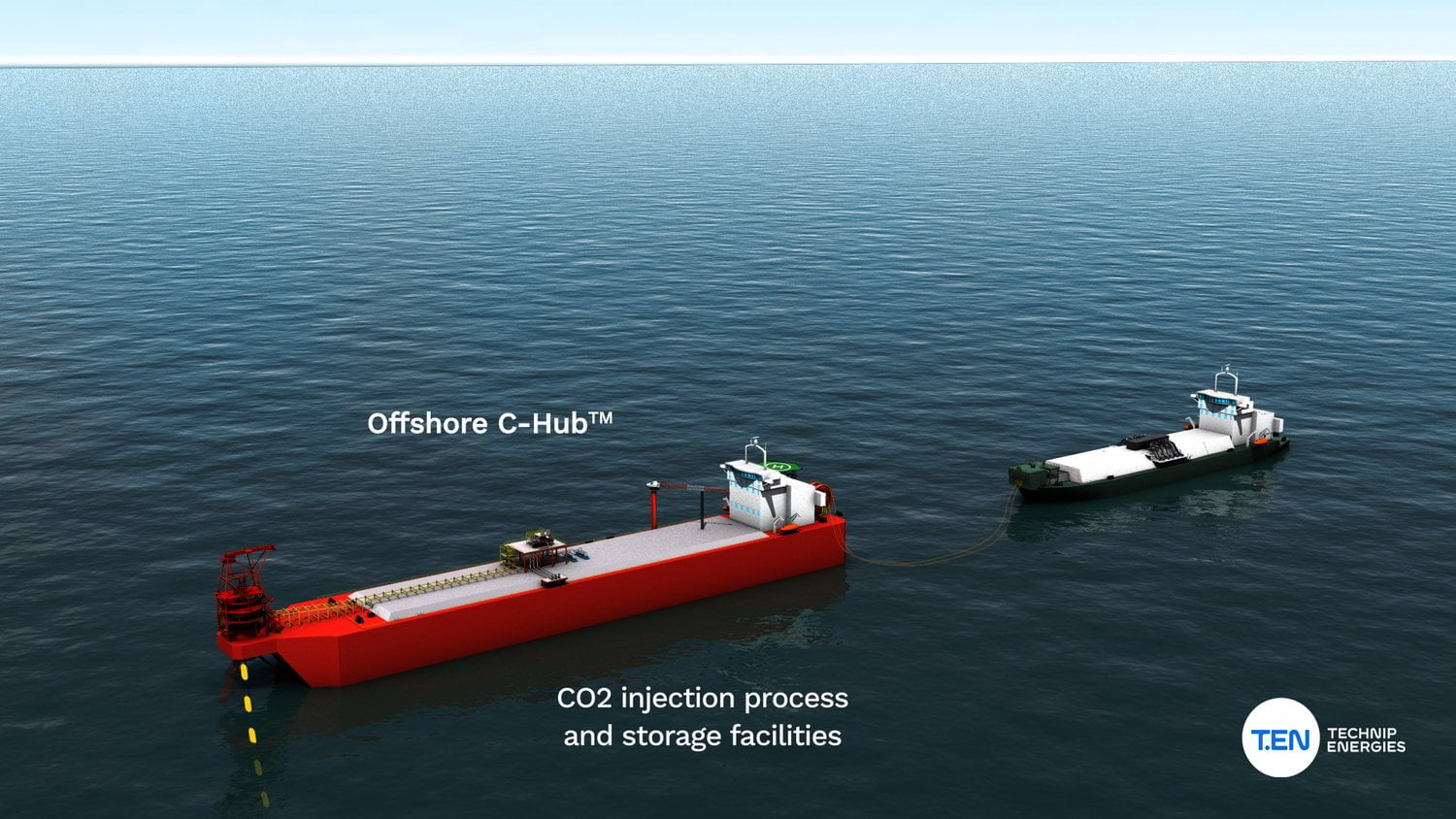
An FSIU – whether a new build or a converted existing offshore asset – receives liquefied CO2 from specialized carriers, stores and conditions it on board, and ensures continuous injection into subsea wells for permanent storage in depleted oil and gas reservoirs or saline aquifers. Unlike fixed offshore platforms or lengthy subsea pipelines, floating facilities offer the flexibility to be deployed in stages and relocated as early CCS markets develop.
Northern Lights: A Model for Success
The Northern Lights project in the Norwegian North Sea serves as an example of how CCS value chains can develop when there is commercial collaboration, government backing, and industrial demand. Equinor, Shell, and TotalEnergies have approved the second phase of the project, supported by significant government funding – the Norwegian government covered around 80% of Phase 1 costs, and Phase 2 has received €131 million from the EU’s Connecting Europe Facility (CEF).
Other projects are also moving towards final investment decisions (FID), such as APOLLO CO2, which has secured €169.3 million in funding through the EU’s 5th Innovation Fund Large-Scale Projects Call. This project, a partnership between Greece's natural gas operator DESFA and ECOLOG, aims to establish Greece's first large-scale CCS hub by 2030, with plans to initially capture 3 to 5 million tons of CO2 from the Attica region and potentially expand to 10 million tons. Additionally, EnEarth, a subsidiary of UK oil and gas company Energean, is developing the Prinos Carbon Storage Project with EU funding, while Petronas from Malaysia has recently obtained the first Offshore Assessment Permit for CCS for the Duyong field off Peninsular Malaysia.
These developments highlight several lessons important for floating injection concepts: commitment from customers is essential, public-private partnerships can reduce risk and spur investment, and scalable infrastructure can foster further demand. Floating solutions may provide an alternative approach, especially where onshore infrastructure faces regulatory hurdles or where storage locations are far from shore.
The Advantages of Offshore and Floating Solutions
Offshore storage offers various benefits compared to onshore options. Regulations and environmental concerns are usually less complicated, risks related to public acceptance are lower, and established hydrocarbon basins provide significant underground capacity along with existing expertise to support projects. Floating injection facilities add further flexibility, functioning not only as injection hubs but also as processing and transfer platforms.
FSIUs can support regions where pipeline transport isn't practical or cost-effective, allowing ship-based CCS networks to develop. Their mobility enables operators to align infrastructure investments with market growth, minimizing upfront financial risks.
Tackling Impurity Issues: The Need for Standardization
Despite its potential, offshore CCS – whether floating or not – faces several challenges. Regulatory frameworks are often fragmented, the definition of long-term liability varies, and economic models are still being refined. Storage operators must manage operational risks while assuring regulators and the public of safe, permanent containment solutions.
One significant technical barrier is the presence of CO2 impurities.
Currently, the fleet of LCO2 carriers is typically designed to custom specifications, which raises costs, limits scalability, and creates bottlenecks in the value chain. This customization is driven by uncertainty around the types of impurities and how they affect materials, safety, and operations.
Standardization could be a game-changer. By defining acceptable ranges for impurities, designers and operators could start building new CO2 carriers and associated floating infrastructure more confidently. Classification societies like ABS are collaborating with industry and academic partners, such as Texas A&M University and Sintef, one of Europe’s largest independent research organizations, to address knowledge gaps concerning impurity effects and materials compatibility. Solving this issue could unlock significant demand for offshore storage solutions.
ABS: A Catalyst for Progress
As an independent and trusted third party, ABS is in a unique position to bring together stakeholders, educate the market, and promote alignment across the offshore CCS ecosystem. While ABS is not a solutions provider, it plays a vital role in fostering the discussions and partnerships that can lead to safe, commercially viable, and scalable solutions.
Floating offshore CO2 injection facilities won’t solve climate change on their own, but they may become one of the most adaptable tools available within a comprehensive carbon value chain. The conversation is progressing rapidly, and the question remains whether the industry can unify its efforts.
Are you interested in joining the discussion? Contact us today.