
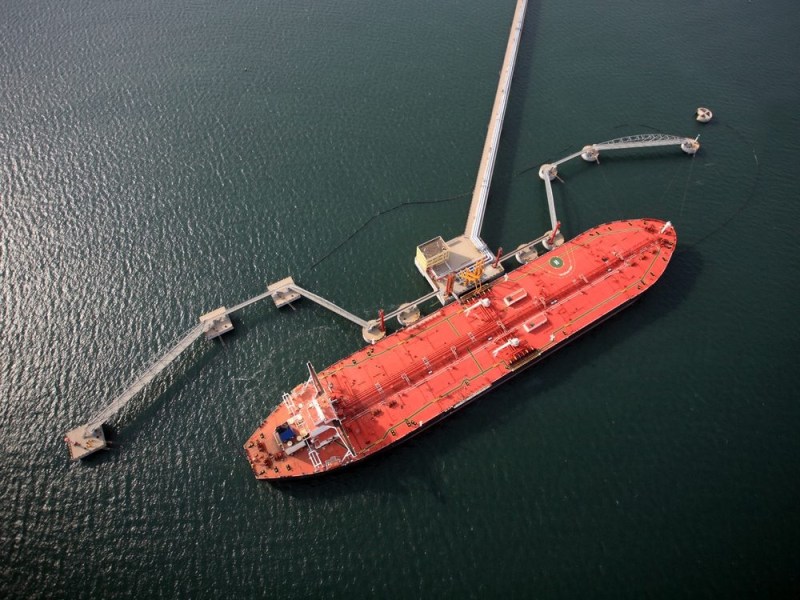
The U.S. Department of Transportation has given the green light to Texas GulfLink, LLC for building and running a deepwater crude oil export terminal off the Texas coast. This marks a significant step as it is the first approval of its kind under the Trump administration, potentially revitalizing a licensing process that has been stuck for many years.
Transportation Secretary Sean P. Duffy announced this decision, stating that cutting down on regulatory barriers can help “create jobs at home and stability abroad.” The terminal will be positioned about 30 miles off the shore of Brazoria County, Texas, and is expected to export up to 1 million barrels of crude oil each day while also creating around 720 jobs.
The approval comes after a six-year review process that started in May 2019 when the application was sent to the Maritime Administration and the U.S. Coast Guard. This project, managed by Sentinel Midstream, will feature a fixed offshore platform, about 45 miles of pipeline, and a setup to accommodate two Very Large Crude Carriers (VLCCs) at single-point mooring buoys, although only one ship will be loaded at a time.
“This permitting achievement showcases the dedication, persistence, and skills of the Sentinel team,” said Jeff Ballard, President and CEO of Sentinel and Texas GulfLink, LLC.
Texas GulfLink is the first terminal to get a license since the Trump administration transferred the oversight of deepwater ports from the Coast Guard to MARAD earlier this year. This shift aims to speed up approvals that the industry has often criticized as being too slow.
Maritime Administrator Capt. Stephen M. Carmel stated that this facility will help reduce congestion near the shore while enhancing export efficiency, calling it a “key offshore logistical asset” for U.S. energy exports.
“We are letting the global market know that America is ready for business. By approving projects like Texas GulfLink, we make sure that American oil producers do not get stuck because of domestic bottlenecks,” added Carmel.
This approval comes amidst ongoing frustrations with the deepwater port program. Since the program started in the 1970s, only 11 applications have been approved, and just eight licenses have been issued, even as U.S. crude exports rose to over 4.1 million barrels per day in 2024.
However, getting from a license to actual operations is still uncertain. Enterprise Products Partners recently revealed that its Sea Port Oil Terminal project—licensed by MARAD in April 2024—has faced challenges in attracting enough commercial interest, which has delayed what was expected to be the largest offshore oil export terminal in the country. Company leaders pointed out that the long permitting timeline was a major reason for losing a key customer.
Texas GulfLink is one of three oil export terminals currently under review by MARAD, along with several LNG proposals. With billions of dollars worth of offshore energy infrastructure still pending regulatory approval, the industry will be closely monitoring whether this recent approval marks a real shift or is just a singular success in an otherwise congested system.