
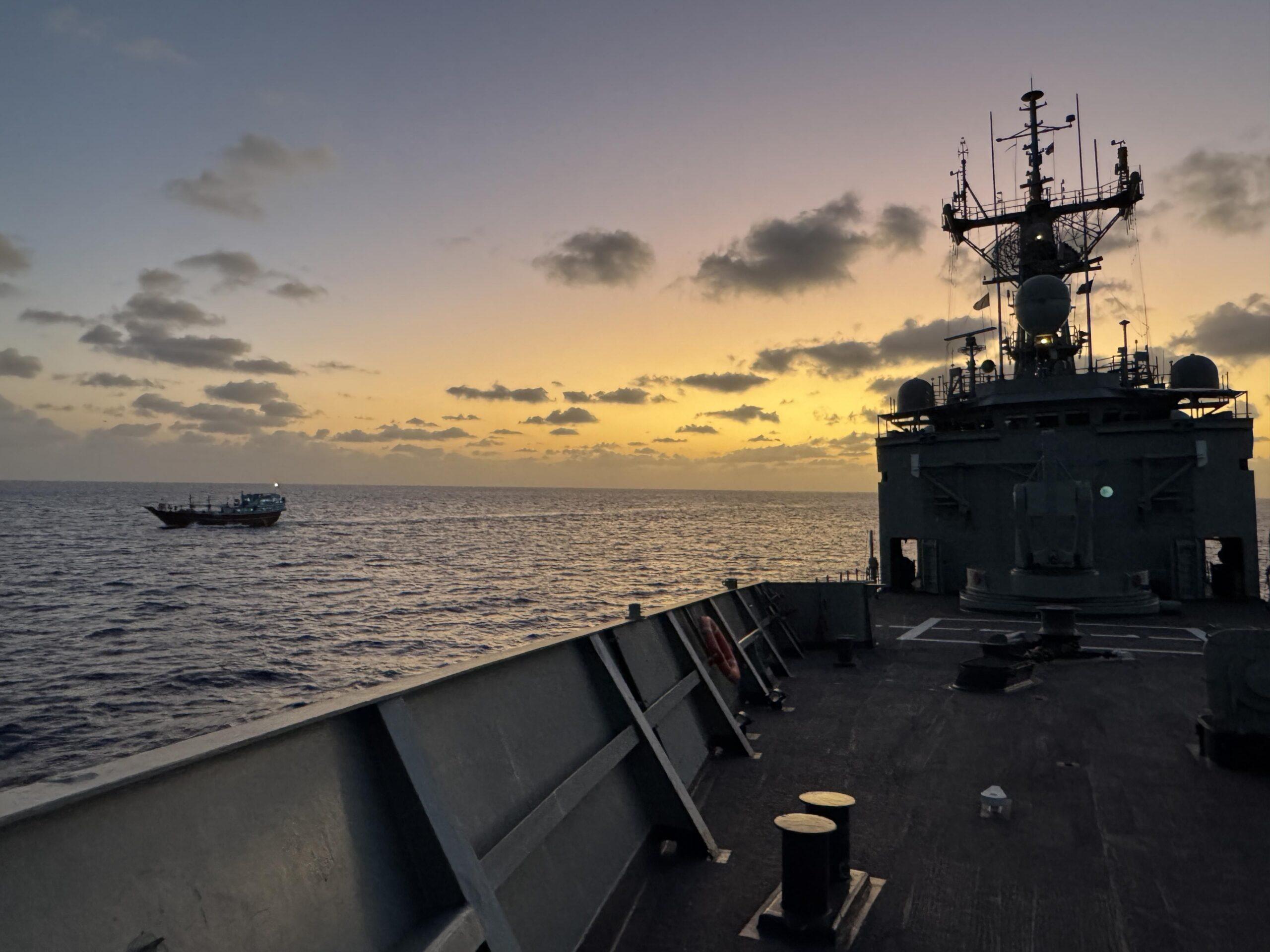
European naval forces have seized control of an Iranian-flagged dhow that was being used as a mother ship for the hijacking of the tanker HELLAS APHRODITE. This operation marks a key achievement in the ongoing fight against piracy in the Western Indian Ocean.
The dhow was found abandoned on the northwestern coast of Somalia after alleged pirates left it. It was closely monitored by the operation’s flagship, ESPS VICTORIA, in collaboration with an Indian Navy warship. The hijackers fled the vessel as EU forces arrived, allowing the HELLAS APHRODITE to be secured.
According to EUNAVFOR ATALANTA, “The Pirate Action Group operating in the area has been effectively disrupted,” highlighting the success of the operation in eliminating an immediate threat.
Once on the dhow, ATALANTA forces conducted thorough checks to ensure the crew's safety. A medical team assessed the crew members and reported that they were “in good condition, safe and free.”
This operation also provided important intelligence for legal actions. Officials stated, “ATALANTA forces on board the dhow have collected evidence from the incident, which, along with the evidence from the HELLAS APHRODITE, will support legal action against the pirates.” The operation continues in coordination with the Federal Government of Somalia and the Puntland Federal Government to track down and capture the suspects.
The counter-piracy effort involved various resources and international partners. The flagship ESPS VICTORIA deployed its helicopter, Uncrewed Aerial Vehicles, and a Special Operations Unit. Additionally, the Maritime Patrol and Reconnaissance Aircraft VIGMA D4 provided aerial support, while other partners included an Indian Navy warship, a Japanese Maritime Patrol and Reconnaissance Aircraft P3C from the Combined Maritime Forces, the Seychellois Air Force, and Somali authorities.
This dhow seizure came after the rescue of the Maltese-flagged HELLAS APHRODITE, which had been hijacked around 700 nautical miles off Mogadishu during a 30-hour standoff. All 24 crew members were safe after taking refuge in the vessel’s citadel during the attack by pirates armed with small arms and rocket-propelled grenades.
The incident marks the end of an eight-day campaign by this pirate group, which had also targeted the Stolt Aphrodite on November 3 and the fishing vessel Intertuna Tres on November 2, according to Martin Kelly, Head of Advisory at EOS Risk Group.
According to EUNAVFOR ATALANTA, it was “HIGHLY LIKELY that the Iranian hijacked dhow reported on 28/10/25 was used as the mother vessel” for these attacks. This dhow, believed to be named ISSAMOHAMADI, was not sending AIS signals.
The recent rise in Somali piracy shows a concerning trend that started in November 2023 with several hijackings. Operation ATALANTA has recorded dozens of incidents in the Somali Basin and the Gulf of Aden in 2024, including the MV Ruen, which was held for three months before being rescued by the Indian Navy, and the MV Abdullah, released after a month, reportedly following a large ransom payment.
Given the ongoing threat, Operation ATALANTA “strongly recommends that merchant and other vulnerable vessels enroll in the MSCIO’s Voluntary Registration Scheme (VRS) to ensure the most effective monitoring and response from ATALANTA forces and partners against maritime security threats in the Western Indian Ocean.”