
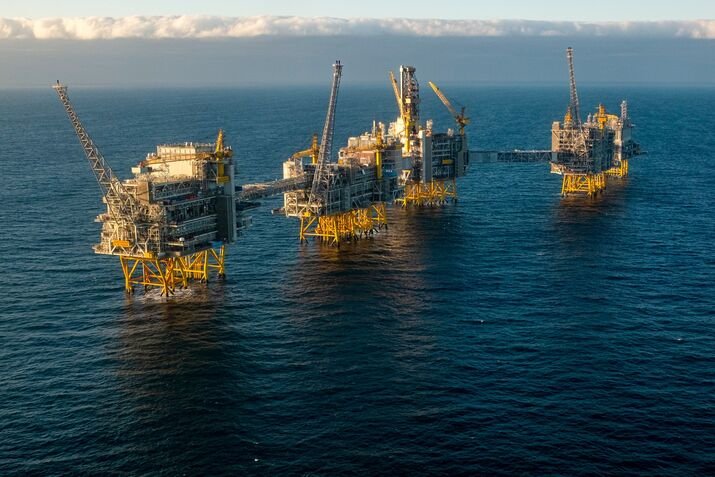
Equinor ASA has announced that oil production from its Johan Sverdrup oil field, which has been the largest contributor to European oil supply growth in the last decade, is expected to decline this year.
CEO Anders Opedal stated at a media briefing on Wednesday that production could decrease by 10% to 20%. Last year, the field averaged exports of 712,000 barrels per day, as reported by Bloomberg's loading programs.
“We’ve managed to delay the decline longer than we thought,” Opedal mentioned. “This year, we expect a decline of more than 10%, but definitely less than 20%.”
Following this announcement, Equinor's shares, which also revealed a reduction in share buybacks on the same day, fell in Oslo after an initial rise. Aker BP ASA, holding a 32% stake in the field, experienced a drop in shares by as much as 3.7%.
The decreasing output from this critical North Sea field serves as a reminder that, after a period of oversupply this year, global oil markets might struggle to meet consumption needs in the future. The International Energy Agency has indicated that the world needs to invest $540 billion annually in oil and gas exploration to counterbalance declines in older fields.
Opedal highlighted that Equinor has managed to maintain a higher output from Sverdrup than expected for a longer duration, and the company is now focusing on optimizing production through new wells and other techniques.
RBC analyst Victoria McCulloch noted that this current projection is higher than their previous expectation of a 5% decline. They now foresee an average year-on-year decline of about 13% by the end of 2026.
While Norway's oil and gas production is expected to stay stable through the end of the decade, a lack of investment could lead to a significant reduction in the industry in the coming years, according to the Norwegian Offshore Directorate in January.