
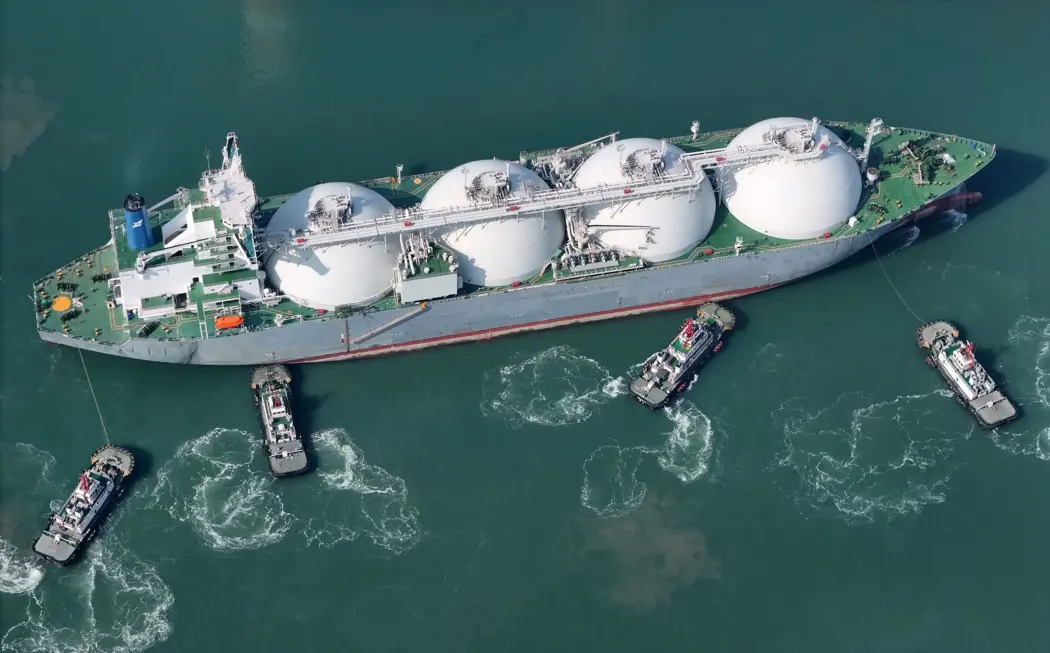
November 27, 2025 - Chinese imports of liquefied natural gas (LNG) are facing another challenging year due to weak industrial demand and high global prices. It is expected that imports will decrease by around 15%, reaching 65 million tons in 2025. As a result, China may lose its title as the world's largest buyer of LNG to Japan, according to analysis by BloombergNEF. The forecast for 2026 also looks pessimistic, with gas demand likely to decline further, indicating a disconnect from GDP growth, as noted by BNEF analysts at a recent summit.
Before the Russian invasion of Ukraine in 2022, China was the fastest-growing LNG market. At that time, BNEF projected that China's imports would reach 100 million tons by 2026. However, the demand has consistently fallen short of expectations, prompting analysts to lower their projections repeatedly. Currently, BNEF predicts next year’s demand to be around 73 million tons.
A new wave of global LNG supply might help bring down spot prices next year, possibly encouraging some additional purchases by China. However, the overall demand situation remains unstable, with significant declines in industrial activity in sectors such as steel, glass, and cement—major consumers of LNG. Additionally, China’s efforts to address overcapacity and the ongoing trade tensions with the US could further hinder purchases.
Gas-fired power plants are now facing stiff competition from coal and rapidly growing renewable energy sources like solar and wind. The utilization rates of gas-burning facilities have fallen to the lower side of the seasonal range, as rising LNG prices compel them to reduce their output.
Meanwhile, Chinese LNG buyers are set to secure more long-term supply contracts starting next year. However, given the waning demand, they may consider redirecting some of their fuel to markets like Europe, where prices are higher. This shift may reinforce China’s role in balancing the global gas market as companies adapt to become both traders and consumers.
“The path to portfolio trading is not by choice, but rather necessity,” said Zhang Yaoyu, global head of LNG and new energies at PetroChina International Co., during the BNEF Shanghai Summit on Wednesday.
In the long run, Chinese gas demand is expected to benefit from the expansion of import terminals, with capacity potentially doubling by 2030. However, whether these facilities will operate at full capacity will depend on market prices and demand.