
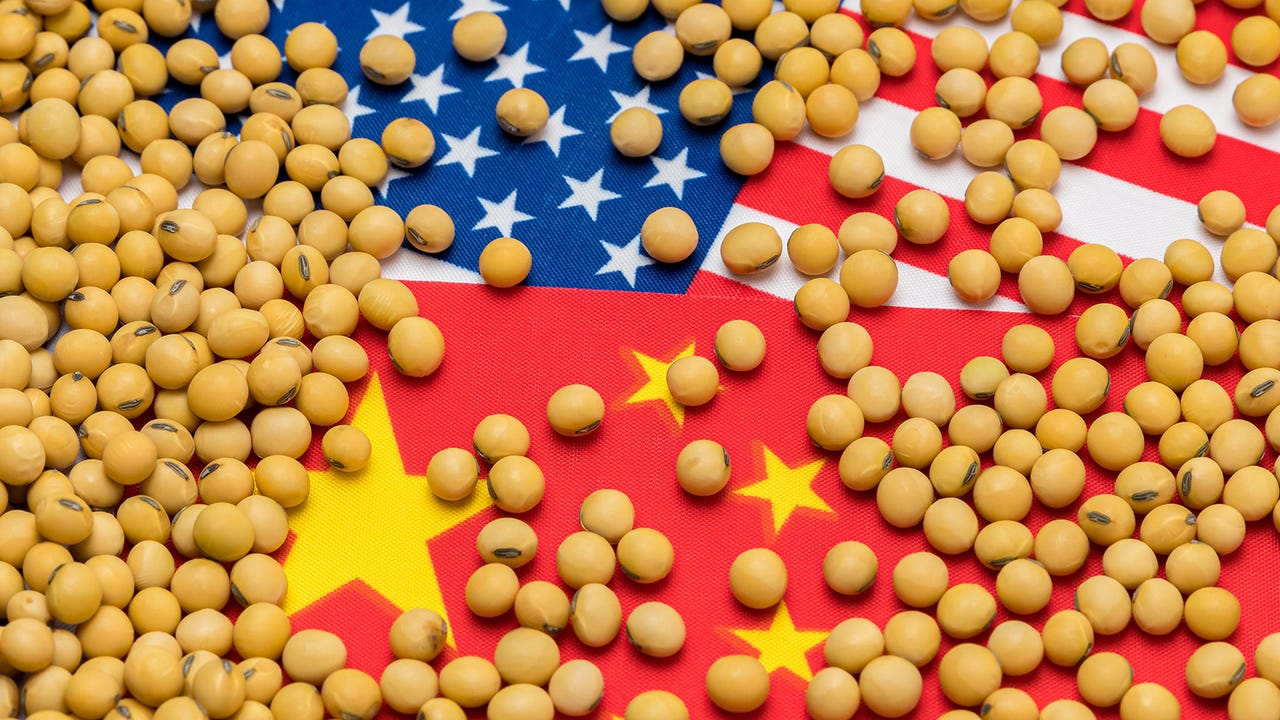
China's imports of American soybeans seem to have hit a standstill, just two weeks after the US announced a significant trade agreement that was meant to improve relations between the two largest economies.
Following a series of orders at the end of last month, which marked the first purchases of the season, Chinese purchases of US soybeans have dropped off, as per traders who preferred to remain anonymous. They mentioned that they were unaware of any new shipments. This pause raises questions about whether China, the largest buyer of American soybeans, will import as much as the US government expects.
The trade agreement with China is considered essential for providing support to struggling American farmers, who have faced issues such as inflation and rising costs. China has been holding back on buying US soybeans for a large part of this season, which has negatively impacted farmers and given China leverage in negotiations with the US. Last year, trade between the US and China exceeded $12 billion.
Soybean futures prices rose in the weeks leading up to the agreement, but have fluctuated since then, creating concerns over the uncertainty surrounding China's purchases.
The US has stated that China is expected to buy 12 million tons of soybeans by the end of this year, with plans for 25 million tons annually over the next three years. However, China has not confirmed these specific commitments. Nevertheless, it has reduced tariffs on American soybeans and lifted import bans on three US exporters, reciprocating similar moves from the US.
“Many in the industry see China's reported commitment to buy 12 million tons of US soybeans as more of a diplomatic gesture than a solid trade agreement,” noted Kang Wei Cheang, an agricultural broker at StoneX Group in Singapore.
In recent months, China has been buying large quantities of South American soybeans to diversify its sources. Therefore, demand from China is likely to decrease in the upcoming months, regardless of any trade agreements with the US, according to Vitor Pistoia, a senior grains and oilseeds analyst at Rabobank.
Chinese crushers will need to obtain some shipments for December and January before new crops from top exporter Brazil become available, but estimates suggest this may only amount to a few million tons. This situation would still leave US soybean cargoes below the purchasing target set by Washington for this year.
Additionally, US soybeans continue to face a 13% tariff, which traders believe makes processing them unprofitable. This lack of incentive means Chinese commercial crushers are less likely to order American shipments.
US soybeans are also priced higher than South American alternatives, partly because prices surged after the trade deal announcement, according to Cheang from StoneX.
As Brazil's planting season progresses smoothly and new crop supplies are anticipated by late January to early February, Chinese buyers have been hesitant to commit to large volumes from the US for immediate shipment, he added.
Recent purchases of US soybeans were reportedly made by state-owned Chinese companies, and a significant portion may be earmarked for state reserves. For commercial buyers, the trade agreement has opened the door to US supplies, but they now face competition from Brazil in a rapidly closing sales window.
“Weak crush margins and high port stocks in China do not indicate a need for substantial US purchases in the near future,” said The Hightower Report. “It seems more likely that China will wait to see if US prices drop below Brazilian levels before making any large purchases.”
Christine Hamilton, a farmer from South Dakota, who has been storing her soybeans and adjusting her corn sales, remains hopeful about the agreement between Trump and Chinese leader Xi Jinping.
“Any positive movement in the market is good, as it boosts prices and demand,” she commented. “I’m cautiously optimistic because while many deals can be made, until they actually happen, it's always a matter of seeing if the agreements will be followed through.”