
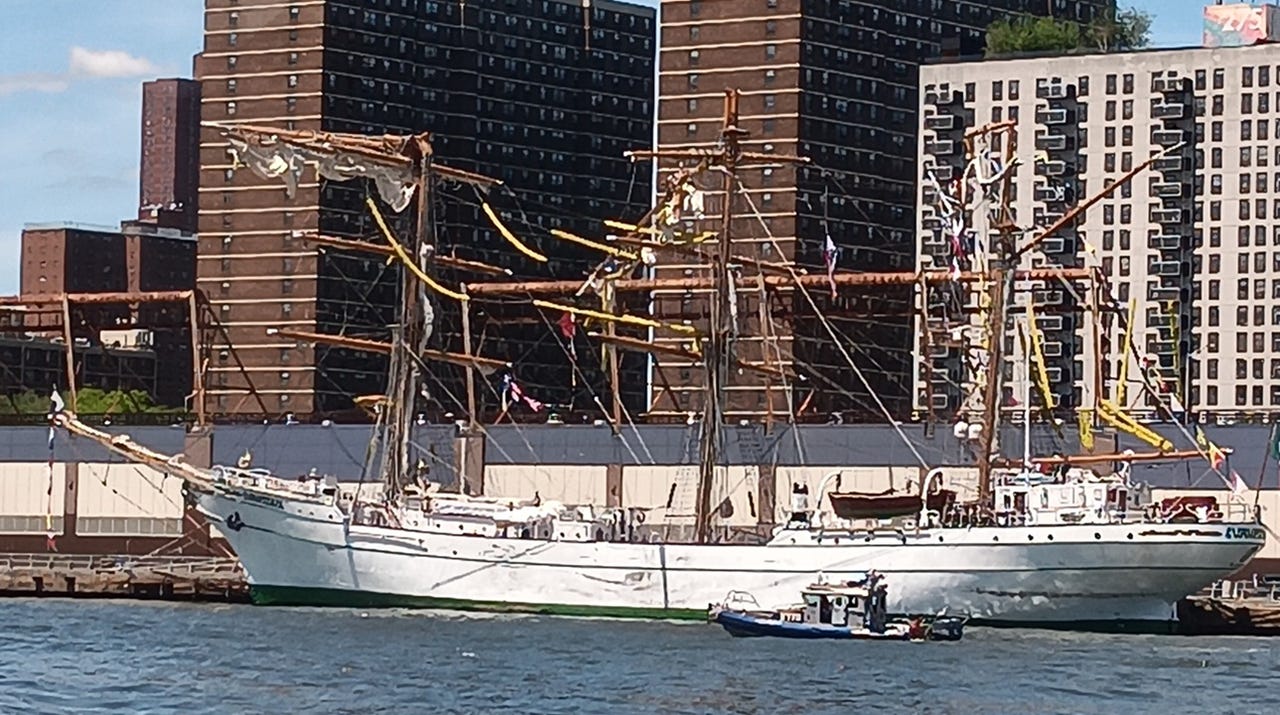
A report from the Australian Transport Safety Bureau revealed that a breakdown in bridge resource management and distractions on board the 333-meter containership Maersk Shekou caused a collision with the tall ship Leeuwin II at the Port of Fremantle in Western Australia. This incident occurred just before dawn on August 30, 2024.
The Singapore-flagged Maersk Shekou was entering Fremantle's inner harbor with the help of two harbor pilots during heavy squalls. A series of coordination mistakes led the ship to crash into the berthed Leeuwin II, which resulted in the tall ship losing its mast and two crew members being injured as they fled at the moment of impact.
Data from the ship’s recorder showed that the primary pilot failed to give a crucial 10-degree turn order towards the inner harbor, and this error went unnoticed by the entire bridge team.
As the pilot tried to steer using the main engine and four tugs, the helmsman kept following the old course of 083 degrees, going against the intended turn. The Maersk Shekou continued on its way to Victoria Quay, crashing into Leeuwin II before hitting the wharf and causing containers to hit the roof of the WA Maritime Museum.
Distraction During a Critical Moment
To make matters worse, the investigation found that the secondary pilot was on a non-essential phone call while navigating a crucial part of the entrance channel. This distraction prevented the pilot from noticing that the primary pilot had not ordered the necessary change in course, and that the helmsman was not following orders.
“This shows how important it is to minimize distractions on the bridge, especially during critical phases of navigation,” said ATSB Chief Commissioner Angus Mitchell in the report.
The investigation highlighted that the bridge team—including both pilots and the crew—failed to maintain what experts call a “shared mental model” of the required actions during the journey.
“A well-functioning bridge team needs all members to have a shared understanding to monitor a ship's progress actively,” Mitchell explained. “This depends on sharing relevant information and quickly identifying, communicating, and fixing any incorrect actions.”
Additionally, delays in securing the tugboats meant that the team was still handling the last tug's connection as the ship approached a critical turning point. This significantly increased their workload during the most challenging part of the transit.
Identified Procedural Violations
Beyond the immediate causes of the collision, the investigation showed that Fremantle Ports' safety measures for large container vessel entries were not followed correctly. The Maersk Shekou entered the inner harbor without all tugs secured, just before sunrise, and in weather conditions beyond operational limits, all violations of established procedures.
“These issues collectively weakened the port's safety controls and raised the risk of future accidents,” Mitchell pointed out.
The container ship suffered minor damage, including a hull breach, but its crew and pilots were unharmed. Both Fremantle Ports and the pilotage provider, Fremantle Pilots, have pledged to take safety actions based on the investigation findings.
Mitchell ended with a reminder about the ever-changing nature of marine operations: “It is crucial to reassess any associated risks and consequences, especially those affecting established limits, whenever necessary, and ensure any changes to the plan are clearly communicated to all parties involved.”