
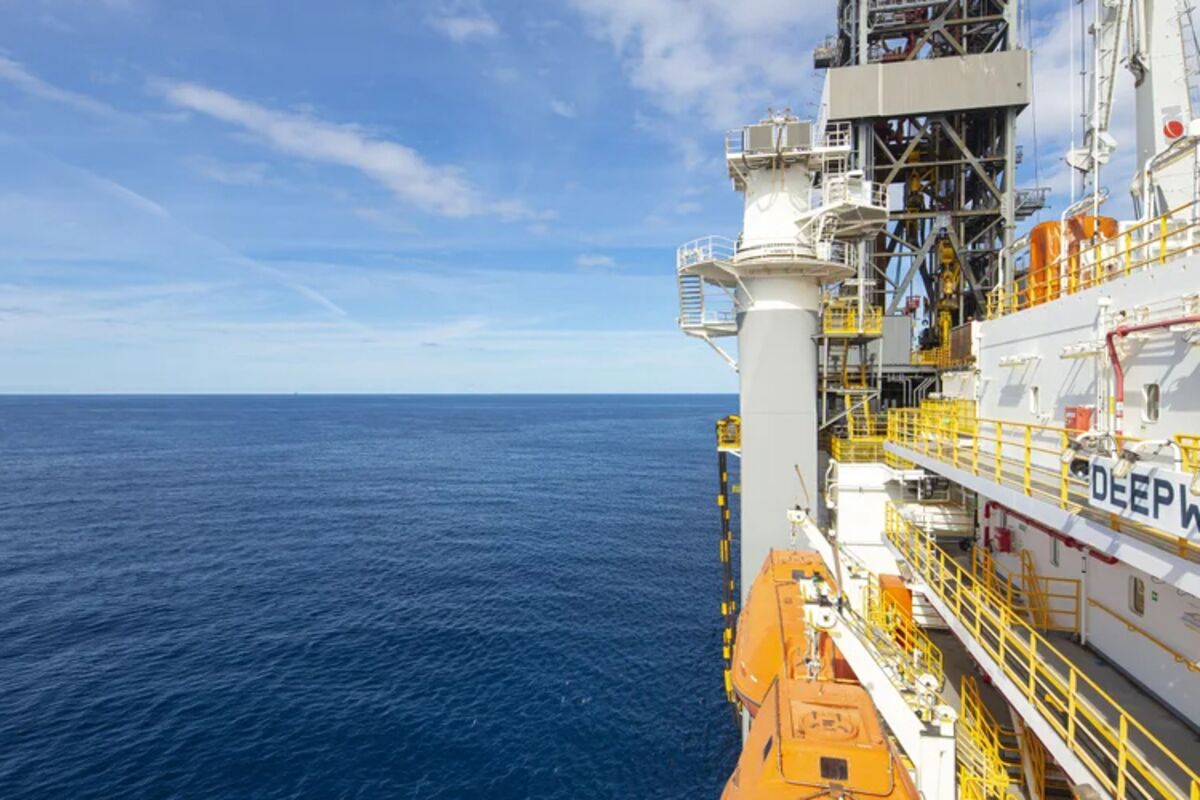
By David Wethe (Bloomberg) — Beacon Offshore Energy LLC, an oil exploration company supported by Blackstone Inc., is optimistic about a drilling revival in the Gulf of Mexico. The company is now operating some of the most productive wells in the U.S., utilizing new technologies to extract previously unreachable crude oil.
According to Chief Financial Officer Marc Hensel, Beacon's four wells, which began production between July and October, are averaging 25,000 barrels per day each.
“These are the largest producing wells in all of North America, not just in the Gulf,” Hensel stated in an interview. He co-founded Beacon in 2016 with backing from Blackstone.
Wells like Beacon’s in the Gulf are significant for monitoring in the coming years, as they will drive U.S. production growth. This comes as output in older shale fields starts to plateau. The shift toward more efficient offshore wells, which have longer lifespans, could create challenges for the global crude market as a supply surplus approaches.
Beacon's wells are part of the Shenandoah prospect, which was discovered by Anadarko Petroleum, a subsidiary of Occidental Petroleum Corp., in 2009. However, Anadarko ultimately focused on easier, quicker outputs onshore at the onset of the shale boom. Beacon took over operations in 2020 with the aim of reducing costs to produce from this prospect.
“I love stranded discoveries,” Hensel remarked. “When oil is already found underground and you just need to extract it, that’s much lower risk compared to starting from an unexplored ocean lease.”
The Shenandoah discovery is located in a challenging area of the earth's crust, prompting the industry to develop new methods to extract the crude oil. Major oil companies like BP, Chevron, and Shell began creating advanced oilfield equipment over a decade ago to reach depths of over 6 miles through water and rock. At those depths, temperatures can reach 400°F (204°C), and pressures in the wellbore can hit 20,000 pounds per square inch — akin to having two elephants sitting on your chest.
Production from these high-pressure oil sources has only started in the past year, marking a new era for the U.S. Gulf.
“There’s definitely going to be some sort of a modest boom from the implementation of this technology in the Gulf,” said Vishnu Gopakumar, an analyst at Enverus. “This enables operators to revisit their existing fields, drill deeper, and unlock resources that were previously inaccessible.”
Beacon plans to introduce around two wells each year over the next few years in this high-pressure area, all connecting to the company's new floating production and storage vessel (FPS), which will act as a hub for nearby discoveries.
The Monument discovery is set to start production next year, alongside the second phase of Shenandoah. Additionally, production from a new find called Shenandoah South is anticipated in 2028.
According to Wood Mackenzie Ltd., producers in the U.S. Gulf are expected to add 300,000 barrels of daily output this year, with an extra 250,000 barrels by 2026 due to ongoing projects.
“The Gulf remains a vital component of the overall picture,” Hensel noted. “Will we ever see record production levels in the Gulf again? I believe there’s still potential for that.”