
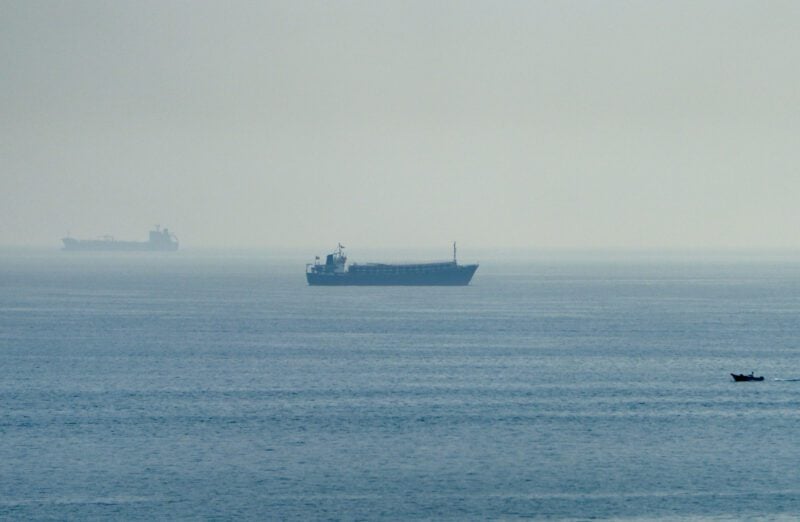
The Abu Dhabi National Oil Company (ADNOC) reported that three of its ships were attacked this week while passing through the Strait of Hormuz. This incident highlights the ongoing risks to commercial shipping in this key energy route, where traffic levels are still much lower than usual.
In a statement released on Friday, ADNOC expressed that it has been “significantly affected” by these attacks targeting its personnel and assets, despite their attempts to fulfill customer needs.
“Since the conflict began, 15 of our ships have been attacked by missiles and drones while traveling through the Strait of Hormuz, including three this week,” ADNOC stated.
The company reported that these attacks resulted in one death and injuries to 20 crew members.
ADNOC did not specify which ships were involved in this week’s incidents or provide details on the level of damage sustained.
This announcement comes as maritime security officials continue to label the Strait of Hormuz as one of the most hazardous areas for merchant shipping.
The Joint Maritime Information Center (JMIC) recently maintained its SEVERE threat level for the Strait, indicating that hostile actions are “highly likely” given the current situation.
JMIC noted ongoing Iranian attacks and harassment, including communications with vessels, drone overflights, and surveillance of commercial ships. Incidents involving projectile strikes and near misses have also been reported near the southern Omani approaches close to Limah, Khasab, and Kumzar.
The worsening security situation is still limiting commercial traffic in this waterway. A new assessment from UK Maritime Trade Operations (UKMTO) released on Friday showed only 18 outgoing and 21 incoming full transits over the week ending August 7. Both numbers represent around 4% of what they were before the conflict.
UKMTO stated that traffic detected by AIS in the Strait is about 90% lower than pre-conflict levels, even after a brief uptick in late June. Operators are now more inclined to use the northern route due to projectile attacks, elevated security worries, and increased enforcement.
The southern Omani corridor has become particularly perilous, accounting for 14 of the 16 projectile strike incidents reported since July 6. UKMTO indicated that many vessels have either canceled planned trips or rerouted north after attacks, suggesting that shipping companies are actively avoiding risks rather than just shifting routes.
Continued Attacks in the Region
JMIC has documented 83 maritime security incidents since March 1, with three more incidents reported since its last update.
In a recent incident, a tanker heading north toward the Strait of Hormuz reported two loud explosions nearby on August 5. The vessel changed course and halted its transit, with no damage or injuries reported.
In another case, the tanker Daisy experienced an explosion nearby while traveling west through the Gulf of Aden. The blast caused minor damage, but the crew was unharmed, and the ship continued its journey to Djibouti.
The security situation has also worsened in the Red Sea, where an Indian mechanized sailing vessel sank after being attacked south of Hodeidah. JMIC stated that the vessel's company security officer reported the attack was carried out using an unmanned surface vehicle. The crew was rescued and taken to the Yemeni port of Mokha.
Despite the regional instability, Hormuz remains the highest-risk area in JMIC's latest evaluation. The Gulf of Oman, Gulf of Aden, and Bab el-Mandeb/Southern Red Sea are categorized as SUBSTANTIAL risk, while the Arabian Gulf is considered MODERATE.
JMIC anticipates that traffic through Hormuz will continue to be low as operators deal with vessel attacks, risks from mines, navigational disruptions, Iranian surveillance, and ongoing U.S. blockade enforcement.
ADNOC stated it is working with authorities to ensure the safety of its crews, assets, and operations while still serving its customers.
“The freedom of navigation and the safe, uninterrupted passage of commercial shipping through international waterways must be upheld without threats, harassment, or attacks,” the company emphasized.